Last Updated on April 25, 2026
Table of Contents
The Voice and Role of the Völva
The Völva, also written as Völva or Vǫlva, carries a name pronounced “vur-lvah,” where the ö sounds like the vowel in “bird,” and the final a remains soft and open. The alternate spelling Vǫlva uses the letter ǫ, which produces a rounded vowel sound similar to “aw” in “law,” giving the name a slightly deeper tone. This figure represents a seeress who speaks with authority, offering insight into events that extend beyond immediate perception and into the unfolding of time.
The Völva occupies a respected and sometimes feared position within early northern society, since she engages with knowledge that others cannot easily access. She does not simply observe events, because she actively interprets signs, patterns, and forces that shape outcomes across different realms. This role requires both skill and presence, as she communicates complex ideas in ways that guide those who seek her understanding.
Descriptions of the Völva often include ceremonial elements, such as staffs, chants, and structured settings that support her work and reinforce her authority. These details highlight the importance of preparation and focus, showing that her abilities rely on disciplined practice rather than spontaneous action. The Völva becomes a figure who bridges visible experience and deeper layers of meaning.
The Practice and Influence of the Völva
The Völva engages in practices that involve entering altered states of awareness, where she gathers information and shapes it into spoken insight that others can understand. This process requires concentration and control, ensuring that the knowledge she conveys remains coherent and useful. Her work does not occur in isolation, since she interacts with individuals and communities who rely on her guidance for decision making and interpretation.
Her influence extends across social and spiritual contexts, where she provides direction during times of uncertainty or transition that require careful consideration. People seek her perspective when facing challenges that involve risk, change, or unknown outcomes, trusting her ability to reveal underlying patterns. This trust places responsibility on them to communicate clearly and act with integrity in every situation.
They also represents continuity, as her knowledge often draws upon traditions that pass from one generation to another through teaching and practice. She maintains connections between past and present, ensuring that accumulated understanding remains accessible and relevant. This role reinforces her importance as both a guide and a keeper of knowledge.
Appearances in Early Northern Texts
The Völva appears prominently in the Poetic Edda, especially in the poem Völuspá, where a seeress delivers a detailed account of events that define the structure and progression of existence. Her speech addresses Odin directly, creating a dynamic interaction that highlights her authority and insight. This portrayal establishes them as central figures whose voice carries significant weight.
The Prose Edda also references seeresses, describing their practices and the respect they command within society, which reinforces the role outlined in poetic sources. These accounts provide additional context, showing how the Völva operates within both narrative and cultural frameworks. The inclusion of such figures across texts ensures that their presence remains consistent and influential.
Through these appearances, the Völva maintains a strong identity as a speaker of knowledge who shapes understanding through her words and actions. Her role connects multiple narratives, linking events and perspectives through her insight. This enduring presence secures her place as a vital figure within the tradition.
Runes Associated with the Völva
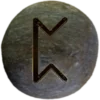
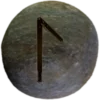
The rune Perthro (ᛈ), pronounced “perth-ro,” aligns closely with the Völva through its association with hidden knowledge, mystery, and the unfolding of events that reveal themselves over time. This rune reflects her role as a seeress who uncovers patterns and communicates insights that others cannot easily perceive. Another rune, Laguz (ᛚ), pronounced “lah-gooz,” connects with her practice through its link to intuition, flow, and the movement of unseen forces.
Perthro (ᛈ) emphasizes discovery and the interpretation of concealed information, highlighting the Völva’s ability to bring clarity to complex situations. Laguz (ᛚ) captures the intuitive aspect of her work, where understanding emerges through connection with deeper currents rather than direct observation. Together, these runes reflect the balance between insight and intuition that defines her role.
The Meaning of the Völva to Asatruar
The Völva holds importance for Asatruar because she represents the pursuit of knowledge and the ability to interpret forces that shape both personal and communal experiences. Her role demonstrates how insight can guide decisions, helping individuals navigate challenges with greater awareness and understanding. People who follow these traditions often view the Völva as a symbol of wisdom and responsibility.
Her presence also emphasizes the value of tradition, since her knowledge connects past practices with present needs, ensuring continuity across generations. The Völva encourages reflection on how information is gathered and shared, highlighting the importance of clarity and integrity in communication. Through this perspective, her role continues to influence approaches to learning, guidance, and the search for meaning.