Last Updated on April 15, 2026
Table of Contents
The Authority and Fate of Hreiðmarr
Hreiðmarr, also written as Hreidmar or Hreithmar in simplified forms, carries a name pronounced “hrayth-mar,” where the ð represents a soft th sound like the one in “this.” The diphthong ei produces a sound similar to “ay” in “day,” giving the first syllable a stretched and resonant quality. This name reflects an Old Norse linguistic structure that blends strong consonants with flowing vowels, creating a sound that feels both grounded and deliberate.
Hreiðmarr stands as a powerful figure associated with wealth, authority, and the complex relationships that arise within families bound by shared resources. He holds a position of control over a significant treasure, which places him at the center of events that unfold through conflict and ambition. His role does not remain static, since his decisions and the actions of those around him drive the narrative toward outcomes shaped by both intention and consequence.
The character of Hreiðmarr represents stability and control at the beginning of his story, yet this position becomes increasingly fragile as tensions within his family escalate. His connection to wealth creates both security and vulnerability, since it attracts attention and fosters desire among those closest to him. This dynamic establishes the conditions that lead to a dramatic shift in his fate, illustrating how authority can unravel under pressure.
The Story and Downfall of Hreiðmarr
Hreiðmarr’s story unfolds through a series of events involving his sons and the acquisition of a cursed treasure that alters the balance within his household. After the death of his son Otter, he demands compensation in the form of gold, setting in motion a chain of events that brings the cursed hoard into his possession. This decision highlights his focus on restitution and control, while also introducing a force that disrupts the stability he seeks to maintain.
Once he acquires the treasure, including the ring Andvaranaut, Hreiðmarr chooses to keep it for himself rather than distribute it among his sons, which intensifies existing tensions. This act creates resentment, particularly in Fafnir, whose desire for the wealth grows stronger under the influence of the curse. The situation escalates as ambition and mistrust replace cooperation, leading to a confrontation that reshapes the family entirely.
Fafnir ultimately kills Hreiðmarr to claim the treasure, marking a turning point that transforms the narrative and demonstrates the destructive power of greed. This outcome reveals how the pursuit of wealth can fracture relationships and lead to irreversible consequences. Hreiðmarr’s fate serves as a stark example of how authority tied to possession can collapse when challenged by internal conflict.
Appearances in Early Northern Texts
Hreiðmarr appears in the Völsunga Saga, where his role as the father of Fafnir and Regin places him at the center of a narrative driven by treasure and transformation. The saga describes his demand for compensation and his eventual death, presenting these events as key moments that influence the direction of the story. His presence establishes the foundation for the conflicts that follow.
The Prose Edda also references Hreiðmarr in its account of the treasure’s origin, connecting him to the broader sequence of events involving Andvari and the cursed gold. These references highlight his involvement in acquiring the hoard and the consequences that arise from that acquisition. The inclusion of Hreiðmarr in these texts ensures that his role remains integral to the narrative.
Hreiðmarr maintains a position as a figure whose decisions initiate a chain of events that extend beyond his lifetime. His story emphasizes the impact of choices made under pressure and the lasting effects they can produce. This portrayal secures his place within the tradition as a symbol of authority challenged by ambition.
Runes Associated with Hreiðmarr
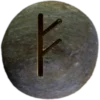
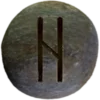
The rune Fehu (ᚠ), pronounced “fay-hoo,” aligns closely with Hreiðmarr because it represents wealth, possession, and the responsibilities tied to managing valuable resources within a Community. This rune reflects his central role as the keeper of treasure, highlighting both the benefits and the risks associated with ownership. Another rune, Hagalaz (ᚺ), pronounced “hah-gah-lahz,” connects with his story through its association with disruption and the sudden breakdown of established order.
Fehu (ᚠ) emphasizes the importance of balance when handling wealth, showing how possession can create both stability and tension depending on how it is managed. Hagalaz (ᚺ) captures the moment when Hreiðmarr’s authority collapses under the weight of internal conflict and external influence. Together, these runes mirror the forces that shape his fate and define his role within the narrative.
The Meaning of Hreiðmarr to Asatruar
Hreiðmarr holds importance for Asatruar because his story illustrates the complexities of leadership, responsibility, and the challenges that arise when wealth influences relationships. His actions demonstrate how decisions made in pursuit of control can lead to unintended consequences that affect both individuals and families. People who follow these traditions often view Hreiðmarr as a reminder to approach authority with awareness and balance.
His narrative also emphasizes the need to consider how resources are shared and managed, since unequal distribution can create tension that undermines unity. Hreiðmarr encourages reflection on the responsibilities that accompany leadership, highlighting the importance of fairness and foresight. His story continues to provide insight into the relationship between power, wealth, and consequence.