
Last Updated on May 24, 2026
Table of Contents
The Origins and Meaning of Ynglingatal
Ynglingatal, pronounced “ING ling ah tal,” stands among the oldest surviving royal poems from the Norse world, and scholars often describe it as an important bridge between mythology, genealogy, and early Scandinavian history. The name translates roughly as “The Tale of the Ynglings,” while alternate spellings include Ynglinga-tal and Ynglingatali in certain historical discussions. Icelandic pronunciation gives extra emphasis to the first syllable, and readers unfamiliar with Old Norse often pronounce the final portion as “tahl.”
The poem traces the ancestry of the Yngling dynasty, a legendary royal line connected to Swedish kings who claimed descent from divine figures associated with Norse mythology. Tradition credits the skald Þjóðólfr, pronounced “THYOH tholf,” from Hvinir with composing the work during the ninth century for King Ragnvald Heidumhaeri. The letter Þ, called thorn, sounds like the “th” in the English word “thing,” while the Icelandic letter ð, called eth, sounds softer, similar to the “th” in “this.”
Ynglingatal survives through later medieval writings rather than original manuscripts from the Viking Age itself, which means historians rely heavily on copied versions preserved in Icelandic literary collections. The poem combines brief descriptions of rulers with unusual accounts of their deaths, creating a dramatic narrative that reflects both heroic ideals and the fragile nature of earthly authority. Several kings perish through drowning, illness, betrayal, or supernatural circumstances, which gives the work a somber but memorable tone.
Royal Lineage and Mythological Connections
The Ynglings traced their ancestry to the god Freyr, who belonged to the Vanir group of deities connected with fertility, prosperity, and sacred kingship. By linking royal bloodlines to divine origins, the poem strengthened political legitimacy and reinforced the belief that successful rulers carried sacred favor within their family heritage. Norse poets often used genealogy in this way because oral culture valued memory, ancestry, and the preservation of heroic identity across generations.
Ynglingatal also preserves details about burial traditions, geographic locations, and royal customs from early Scandinavia, although historians debate how much of the poem reflects actual history rather than symbolic storytelling. The work references regions within Sweden and Norway, and many passages suggest that royal burial mounds served as visible reminders of dynastic continuity. Ancient audiences likely understood these references immediately because the locations carried cultural importance within their communities.
The poem strongly influenced later medieval literature, especially Heimskringla by Snorri Sturluson, pronounced “SNOR ree STURL oo son,” who used Ynglingatal as a foundation for his narrative about early Scandinavian kings. Snorri quoted portions of the poem because he viewed skaldic verse as a reliable historical source that preserved ancient traditions with remarkable precision. Although modern scholars question some details, many still consider the poem invaluable for understanding how medieval Scandinavians viewed kingship and ancestral memory.
Ynglingatal in Sagas and Literary Tradition
Ynglingatal appears most prominently within Ynglinga Saga, which forms the opening section of Heimskringla, a celebrated collection of Norwegian kings’ sagas written during the thirteenth century. Snorri expanded the brief poetic references into longer prose narratives that explained the actions, personalities, and deaths of the rulers mentioned within the original poem. This adaptation allowed medieval readers to engage with ancient traditions through a more detailed storytelling style.
The poem also connects indirectly with broader themes found in the Poetic Edda and Prose Edda, although those collections do not preserve the complete text itself. Both Eddic traditions explore divine ancestry, heroic destiny, and the relationship between gods and rulers, which closely aligns with the themes expressed throughout Ynglingatal. These connections help modern readers place the poem within the wider intellectual and mythological culture of medieval Scandinavia.
Modern scholars value Ynglingatal because it preserves an early example of Skaldic Poetry, a highly structured literary form that depended on dense imagery, complex metaphors, and careful memorization. The poem demonstrates how Norse poets transformed genealogy into artistic expression while reinforcing political identity and communal memory through performance. Its survival across centuries reflects the enduring fascination surrounding legendary kings and the sacred origins attached to Scandinavian rulership.
Runes Associated with Ynglingatal
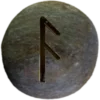
Ansuz (ᚨ), pronounced “AHN sooz,” carries strong associations with wisdom, speech, and divine communication within the Elder Futhark rune system. Scholars frequently connect Ansuz (ᚨ) with poetic inspiration because Skalds relied upon eloquence, memory, and verbal mastery while performing royal genealogies such as Ynglingatal before noble audiences. The rune therefore represents the spoken power that preserved ancestral history across generations in Norse society.
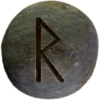
Raido (ᚱ), pronounced “RYE though,” symbolizes travel, movement, and ceremonial progression, making it relevant to Ynglingatal and its descriptions of dynastic succession through different regions of Scandinavia. The poem constantly moves from one ruler to another while tracing a symbolic journey through sacred kingship and inherited authority. Many historians also connect Raido (ᚱ) with ritual order because royal processions, funerary rites, and journeys between kingdoms shaped the political world reflected within the poem.
The Importance of Ynglingatal to Asatruar
Many Asatruar view Ynglingatal as an important cultural source because it preserves early Scandinavian ideas about ancestry, sacred kingship, and the relationship between humanity and the divine world. The poem offers insight into how Norse communities understood memory, honor, and inherited responsibility during the Viking Age and earlier Germanic periods. Readers often appreciate the work because it reflects values centered upon reputation, courage, and loyalty to family lineage.
Ynglingatal also provides modern practitioners with a literary connection to pre Christian Nordic tradition through its use of skaldic poetry and mythological ancestry. Its references to Freyr and legendary rulers help illustrate how religion, governance, and storytelling operated together within early Scandinavian culture. Many people studying Norse spirituality therefore regard the poem as a valuable historical and mythological document that preserves important elements of ancient northern identity.