Last Updated on June 15, 2026
Table of Contents
The Story and Symbolism of Heiðrún
Heiðrún holds a unique place in Norse mythology as a remarkable goat that stands upon the roof of Valhalla and feeds from the branches of the great tree called Læraðr. The name Heiðrún sounds roughly like HAYTH roon, where the Icelandic letter ð carries a soft th sound similar to the word this, and the accented ú sounds like the oo in food. Writers also use alternate spellings such as Heidrun and Heidrun when special characters remain unavailable, although Heiðrún reflects the traditional Old Norse form.
The goat produces an endless supply of nourishing mead from her udders, and the drink fills a large vessel that satisfies the warriors who gather inside Valhalla. This extraordinary gift reflects the importance of hospitality, abundance, and renewal within Norse storytelling while presenting an image of constant provision rather than scarcity. Readers often remember Heiðrún because the legend transforms an ordinary farm animal into a creature with immense mythical significance.
Some modern descriptions connect Heiðrún directly with Ragnarök because the goat lives within the divine world that eventually faces the final conflict. The spelling Ragnarök contains the letter ö, pronounced somewhat like the vowel in bird with rounded lips, while English sources also use Ragnarok as a simplified form. Surviving accounts do not describe Heiðrún as an active participant in the great battle, yet the goat remains part of the mythological landscape surrounding those events.
Pronunciation, Literary Sources, and Mythic Role
The pronunciation of Læraðr also deserves attention because the ligature æ resembles the vowel sound in cat, while the letter ð again carries the soft th sound heard in this. Speakers may approximate the name as LAIR ahthr, although exact historical pronunciation remains difficult to reconstruct with certainty. These linguistic details help readers approach Old Norse words with greater confidence while respecting their distinctive forms.
Heiðrú appears in the Prose Edda, where the narrative explains that the goat feeds upon the leaves of Læraðr and produces enough mead to satisfy the fallen warriors gathered within Valhalla. The description remains concise, yet it offers one of the clearest examples of miraculous abundance within surviving Norse literature. Medieval writers therefore preserved an image that continues to inspire scholars, artists, and enthusiasts across many generations.
The story also invites symbolic interpretation because the goat transforms simple nourishment into an inexhaustible reward for heroic deeds. Ancient audiences likely recognized livestock as valuable resources, making the miraculous qualities of Heiðrún even more striking within everyday agricultural experience. The tale therefore combines familiar imagery with extraordinary results that reinforce the magical nature of the divine realm.
Legacy and Continuing Interest
Modern readers frequently encounter Heiðrún through books, illustrations, games, and discussions devoted to Norse mythology. Artists often depict the goat standing proudly above Valhalla while streams of mead flow into waiting containers below, creating memorable visual representations that emphasize generosity and supernatural power. Such portrayals keep the ancient figure alive within popular culture while encouraging renewed interest in medieval Scandinavian literature.
The enduring appeal of Heiðrún also reflects the universal attraction of stories that promise endless sustenance and shared celebration. Communities across history valued food and drink as foundations of survival, fellowship, and ritual, making the image of an ever giving goat especially meaningful. The legend therefore reaches beyond entertainment and illustrates hopes for prosperity, unity, and dependable provision.
Scholars continue to examine the connections between Heiðrún, sacred animals, and symbolic feasting throughout the wider body of Norse tradition. Although the available descriptions remain brief, they provide enough detail to support thoughtful interpretation without diminishing the mystery surrounding the creature. Heiðrún therefore remains one of the most recognizable mythical animals associated with Valhalla and its legendary abundance.
Elder Futhark Runes Commonly Associated with Heiðrún
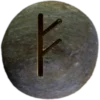
Modern symbolic interpretations often connect Fehu (ᚠ) and Jēra (ᛃ) with Heiðrún, even though historical sources never establish a direct relationship between the goat and specific Elder Futhark runes. Fehu (ᚠ), pronounced FAY hoo, traditionally relates to wealth, livestock, and material prosperity, making it a natural symbolic partner for a miraculous goat that provides endless mead. The association reflects themes of nourishment and valuable resources that ancient communities respected deeply.
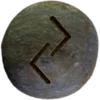
Jēra (ᛃ), pronounced YEH rah, commonly represents harvest cycles, fruitful outcomes, and recurring abundance within rune studies. Students sometimes link it with Heiðrún because the goat continually renews the supply of drink without visible exhaustion or decline. These pairings remain interpretive rather than historical, yet they encourage reflection upon prosperity, continuity, and generous provision within Norse inspired symbolism.
The Importance of Heiðrún to Asatruar
Many Asatruar appreciate Heiðrún as a symbol of generosity, hospitality, and enduring abundance within the mythological tradition they honor. The goat reminds practitioners that shared meals and communal celebration strengthen relationships while reflecting values found throughout many Norse stories. This interpretation encourages gratitude for available resources and respect for the connections that unite families and communities.
Some Asatruar also view Heiðrún as an example of nature transformed through sacred meaning, where an everyday animal gains extraordinary purpose within divine settings. The legend supports contemplation about renewal, provision, and responsible stewardship without requiring elaborate theological conclusions. Interest in Heiðrún therefore centers upon symbolic richness and cultural heritage rather than exclusive ritual focus or constant devotional attention.