Last Updated on April 25, 2026
Table of Contents
The Primordial Role of Auðhumla in Creation
Auðhumla pronounced OYTH-hoom-lah stands as one of the earliest beings in Norse mythology, embodying nourishment, origin, and the quiet force that sustains life at the beginning of existence. Alternate spellings include Audhumbla and Audhumla, while the letter ð carries a soft th sound similar to the word this. Her name suggests abundance and hornlessness, which reflects both her nurturing role and her peaceful nature within the mythic landscape.
She emerges within Ginnungagap pronounced GIN-noon-gah-gap, the vast and empty void that existed before the formation of the world, where elemental forces from Muspelheim and Niflheim began to interact. As ice melted under the influence of heat, Auðhumla appeared alongside the giant Ymir pronounced EE-meer, marking the beginning of life within the Norse cosmology. Her presence introduces a source of sustenance that allows other beings to survive and develop.
Auðhumla nourishes Ymir by providing four streams of milk, which flow continuously and sustain the giant during the earliest stages of existence. This act establishes her as a foundational figure who supports the growth of life through generosity and stability. Her role emphasizes the importance of nourishment as a driving force behind creation rather than conflict or dominance.
The Emergence of Búri and the Growth of Life
While Auðhumla feeds Ymir, she also sustains herself by licking the salty ice blocks that formed within Ginnungagap, revealing another dimension of her role within the creation process. As she licks the ice, she uncovers the figure of Búri pronounced BOO-ree, the first of the gods, whose emergence marks a significant turning point in the mythological narrative. This action demonstrates how her simple behavior leads directly to the development of divine lineage.
Over the course of three days, Auðhumla gradually reveals Búri’s form, beginning with his hair, then his head, and finally his entire body, illustrating a slow and deliberate process of creation. This progression highlights the theme of gradual emergence rather than sudden appearance, reinforcing the idea that life develops through steady and consistent action. Her role in this process connects nourishment with revelation, blending sustenance and creation into a unified concept.
Búri later becomes the ancestor of the gods, leading to the birth of Odin pronounced OH-din and his brothers, who shape the world from Ymir’s body. Through this chain of events, Auðhumla indirectly contributes to the formation of the cosmos and the establishment of divine order. Her influence extends far beyond her immediate actions, shaping the entire mythological framework.
Sources and Symbolic Meaning
Auðhumla appears in the Prose Edda pronounced PROH-suh ED-da, where Snorri Sturluson pronounced SNOR-ree STURL-oo-son records her role in the earliest stages of creation with clear and structured detail. This account provides valuable insight into how Norse tradition understood the origins of life and the interplay between elemental forces. Her presence within this text confirms her importance despite her limited narrative scope.
Her symbolism centers on nourishment, patience, and the quiet power that supports growth without seeking recognition or dominance. Auðhumla does not act through conflict or ambition, yet her contributions enable the existence of both giants and gods. This contrast highlights a form of strength that operates through consistency and care rather than force.
Modern interpretations often view Auðhumla as a representation of natural abundance and the sustaining forces that underlie all forms of life. Her story emphasizes the importance of foundational support systems that allow more visible structures to emerge and thrive. She remains a vital figure within Norse mythology and its understanding of creation.
Runes Reflecting the Nature of Auðhumla
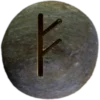
The rune Fehu (ᚠ) pronounced FAY-hoo aligns with Auðhumla through its association with wealth, nourishment, and the resources that sustain life and enable growth. This rune reflects the abundance of milk that she provides, which supports the survival of Ymir and contributes to the continuation of existence. Her role embodies the idea that true wealth lies in the ability to nourish and sustain others.
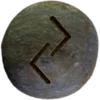
The rune Jēra (ᛃ) pronounced YEH-rah connects with Auðhumla through its link to cycles, harvest, and the steady progression of natural processes that lead to growth and renewal. This rune captures the gradual emergence of Búri as she licks the ice, illustrating how consistent effort produces meaningful results over time. Together, these runes emphasize the connection between nourishment and the cycles that sustain life.
The Importance of Auðhumla to Asatruar
Auðhumla holds deep meaning for Asatruar as a symbol of nourishment, patience, and the foundational support that allows life and Community to flourish. Her role in creation highlights the value of sustaining others and maintaining balance within both natural and social systems. This perspective encourages individuals to recognize the importance of care and consistency.
Many Asatruar also interpret Auðhumla as a reminder that great outcomes often begin with simple and steady actions rather than dramatic displays of power. Her quiet influence demonstrates how essential contributions may remain unseen while still shaping the world in profound ways. She represents the enduring strength found within nurturing and perseverance.