
Last Updated on May 20, 2026
Table of Contents

The Legacy and Meaning of Víga-Glúms Saga
Víga-Glúms Saga, pronounced VEE gah GLOOMS Sah gah, stands among the most respected Icelandic family sagas that emerged during the medieval period. Scholars usually translate the title as The Saga of Viga Glum, although some writers also use the forms Viga Glums Saga, Vigaglums Saga, or Saga of Glúmr the Slayer. The name Glúmr sounds similar to gloomr, while Víga comes from an Old Norse word connected to killing or slaying. Readers often notice the accented letters immediately, and the accented ú carries a long oo sound that stretches the pronunciation naturally.
The saga takes place during Iceland’s settlement era and focuses on the ambitious chieftain Glúmr Eyjólfsson, whose intelligence and stubborn nature shape nearly every conflict in the story. Unlike several heroic sagas that celebrate fearless warriors through grand battles, this narrative pays close attention to legal disputes, social reputation, and family tensions. Characters constantly balance personal honor against Community expectations, which creates a tense atmosphere throughout many chapters. This grounded style gives the work a strong sense of realism that still attracts modern readers interested in Scandinavian history and culture.
Writers preserved Víga-Glúms Saga through handwritten Icelandic manuscripts that survived centuries of political and religious change. The saga likely reached written form during the thirteenth century, although the events described belong to an earlier period. Historians value the text because it reveals details about farming communities, inheritance customs, local assemblies, and spiritual beliefs during Iceland’s formative years. The narrative also contains dream sequences and supernatural suggestions that reflect lingering pagan traditions even after Christianity spread across the island.
Glúmr himself remains one of the most layered figures in the Icelandic saga tradition because he rarely fits the image of a simple hero or villain. He acts with sharp intelligence and strategic patience, yet his pride often damages friendships and weakens political alliances that could have protected his family. Several scenes show him manipulating legal systems and social expectations instead of relying solely on physical strength. Readers frequently remember his complicated personality because it feels strikingly human despite the enormous historical distance separating modern audiences from medieval Iceland.
Oral Tradition, Language, and Cultural Influence
Many literary historians believe oral storytelling shaped the rhythm and structure of Víga-Glúms Saga long before scribes copied the tale onto parchment. Storytellers likely performed sections aloud during gatherings, which explains the saga’s memorable dialogue and carefully paced confrontations. The narrative avoids excessive decoration and instead uses concise descriptions that encourage listeners to imagine emotional tension without lengthy explanation. This restrained style later became one of the defining features of Icelandic saga literature.
The language within the saga reflects Old Norse vocabulary and social values that continue to influence Icelandic identity today. Icelanders can still read medieval texts with greater ease than speakers of most modern European languages because Icelandic changed more gradually over the centuries. Pronouncing Old Norse names sometimes challenges English speakers, especially when encountering letters such as ð and þ. The letter ð sounds similar to the th in this, while þ sounds similar to the th in thing, which helps readers approach the names with greater confidence.
Modern translations introduced Víga-Glúms Saga to audiences far beyond Iceland, and universities frequently include the text in courses covering medieval literature and Nordic history. Students often appreciate the saga because it presents moral uncertainty instead of offering simple lessons about good and evil behavior. The conflicts arise from pride, revenge, loyalty, and social obligation, which remain recognizable motivations even in contemporary society. Film directors and fantasy authors have also drawn inspiration from saga literature because its atmosphere combines harsh landscapes with emotionally intense storytelling.
Interest in the saga increased again during the twentieth century when scholars examined how Icelandic narratives preserved memories of pre Christian Scandinavian beliefs. References to dreams, sacred objects, and spiritual protection suggest that older traditions survived beneath the surface of daily life for many generations. Readers who study Norse religion often connect these details with broader discussions about fate, honor, and divine influence. This continuing fascination ensures that Víga-Glúms Saga remains both a literary achievement and a valuable historical source.
Runes Commonly Connected with Víga-Glúms Saga
The Elder Futhark rune Tiwaz (ᛏ), pronounced TEE wahz, often appears in discussions surrounding Víga-Glúms Saga because it symbolizes justice, leadership, and honorable struggle. Scholars connect Tiwaz (ᛏ) with Týr, the Norse god associated with law and sacrifice, which matches the saga’s constant focus on legal maneuvering and personal duty. Glúmr frequently navigates disputes through careful strategy instead of reckless violence, so many readers view Tiwaz (ᛏ) as a fitting symbolic association.
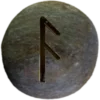
Another rune commonly linked with the saga is Ansuz (ᚨ), pronounced AHN sooz, which represents wisdom, speech, and inspired communication. Much of the narrative depends upon negotiation, persuasive language, and carefully chosen words spoken during assemblies or private confrontations. Characters gain influence through intelligence and reputation rather than through brute force alone, which strengthens the symbolic connection with Ansuz (ᚨ). Modern practitioners of Norse spiritual traditions sometimes meditate on these rune names while reflecting upon the saga’s themes.
Why Víga-Glúms Saga Matters to Asatruar
Many Asatruar value Víga-Glúms Saga because it preserves themes closely connected with pre Christian Nordic ethics and social ideals. The narrative explores honor, kinship, courage, hospitality, and responsibility, which remain central concepts within several modern Heathen and Asatru communities. Readers often study the saga to understand how medieval Icelanders balanced personal ambition with obligations toward family and society. These lessons encourage reflection upon conduct, reputation, and moral accountability within contemporary spiritual practice.
The saga also attracts Asatruar because it contains subtle references to older spiritual beliefs that survived during Iceland’s gradual religious transition. Dreams, omens, and sacred associations appear throughout the story without dramatic explanation, which suggests that supernatural ideas shaped everyday thought naturally. Practitioners interested in reconstructing Norse traditions frequently examine these passages for insight into worldview and cultural attitudes. Víga-Glúms Saga therefore serves not only as literature, but also as a meaningful cultural bridge connecting modern readers with the spiritual imagination of medieval Scandinavia.