Last Updated on June 8, 2026
Table of Contents
The Mystery and Significance of Heimdall’s Nine Mothers
Heimdall’s nine mothers represent one of the most intriguing and mysterious concepts within Norse mythology. The phrase commonly appears as Heimdall’s nine mothers, although readers may also encounter references to the Nine Mothers of Heimdall, Heimdallr’s Nine Mothers, or the Old Norse form Heimdallr, pronounced HAYM dahlr. The name Heimdall is usually pronounced HAYM dahl. Ancient sources present the remarkable claim that the watchman god Heimdall came into existence through the influence of nine mothers rather than a single parent.
This unusual origin immediately distinguishes Heimdall from many other figures in Norse mythology. The idea of nine mothers suggests a symbolic birth connected with powerful natural forces, ancient wisdom, and cosmic relationships. Scholars have debated the meaning of this tradition for many years because surviving sources provide only limited details. Despite those uncertainties, the image of nine maternal figures working together remains one of the most memorable elements associated with Heimdall.
Several medieval texts identify these mothers as sisters. Their names often appear as Gjálp, pronounced GYAULP, Greip, pronounced GRAPE, Eistla, pronounced EYST lah, Eyrgjafa, pronounced AYR yah vah, Ulfrún, pronounced OOLF roon, Angeyja, pronounced AHN gay yah, Imðr, pronounced IM thur, Atla, pronounced AHT lah, and Járnsaxa, pronounced YAHRN sahk sah. The name Imðr contains the Icelandic letter ð, called eth, which is usually pronounced like the voiced th sound in the English word “this.”
Many interpretations connect these nine women with ocean waves. According to this view, Heimdall emerged from the sea through the combined power of nine wave maidens. Such symbolism aligns with Heimdall’s association with boundaries, watchfulness, and connections between different realms. The sea itself forms a natural boundary, making this interpretation attractive to many researchers who study Norse mythology.
Heimdall’s Nine Mothers in Ancient Sources
The primary references to Heimdall’s nine mothers appear within Old Norse literary sources. The Poetic Edda preserves important passages that describe Heimdall as the son of nine mothers. These references remain brief, yet they provide enough information to establish the tradition firmly within the mythological record.
The Prose Edda also contributes information concerning Heimdall and his unusual ancestry. Medieval authors recorded fragments of older traditions that had already existed for generations before they committed them to writing. Those preserved references allow modern readers to glimpse a myth whose complete form may have contained far more detail than the surviving texts reveal.
Because the surviving material remains fragmentary, scholars continue to propose different explanations. Some view the nine mothers as giantesses associated with primal forces of nature. Others interpret them as personifications of ocean waves, while some suggest that the number nine itself carries symbolic importance connected with completeness and cosmic order.
The recurring appearance of the number nine throughout Norse mythology supports these interpretations. Numerous myths employ the number in ways that suggest spiritual significance, ritual importance, or cosmic structure. Heimdall’s birth through nine mothers therefore fits comfortably within broader mythological patterns that emphasize sacred numerical symbolism.
Symbolism and Lasting Influence
Heimdall’s nine mothers occupy an important place in discussions of Norse cosmology because they connect divine ancestry with natural forces. Their collective role challenges ordinary expectations regarding parentage and encourages symbolic interpretations. Rather than emphasizing individual identity, the tradition highlights cooperation among multiple powerful beings who contribute to the creation of an important god.
The connection between Heimdall and these nine maternal figures may also reflect themes of protection and vigilance. Heimdall serves as the guardian of the gods and watches carefully for approaching danger. His extraordinary origins suggest that exceptional guardianship requires equally extraordinary beginnings rooted in ancient and powerful forces.
The names of the mothers themselves contribute additional layers of meaning. Several names possess associations with strength, motion, protection, or natural power. Although scholars debate specific interpretations, the collection of names reinforces the impression that Heimdall’s ancestry draws upon forces larger than any single individual.
Interest in Heimdall’s nine mothers continues because the tradition combines mystery, symbolism, and mythological depth. Their story invites exploration of ancient ideas concerning creation, nature, and divine relationships. Even with limited surviving details, Heimdall’s nine mothers remain among the most fascinating and frequently discussed figures connected with Norse mythology.
Associated Elder Futhark Runes
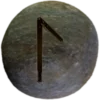
Two Elder Futhark runes commonly associated with Heimdall’s nine mothers are Laguz (ᛚ) and Berkanan (ᛒ). Laguz (ᛚ) is usually pronounced LAH gooz. This rune carries strong associations with water, intuition, movement, and the flowing forces of nature. Since many interpretations connect Heimdall’s nine mothers with ocean waves, Laguz (ᛚ) provides a meaningful symbolic link to their collective identity and creative power.
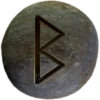
Berkanan (ᛒ) is commonly pronounced BAIR kah nan. This rune represents birth, nurturing, growth, protection, and maternal influence. The image of nine mothers bringing forth an important divine figure aligns closely with the nurturing symbolism associated with Berkanan (ᛒ). The rune emphasizes creation and development through supportive forces working together.
Together, Laguz (ᛚ) and Berkanan (ᛒ) symbolize the union of natural power and maternal creation. These themes reflect many interpretations of Heimdall’s nine mothers and their remarkable role within Norse mythology.
The Importance of Heimdall’s Nine Mothers to Asatruar
Many Asatruar regard Heimdall’s nine mothers as meaningful examples of the interconnected relationships that appear throughout Norse mythology. Their story highlights cooperation among powerful beings and demonstrates how significant outcomes can emerge through collective effort rather than individual action alone.
The association between the nine mothers and natural forces also appeals to those who value the close relationship between mythology and the natural world. Interpretations that connect the mothers with ocean waves emphasize themes of creation, renewal, and the enduring strength of nature. These ideas encourage reflection on the relationship between divine powers and the environment.
Heimdall’s nine mothers also illustrate the importance of mystery within mythological traditions. Their story preserves questions that remain open to interpretation while continuing to inspire study and discussion. For many Asatruar, these figures represent wisdom, creation, and the powerful connections that unite gods, nature, and cosmic order.