Last Updated on June 28, 2026
Table of Contents
Forn Siðr: The Historical Name for the Old Norse Religion After the Arrival of Christianity
The ancient Scandinavian people never used a single universal name for their traditional religion before Christianity spread throughout the Nordic world. Modern readers often expect an organized faith with a formal title, yet Viking Age religion centered on customs, family traditions, sacrifices, and community practices instead of a unified institution. After Christian ideas entered Scandinavia, writers needed language that distinguished older beliefs from the new religion, and they increasingly referred to the traditional faith as Forn Siðr, with the common alternate spellings Forn Sidr, Forn Sidh, and Forn Siður. Pronounce Forn Siðr as “forn SEETHR,” where the Icelandic letter ð sounds like the “th” in “this.”
The expression Forn Siðr means “Old Custom” or “Old Way,” which reflected how medieval Scandinavians viewed their ancestral traditions rather than a separate religion with rigid boundaries. The word siðr referred to custom, habit, accepted behavior, and inherited social practice, making the phrase describe a way of living as much as a spiritual tradition. Pronounce siðr as “SEETHR,” remembering that the letter ð represents the voiced “th” sound instead of a hard “d.”
People living during the Viking Age focused their religious lives on maintaining relationships with gods, ancestors, local spirits, and their surrounding communities through feasts, sacrifices, seasonal celebrations, and sworn oaths. Each district preserved local traditions while still recognizing many of the same gods, which created a religious culture that shared broad ideas without requiring complete uniformity. Families passed these customs from one generation to another, allowing traditions to adapt naturally while preserving familiar practices.
Christian missionaries, kings, and chroniclers gradually introduced a different religious framework that encouraged clearer distinctions between old beliefs and Christian worship. Writers therefore described earlier practices as the old custom because the expression emphasized continuity with inherited traditions instead of presenting the beliefs as a newly identified religion. This distinction reflected the language of a changing society that now compared two different systems of belief.
Language, Identity, and Historical Meaning
The phrase Forn Siðr appeared within medieval Scandinavian literature after Christianity had become established, allowing authors to describe the beliefs that existed before conversion. The expression did not function as the official name of a centralized religion because no religious authority governed every Scandinavian community. Instead, the phrase summarized a collection of ancient customs that people recognized as belonging to their ancestors.
Historical sources also use related expressions that communicate similar meanings, including the idea of following ancient customs or maintaining the practices of earlier generations. These descriptions emphasize tradition instead of doctrine, reflecting a culture where rituals, hospitality, law, and seasonal ceremonies connected closely with religious life. Such wording helps modern readers understand that religion and everyday society remained deeply intertwined throughout the Viking Age.
The gods associated with these traditions included Odin, Thor, Freyr, Freyja, Týr, Frigg, Heimdall, and many others whose worship varied according to region and local preference. Communities honored these deities through sacrifices known as blóts, shared ceremonial meals, and festivals that marked important moments within the agricultural calendar. Pronounce blót as “bloht,” where the long vowel sounds similar to the word “boat” without the final glide.
Archaeological discoveries support this picture by revealing ceremonial halls, cult buildings, amulets, graves, and offerings that illustrate a religious culture rooted in daily life instead of centralized administration. Written evidence complements these discoveries, although many surviving texts originated after Christianization and therefore describe earlier beliefs through a later historical perspective. Scholars compare literary evidence with archaeology to build a fuller understanding of the old customs.
References Within Old Norse Literature
The phrase Forn Siðr itself does not appear as the formal title of an organized religion throughout the mythological poems of the Poetic Edda. However, the Poetic Edda and the Prose Edda preserve many myths involving Odin, Thor, Loki, Freyja, Baldr, and other divine figures whose stories formed an important part of the broader religious tradition later described as Forn Siðr. Several Icelandic Sagas also contrast Christian practices with the old customs, illustrating how medieval authors understood the transition between the two religious worlds while recording memories of earlier traditions.
Elder Futhark Runes Connected with the Old Custom
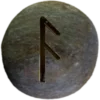
Ansuz (ᚨ), pronounced “AHN sooz,” often represents divine communication, wisdom, inspired speech, and sacred knowledge within modern interpretations of the Elder Futhark. Many scholars connect the rune with Odin because of his role as a seeker of wisdom, poetry, and hidden understanding. Although surviving historical evidence rarely assigns fixed symbolic meanings to individual runes, later traditions consistently associate Ansuz (ᚨ) with inspired communication and intellectual insight.
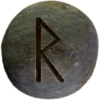
Raido (ᚱ), pronounced “RYE though,” commonly symbolizes journeys, purposeful movement, right order, and the proper path through life. The concept harmonizes well with the old customs because religious practice depended upon correct participation in seasonal festivals, communal gatherings, and sacred obligations rather than acceptance of written doctrine. Together, Ansuz (ᚨ) and Raido (ᚱ) reflect wisdom and tradition, qualities that many people associate with the inherited customs later described as Forn Siðr.
The Continuing Importance of Forn Siðr
Forn Siðr remains important because it provides historians, linguists, archaeologists, and modern practitioners with a historically grounded description for the ancestral customs that shaped pre Christian Scandinavian society. The phrase reminds readers that Viking Age religion developed through living traditions instead of formal institutions, allowing communities to preserve local identities while sharing many cultural values.
Some modern followers choose the name Asatruar for themselves, yet the historical expression Forn Siðr continues to emphasize the older understanding of inherited customs rather than a centralized religious system. This distinction encourages careful reading of medieval sources while reducing confusion between historical terminology and modern religious movements. Understanding the phrase also strengthens appreciation for Norse mythology because myths, rituals, social customs, and seasonal celebrations formed interconnected parts of one cultural tradition rather than isolated elements of separate beliefs.