
Last Updated on May 19, 2026
Table of Contents
The Meaning and Legacy of Húsdrápa
Húsdrápa, pronounced “HOOS drau pa,” stands among the most admired skaldic poems connected with Norse mythology and medieval Icelandic culture. Scholars often write the name as Husdrapa or Húsdræpa, while some older English texts simplify the spelling to Husdrapa for readers unfamiliar with Icelandic characters. The Icelandic letter “ú” sounds similar to “oo” in “food,” while the letter “á” carries a long “ow” sound similar to “cow.” The term itself translates roughly as “House Lay” or “Poem of the House,” because the verses describe mythological scenes painted or carved inside a wealthy chieftain’s hall.
The poet Úlfr Uggason, pronounced “OOLV OOG ga son,” composed Húsdrápa during the late tenth century in Iceland. He created the poem to honor a powerful Icelandic leader named Óláfr pái Höskuldsson, whose name sounds like “OH laufr pie HERS koolds son.” The poem celebrated a grand feast held at Óláfr’s estate and described decorated wall panels that displayed famous scenes from Norse mythology. This connection between visual art and poetry made Húsdrápa unusual even among highly creative skaldic works from medieval Scandinavia.
Only fragments of Húsdrápa survive today, yet those surviving portions provide valuable insight into Viking Age storytelling and artistic culture. The poem describes the god Thor fishing for the Midgard Serpent, the funeral of the god Baldr, and a fierce contest between Heimdall and Loki over the necklace Brísingamen, pronounced “BREE sing ah men.” These mythological scenes revealed ideals of bravery, honor, rivalry, and fate that shaped Norse religious thought during the Viking Age.
Poetic Style and Mythological Themes
Húsdrápa belongs to the skaldic tradition, a demanding poetic form that relied upon strict meter, layered symbolism, and intricate verbal patterns. Skaldic poets often used kennings, which acted as compact metaphorical phrases that replaced ordinary nouns with vivid imagery. A poet might describe the sea as the “whale road” or refer to blood as the “battle rain,” creating language that rewarded attentive listeners during feasts and gatherings.
The surviving sections concerning Thor remain especially important because they portray the thunder god during his dangerous attempt to catch the Midgard Serpent. Thor rows into deep waters with the giant Hymir and uses an ox head as bait while seeking the monstrous serpent that circles the world. The scene captures tension, physical strength, and cosmic danger, while emphasizing Thor’s role as a defender of gods and humanity against destructive forces.
Another surviving section recounts the funeral of Baldr, one of the most tragic stories in Norse mythology. The gods carry Baldr’s body onto a magnificent ship before setting the vessel ablaze during a ceremonial funeral rite. Rich imagery within the poem highlights grief, ritual dignity, and the emotional weight carried by the gods after Baldr’s death, which later traditions connected with the coming destruction of Ragnarök.
The contest between Heimdall and Loki also receives attention within Húsdrápa, although only brief fragments survive from that episode. The two rivals struggle over the necklace Brísingamen, a treasured object associated with the goddess Freyja and themes of beauty, desire, and status. Medieval audiences likely understood many symbolic details that modern readers can only partially reconstruct from the surviving lines.
Connections to the Eddas and Icelandic Tradition
Writers preserved portions of Húsdrápa inside the Prose Edda composed by Snorri Sturluson, pronounced “SNOR ree STURLু son,” during the thirteenth century. Snorri quoted the poem because he considered it an important source for understanding ancient mythological traditions and skaldic poetic techniques. Without those quotations, the entire work would likely have disappeared from historical memory.
The Prose Edda uses Húsdrápa to support descriptions of several mythological events, especially the fishing expedition involving Thor and the Midgard Serpent. Scholars value these references because they preserve older traditions that may predate many later written accounts of Norse mythology. The poem therefore serves both as literature and as historical evidence for religious storytelling in medieval Iceland.
Modern readers admire Húsdrápa because it combines artistic description, mythology, and courtly praise into a single poetic composition. The poem reveals how Viking Age elites celebrated cultural sophistication through architecture, storytelling, and skilled verbal performance during important social gatherings. Although only fragments remain, Húsdrápa continues to influence modern interpretations of Norse mythology and the literary culture of medieval Scandinavia.
Runes Associated with Húsdrápa
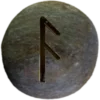
The rune Ansuz (ᚨ), pronounced “AHN sooz,” connects strongly with Húsdrápa because the poem depends upon eloquence, poetic inspiration, and sacred communication. Elder Futhark traditions often associated Ansuz (ᚨ) with wisdom, speech, and divine knowledge linked to Odin and skilled poets. Since Skaldic Poetry required exceptional memory and verbal mastery, Ansuz (ᚨ) represents the intellectual and artistic discipline reflected throughout the surviving verses of Húsdrápa.
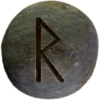
The rune Raido (ᚱ), pronounced “RYE though,” also relates closely to themes found within Húsdrápa because several scenes involve journeys, ritual movement, and cosmic travel. Thor travels across dangerous waters during his confrontation with the Midgard Serpent, while Baldr’s funeral ship carries the dead god toward his final destination. Raido (ᚱ) traditionally symbolized ordered movement, purposeful travel, and ceremonial progression, making it a fitting symbolic companion for a poem filled with motion, ritual events, and mythological transitions.
Importance of Húsdrápa to Asatruar
Many modern Asatruar value Húsdrápa because the poem preserves vivid portrayals of important gods and mythological events from pre Christian Scandinavian tradition. The surviving fragments provide insight into how medieval Icelanders understood Thor, Baldr, Heimdall, Loki, and the larger cosmic struggles described within Norse mythology. Readers often appreciate the poem for its emotional intensity, strong visual imagery, and complex poetic craftsmanship.
Húsdrápa also offers Asatruar a cultural connection to historical forms of storytelling, artistic patronage, and ceremonial gathering within Viking Age society. The poem demonstrates how mythology existed within everyday social spaces such as feasting halls, where guests experienced stories through spoken performance and visual decoration. This combination of poetry, communal memory, and artistic expression continues to inspire people interested in preserving and studying traditional Norse cultural heritage.