
Last Updated on April 25, 2026
Table of Contents

The Legend and Transformation of Fafnir
Fafnir, also recorded as Fáfnir pronounced FAHV-neer and Fafner pronounced FAHF-ner, stands among the most infamous figures in Norse mythology, representing greed, transformation, and destructive obsession. Early traditions describe him as the son of the dwarf Hreiðmarr pronounced HRAYTH-mar, whose family guarded great wealth that ultimately became the source of tragedy. His story illustrates how desire for power and treasure can corrupt even those who begin with noble or ordinary origins.
Fafnir’s tale begins with the cursed gold of Andvari pronounced AHND-vah-ree, a dwarf whose treasure carried a powerful and destructive curse after Loki seized it under duress. When Hreiðmarr received this hoard as compensation, Fafnir and his brother Reginn pronounced REG-inn became consumed by its allure and plotted to claim it for themselves. He murdered his own father to seize the treasure, revealing how greed quickly overpowered loyalty and kinship.
After claiming the hoard, Fafnir withdrew into isolation and transformed into a dragon, a change that symbolized both his inner corruption and his desire to guard the treasure without interference. His monstrous form reflected his complete surrender to greed, since he no longer lived among others and instead devoted his existence to hoarding wealth. This transformation remains one of the most striking examples within Norse mythology of physical change driven by moral decay.
The Dragon’s Hoard and Heroic Confrontation
Fafnir settled upon Gnitaheiðr pronounced GNEE-tah-hayth-r, where he guarded his treasure and spread fear across the surrounding lands, preventing any challenger from approaching his domain. His reputation grew as stories described his immense strength, poisonous breath, and relentless vigilance over the cursed gold. These traits made him a nearly unstoppable force, yet they also attracted the attention of heroes seeking glory and fortune.
Reginn, who survived the earlier betrayal, later guided the hero Sigurðr pronounced SEE-gurdhr toward confronting Fafnir, using both strategy and cunning to overcome the dragon’s overwhelming power. Sigurðr dug a trench along his path and struck from below as the dragon passed overhead, delivering a fatal blow that pierced his underside. This act combined bravery with calculated planning, showing that intelligence often proves as vital as strength within heroic narratives.
As Fafnir lay dying, he warned Sigurðr about the curse attached to the treasure, revealing a moment of awareness that contrasted sharply with his earlier obsession. His final words emphasized the destructive cycle tied to the gold, suggesting that others who claimed it would face similar fates. This warning reinforced the central theme that unchecked greed leads to inevitable ruin.
Sources and Lasting Cultural Influence
Accounts of Fafnir appear in the Poetic Edda pronounced poh-EH-tik ED-da and the Prose Edda pronounced PROH-suh ED-da, where poets recorded his transformation, his hoard, and his confrontation with Sigurðr. The Völsunga Saga pronounced VOL-soong-ah SAH-gah also provides a detailed narrative that expands upon his role within a broader heroic tradition. These sources preserve the complexity of his character and highlight his significance within Norse storytelling.
Fafnir’s story influenced later European literature, including adaptations that shaped dragon myths across many cultures, where treasure-hoarding beasts became central figures in heroic tales. His narrative established a powerful archetype that connects greed with monstrous transformation, reinforcing moral lessons through vivid imagery and dramatic conflict. This legacy continues to shape modern interpretations of dragons within fantasy literature and popular culture.
Writers portray Fafnir not simply as a beast but as a cautionary figure whose choices drive his transformation and ultimate downfall. His tale emphasizes the dangers of obsession and the consequences of valuing wealth above all else. Through this enduring story, he remains a powerful symbol of how inner corruption can manifest in both physical and moral destruction.
Runes Reflecting the Nature of Fafnir
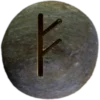
The rune Fehu (ᚠ) pronounced FAY-hoo connects closely with Fafnir because it represents wealth, prosperity, and movable riches, all of which define the treasure that consumed his life. This rune highlights the dual nature of wealth, since it can support growth and stability but also inspire greed and destructive obsession when pursued without restraint. His story demonstrates how the pursuit of riches can transform a guardian into a destroyer.
The rune Hagalaz (ᚺ) pronounced HAH-gah-lahz aligns with Fafnir through its association with disruption, chaos, and sudden transformation that reshapes existing conditions. This rune captures the destructive shift that occurred when he abandoned his former life and embraced a monstrous existence driven by greed. Together, these runes illustrate the tension between prosperity and ruin, which lies at the heart of Fafnir’s enduring narrative.
The Meaning of Fafnir for Asatruar
Fafnir holds significant meaning for Asatruar, who often interpret his story as a warning about the dangers of allowing material desire to dominate one’s values and decisions. His transformation into a dragon reflects a deeper lesson about how internal choices shape external reality over time. This perspective encourages individuals to maintain balance and avoid the destructive influence of unchecked ambition.
Many Asatruar also view Fafnir as a symbol of the consequences that follow betrayal and the breakdown of familial trust, since his actions began with violence against his own kin. His story invites reflection on responsibility, integrity, and the long-term impact of personal decisions. Fafnir serves as a powerful reminder that actions rooted in greed can lead to isolation and eventual downfall.