Last Updated on April 15, 2026
Table of Contents
The Legacy and Edge of Gram
Gram, also written as Gramr or Gramur, carries a name that resonates with strength and sharpness, and people pronounce it as “grahm,” with a broad open vowel and a firm ending that emphasizes clarity. The alternate form Gramr includes the Old Norse nominative ending r, which is pronounced lightly, almost like a soft trailing consonant that fades quickly. This weapon stands as one of the most renowned blades in early northern tradition, known for its unmatched sharpness and its role in defining heroic identity through decisive action.
The sword Gram does not simply serve as a tool for combat, since it represents authority, destiny, and the capacity to act with precision when circumstances demand courage. Stories consistently present this blade as something that requires worthiness, because only a capable and determined individual can wield its full potential without hesitation. Its presence signals a turning point, where challenges meet resolution through deliberate and skillful effort rather than chance or uncertainty.
Descriptions of Gram highlight its exceptional craftsmanship, often portraying it as a weapon that cuts through even the strongest materials with ease and reliability. This quality reinforces its symbolic connection to clarity, where confusion or obstruction gives way under focused intent and decisive movement. It becomes more than a physical object, since it embodies the idea that strength guided by purpose can overcome even the most formidable obstacles.
The Story and Symbolism of Gram
Gram holds a central place in the story of Sigurd, where the hero reforges the shattered blade and uses it to achieve feats that define his reputation and legacy. The act of reforging, pronounced “ree-for-jing,” emphasizes renewal and transformation, where broken elements regain strength through skill and determination. This moment establishes it as a symbol of restoration, showing how something damaged can return with even greater power when shaped by capable hands.
The sword’s most famous achievement involves the slaying of the dragon Fafnir, where Gram cuts through scales that no ordinary weapon can penetrate. This event highlights the blade’s role as an instrument of change, since it allows the hero to confront a powerful and dangerous force directly. The encounter demonstrates how courage, preparation, and the right tools combine to produce outcomes that reshape both personal destiny and the surrounding world.
Gram also represents the bond between weapon and wielder, where effectiveness depends on alignment between intention and action rather than brute strength alone. The sword responds to decisive use, rewarding those who approach challenges with clarity and confidence while offering little to those who hesitate. Through this relationship, it illustrates how mastery arises from understanding both the tool and the moment in which it is used.
Appearances in Early Northern Texts
Gram appears prominently in the Völsunga Saga, where it plays a defining role in the story of Sigurd and his journey toward confronting Fafnir. The saga describes how Sigurd reforges the blade from fragments, then tests its sharpness by slicing through an anvil, which confirms its extraordinary quality. This scene establishes it as a weapon that surpasses ordinary limits, reinforcing its status as a symbol of heroic capability and resolve.
The Poetic Edda also references the deeds of Sigurd and the slaying of Fafnir, where Gram serves as the means through which the hero achieves his victory. These verses emphasize action and consequence, presenting the sword as an extension of the hero’s will rather than a separate entity. The inclusion of Gram in these works ensures that it remains tied closely to narratives of courage, transformation, and decisive confrontation.
It maintains its identity as a blade that defines moments of change, where outcomes hinge on the ability to act with precision and intent. Its presence in these texts reinforces the connection between skill, preparation, and success in the face of formidable challenges. This enduring association secures Gram’s place as a symbol of focused strength and purposeful action.
Runes Associated with Gram
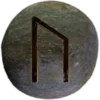
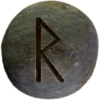
The rune Ūruz (ᚢ), pronounced “oo-rooz,” aligns strongly with Gram because it represents raw strength, vitality, and the force required to overcome resistance through direct action. This rune captures the physical and inner power needed to wield such a weapon effectively, reflecting how strength must combine with control to achieve meaningful results. Another rune, Raido (ᚱ), pronounced “rye-tho,” connects with Gram through its association with journeys, direction, and purposeful movement toward a defined goal.
Ūruz (ᚢ) emphasizes the importance of harnessing energy in a focused manner, ensuring that power does not scatter or lose effectiveness during critical moments. Raido (ᚱ) highlights the idea that every action follows a path, and that success depends on maintaining alignment with that path despite obstacles or uncertainty. Together, these runes mirror the nature of Gram, where strength and direction unite to produce decisive and transformative outcomes.
The Meaning of Gram to Asatruar
Gram holds importance for Asatruar because it represents the union of strength, skill, and intention within the context of facing life’s challenges directly and without hesitation. The sword reflects the idea that individuals must act with clarity and purpose when confronting obstacles, rather than relying on chance or avoidance. People who follow these traditions often view Gram as a symbol of responsibility, where the ability to act carries the obligation to do so wisely and effectively.
This blade also emphasizes transformation, since its story involves destruction, renewal, and eventual triumph through disciplined effort and determination. Gram encourages individuals to refine their abilities and approach each challenge with focus, ensuring that their actions align with their goals and values. Through this perspective, the sword remains relevant as a guiding symbol for navigating conflict, growth, and the pursuit of meaningful achievement.