Last Updated on April 15, 2026
Table of Contents

The Cunning and Curse of Andvari
Andvari, also written as Andvare or Andvarið in some reconstructed forms, carries a name pronounced “ahn-dvah-ree,” where the first syllable opens softly and the second carries a rounded vowel that flows into a clear ending. The name uses straightforward Old Norse sounds, yet its rhythm gives it a fluid quality that reflects the character’s connection to water and hidden places. This figure appears as a dwarf associated with wealth, secrecy, and transformation, and his story centers on the consequences that follow the loss of treasured possessions.
Andvari lives within a secluded environment, often described as a waterfall or pool, where he guards a hoard of gold that he has gathered with care and determination. He does not simply collect wealth for display, since he treats it as an extension of his identity and effort, which deepens his attachment to every piece. This strong connection to his treasure sets the stage for conflict, since it ensures that any attempt to take it will provoke a powerful reaction rooted in both anger and loss.
The figure of Andvari represents more than a keeper of gold, because his actions introduce one of the most influential cursed objects in early northern tradition. His story unfolds through interaction with other figures who seek his wealth, creating a chain of events that extends far beyond his initial loss. He becomes a catalyst, setting forces in motion that continue to shape outcomes long after his direct involvement ends.
The Story and Influence of Andvari
Andvari’s story begins when Loki captures him in his aquatic form, forcing him to surrender the gold he has carefully accumulated over time. This moment highlights the vulnerability that comes with isolation, since his hidden life does not protect him from those who possess greater power or cunning. When he relinquishes his treasure, he does so under pressure, which transforms the act into a moment of loss that carries deep emotional weight.
Before giving up the hoard completely, he places a curse upon a ring known as Andvaranaut, declaring that it will bring misfortune and destruction to anyone who possesses it. The name Andvaranaut is pronounced “ahn-dvah-rah-nowt,” where the final syllable rhymes with “out,” and it carries a strong and memorable sound. This curse ensures that his influence persists, since the ring becomes a source of conflict and tragedy for those who later acquire it.
The consequences of this curse unfold through a chain of events that affect multiple figures, including Fafnir and Sigurd, linking Andvari’s loss to a broader narrative of ambition and downfall. His role therefore extends beyond his immediate story, shaping the direction of events that follow and reinforcing the idea that actions driven by loss can echo across time. Andvari remains present within the unfolding narrative, even after his direct involvement concludes.
Appearances in Early Northern Texts
Andvari appears in both the Poetic Edda and the Prose Edda, where his encounter with Loki and the creation of the cursed ring receive clear attention within the narrative structure. These texts describe his capture and the extraction of his gold, emphasizing the tension between his desire to protect his wealth and his inability to resist Loki’s demands. The inclusion of Andvari in these works ensures that his story forms a foundational part of the larger sequence of events.
The Völsunga Saga also references Andvari’s treasure and the curse attached to it, integrating his role into the broader story of Fafnir and Sigurd. This connection highlights how his actions initiate a chain reaction that influences later developments, linking his personal loss to larger conflicts. The saga presents his contribution as a crucial starting point, establishing the conditions that drive the narrative forward.
Through these appearances, Andvari maintains a lasting presence as the origin of a powerful and destructive force tied to wealth and possession. His story reinforces the idea that the consequences of loss and anger can extend far beyond their initial context. This enduring impact secures his place as a figure whose actions shape the course of events across multiple narratives.
Runes Associated with Andvari
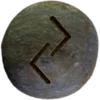
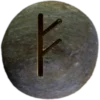
The rune Fehu (ᚠ), pronounced “fay-hoo,” aligns closely with Andvari because it represents wealth, ownership, and the responsibilities that come with managing valuable resources. This rune reflects the central role that gold plays in Andvari’s story, highlighting both its importance and its potential to create conflict. Another rune, Hagalaz (ᚺ), pronounced “hah-gah-lahz,” connects with his narrative through its association with disruption and the breaking apart of established conditions.
Fehu (ᚠ) emphasizes the dual nature of wealth, showing how it can provide security while also creating attachment that leads to vulnerability when threatened. Hagalaz (ᚺ) captures the sudden change that occurs when Andvari loses his treasure and responds with a curse that reshapes future events. Together, these runes mirror the tension between possession and loss that defines Andvari’s experience.
The Meaning of Andvari to Asatruar
Andvari holds importance for Asatruar because his story highlights the consequences of attachment to material wealth and the impact that loss can have on both individuals and communities. His actions demonstrate how strong emotional responses, particularly anger and resentment, can influence outcomes far beyond the initial event. People who follow these traditions often view Andvari as a reminder to approach wealth with balance and awareness.
His story also emphasizes responsibility, since the curse he places on the ring shows how actions taken in moments of distress can shape the future in lasting ways. Andvari encourages reflection on how individuals handle loss and respond to challenges involving possession and control. His narrative continues to provide insight into the relationship between wealth, emotion, and consequence.