Last Updated on April 25, 2026
Table of Contents
The Vast Expanse of Ginnungagap and Its Foundational Presence
Ginnungagap, sometimes written as Ginnunga-gap or Ginnungagap in simplified modern forms, carries a name from Old Norse pronounced roughly as “GIN-noon-gah-gap,” where the double n creates a drawn nasal sound. This term refers to a great void that exists before formed structure, representing openness, potential, and the space where interaction begins. Rather than remaining empty in a simple sense, this expanse holds the capacity for movement and change through the meeting of opposing forces.
This immense gap stands between regions of fire and ice, creating a meeting place where contrasting energies interact and generate transformation. The presence of Ginnungagap allows these elements to approach one another, creating tension and interaction that leads to development. This role highlights the importance of space itself, showing that creation depends not only on substance but also on the room for forces to meet and engage.
Ginnungagap does not function as a passive background, as it actively enables processes that shape existence through contact and interaction. Its openness allows movement, while its position between extremes fosters dynamic exchange. It represents a foundational condition that supports transformation and emergence.
Mentions in Early Texts and Narrative Context
The Prose Edda describes Ginnungagap as a central expanse that separates regions of intense heat and deep cold, establishing it as a crucial setting for early events. These descriptions explain how sparks from Muspelheim and frost from Niflheim meet within this gap, leading to the formation of new structures. This interaction illustrates how it functions as a space where change occurs through the meeting of forces.
The Poetic Edda also references Ginnungagap, reinforcing its role as a defining feature in the early structure of existence. These accounts emphasize that the gap provides the environment necessary for transformation, rather than acting as an empty absence. This portrayal highlights the importance of conditions that allow interaction, showing that creation depends on more than individual elements.
The emergence of Ymir within Ginnungagap demonstrates how the meeting of fire and ice leads to the formation of new beings and structures. This event connects the gap directly to the process of development, illustrating its active role in shaping outcomes. Through these narratives, it becomes a symbol of interaction and the conditions that support transformation.
Symbolism and Continuing Meaning
Ginnungagap represents openness and potential, where space allows forces to meet and interact in ways that generate change and development. This symbolism emphasizes that absence of form does not mean absence of significance, as the gap enables processes that lead to structure and growth. By focusing on possibility, it highlights the importance of conditions that support interaction.
The contrast between fire and ice within Ginnungagap reflects the role of balance and tension in shaping outcomes, showing that interaction between different forces produces meaningful results. This perspective encourages an understanding of development as a product of engagement rather than isolation. It represents dynamic possibility.
Modern interpretations continue to view Ginnungagap as a symbol of potential and transformation, often linking it to the idea of beginnings and the space required for creation to occur. Its image resonates with those who seek to understand how interaction leads to change and development. By maintaining its identity as a vast and active expanse, Ginnungagap remains a powerful representation of possibility and emergence.
Runes Reflecting Potential and Formation
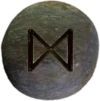
The rune Dagaz (ᛞ), pronounced “DAH-gahz,” connects strongly with Ginnungagap through its association with transformation, breakthrough, and the transition from one state to another. This rune reflects the moment when interaction within the gap leads to new forms and developments, aligning with the idea of emergence through contact. Its meaning emphasizes clarity and the realization of potential through change.
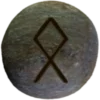
Another rune, Othila (ᛟ), pronounced “OH-thah-lah,” represents inheritance, foundation, and the establishment of structure, linking it to the outcomes that arise from the processes within Ginnungagap. This rune highlights the formation of stable systems that develop from initial interaction and transformation. Together, Dagaz (ᛞ) and Othila (ᛟ) illustrate how Ginnungagap supports both the moment of change and the establishment of lasting form.
Importance of Ginnungagap Within Asatruar Practice
Within modern Heathen traditions, Ginnungagap holds importance as a symbol of potential, openness, and the conditions that allow transformation to occur. It represents the idea that creation requires space for interaction, encouraging individuals to recognize the value of openness in their own lives. This perspective supports a thoughtful approach to growth and development.
Practitioners often view Ginnungagap as a reminder that change emerges from the meeting of different forces, emphasizing the importance of balance and engagement. Its symbolism encourages awareness of how contrasting elements contribute to meaningful outcomes, fostering a deeper understanding of interaction. This connection highlights the role of dynamic processes in shaping experience.
Ginnungagap also symbolizes beginnings, illustrating how potential becomes reality through movement and contact. This idea reinforces the importance of embracing possibility and allowing space for development to unfold. Through these meanings, Ginnungagap remains a significant and influential symbol within contemporary spiritual practice.