Last Updated on April 18, 2026
Table of Contents
Ætt in Asatru Structure and Meaning
Ætt holds a central place within Asatru, as it represents lineage, family connection, and structured grouping that links individuals to ancestry and shared identity across generations. People pronounce Ætt as AYT, where the ligature Æ produces a vowel sound similar to the word eye, followed by a crisp t sound that closes the word firmly. This term often appears in discussions of heritage, social organization, and spiritual belonging within Norse inspired traditions.
Asatruar use Ætt to describe both literal family lines and symbolic groupings that reflect shared values, mutual support, and cultural continuity that extends beyond biological relationships. This concept encourages individuals to recognize their place within a larger network of connections, which includes ancestors, living Community members, and future generations. Some sources also use alternative spellings such as aett or ett, though Ætt remains the most accurate representation tied to Old Norse language.
Historical references show that Ætt played an important role in Norse society, where kinship determined social responsibility, legal standing, and support systems that ensured survival in demanding environments. These connections created strong bonds that required loyalty, cooperation, and accountability among members who depended on one another. Modern Asatruar draw from this model to build relationships that reflect both tradition and contemporary needs.
Kinship, Identity, and Social Structure
Ætt shapes identity within Asatru by connecting individuals to a lineage that carries history, reputation, and shared experience across time and circumstance. Members often consider how their actions reflect on their Ætt, which encourages thoughtful decision making and a strong sense of responsibility toward others. This awareness strengthens personal integrity while reinforcing collective identity that supports long term stability.
Old Norse terminology frequently appears when discussing kinship, including the word kyn, pronounced keen, meaning family or lineage, and frændi, pronounced FRINE-dee, meaning relative or kinsman. The letter æ in frændi produces a sound similar to the a in cat, while the accented pronunciation varies slightly depending on regional influence. These linguistic details highlight how language carries cultural meaning that deepens understanding of relationships and social roles.
Social structure within an Ætt often includes defined roles and expectations that guide behavior and interaction, ensuring that each member contributes to the well being of the group. Leadership may emerge through experience and respect rather than rigid hierarchy, which encourages cooperation and shared responsibility. This approach allows flexibility while maintaining clear expectations that support unity and function.
Spiritual Connection and Cultural Continuity
Ætt also carries spiritual significance within Asatru, as it connects individuals to ancestors who influence identity, values, and personal development through memory and tradition. Practitioners often honor these connections through ritual, storytelling, and reflection, which reinforces a sense of continuity that extends beyond the present moment. This relationship encourages respect for those who came before while shaping how individuals approach their own actions.
Some Icelandic terms appear in discussions of ancestry, such as ættir, pronounced EYE-teer, which represents plural forms of lineage or family lines, and includes the ligature Æ that produces an eye like sound. Another term, arfleifð, pronounced ARV-life-th, refers to inheritance or legacy, where the letter ð creates a soft th sound similar to the word this. These words demonstrate how pronunciation and meaning intertwine within cultural expression.
Modern Asatruar often adapt the concept of Ætt to include chosen family and community connections that reflect shared values rather than strict biological ties. This adaptation allows individuals to build meaningful relationships that support growth and stability within contemporary life. Through this approach, it remains a living concept that evolves while preserving its essential role in identity and connection.
Runes Associated with Ætt
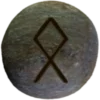
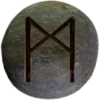
The Elder Futhark rune Othila (ᛟ), pronounced OH-thah-lah, closely relates to Ætt because it represents heritage, inheritance, and ancestral land that connects individuals to their lineage and cultural identity. This rune emphasizes the importance of roots, tradition, and the transmission of values across generations, which aligns directly with the concept of Ætt within Asatru. Another rune, Mannaz (ᛗ), pronounced MAHN-nahz, symbolizes humanity, cooperation, and shared identity among people who form social groups and families.
Othila (ᛟ) highlights the connection to ancestry and inherited responsibility, while Mannaz (ᛗ) focuses on interaction and cooperation within a group that depends on mutual support and understanding. Practitioners often reflect on these runes to strengthen their awareness of lineage and their role within a larger social structure. Together, they represent both origin and connection that define Ætt in practice.
The Importance of Ætt to Asatruar
Ætt holds deep importance for Asatruar because it provides a framework for understanding identity, responsibility, and connection within both family and community contexts that shape daily life. Individuals rely on this concept to guide behavior, maintain relationships, and honor those who contributed to their existence and development. This awareness fosters respect and accountability.
Through Ætt, practitioners maintain continuity with the past while building relationships that support present needs and future growth within a shared cultural framework. This connection encourages thoughtful action and reinforces values such as loyalty, trust, and mutual support that sustain strong communities. Ætt therefore serves as a foundation for living Asatru with purpose and connection.