Last Updated on April 25, 2026
Table of Contents
The Primal Flow of Élivágar and Its Formative Power
Élivágar, sometimes written as Elivagar or Élivagar in simplified forms, carries a name from Old Norse that is pronounced roughly as “AY-lee-vaw-gar,” where the accented É sounds like “ay” in “say.” This term refers to a group of powerful rivers that originate from a deep and ancient source, embodying motion, intensity, and the early shaping of existence. These rivers do not remain calm or gentle, as they surge forward with force and carry elements that influence formation and change.
The streams of Élivágar flow from Hvergelmir, creating a network of movement that spreads outward into surrounding regions and environments. Their waters contain a mixture of cold, mist, and raw energy, which contributes to their transformative qualities. This combination gives them a distinct role as carriers of both substance and force, shaping conditions wherever they travel.
As these rivers extend outward, they interact with surrounding elements, creating tension and interaction that leads to new forms and structures. This dynamic highlights the importance of motion and contact in generating change and development. Élivágar represents the ongoing interaction between forces that shape the world.
Mentions in Early Texts and Narrative Role
The Prose Edda and the Poetic Edda describe Élivágar as a collection of rivers that play a crucial role in early creation narratives. These texts explain how the rivers carry venomous and icy substances that harden as they move farther from their source. This transformation contributes to the formation of structures and beings, linking the rivers directly to the process of development.
These accounts emphasize the active nature of Élivágar, showing that their flow drives change rather than remaining a passive feature of the landscape. Their movement creates conditions that allow new forms to emerge, illustrating the connection between motion and creation. This portrayal reinforces the idea that energy and interaction shape existence in meaningful ways.
The rivers also connect to the formation of Ymir, a primordial being whose emergence reflects the interaction between cold and heat in the surrounding environment. This connection highlights the role of Élivágar as a contributing force in significant events, demonstrating how their movement influences larger processes. Through these narratives, the rivers gain importance as active participants in shaping reality.
Symbolism and Enduring Interpretation
Élivágar represents the power of movement and transformation, where flowing energy creates conditions for growth, change, and the emergence of new forms. This symbolism emphasizes that motion drives development, encouraging an understanding of progress as a result of interaction and activity. By focusing on flow, the rivers illustrate how constant movement sustains and shapes existence.
The mixture of elements within Élivágar reflects complexity and balance, showing that creation involves the interaction of different forces rather than a single source. This perspective highlights the importance of diversity and tension in generating meaningful outcomes. The rivers serve as a reminder that transformation often arises from the meeting of contrasting elements.
Modern interpretations continue to view Élivágar as a symbol of raw energy and the processes that drive change, often linking them to ideas of evolution and development. Their enduring image reflects a fascination with forces that shape the world through movement and interaction. By maintaining their identity as powerful and active rivers, Élivágar remains a vivid representation of transformation in motion.
The Eleven Rivers of Élivágar
- Svöl (Svol, Svǫl, Svǫll) – “The Cool One” or “The Cold”. It is associated with the end times, as it is thought to chill the battlefield and emphasize the harsh, unforgiving nature of the final conflict.
- Gunnþrá (Gunnthrá, Gunnthra) – “Battle’s Burden” or “Battle’s Suffering”. Reflecting the violence of war and the burden it brings, this river may relate to battle and struggle.
- Fjörm (Fjorm) – A name that means “Ancient,” Fjörm is the reminder of enduring forces in the universe. It represents wisdom drawn from the past.
- Fimbulþul (Fimbulthul, Fimbulthula) – Associated with the “Great Noise,” this river evokes the overwhelming power of natural forces. It signifies the primal roar of creation.
- Slíðr (Slidr, Slithr) – Known as the “Dangerous” river, Slíðr represents unstoppable currents. It serves as a reminder of how nature can be both destructive and transformative.
- Hríð (Hrid) – “Storm” or “Tempest” symbolizes dark winds and storms. This river represents chaotic and destructive forces, much like a storm in nature.
- Sylgr (Silgr) – “Swallower” or “Devourer” Sylgr represents the forces of consumption. It is a reminder that some changes require letting go of the past.
- Ylgr (Ilgr) – Often translated as “She-Wolf,” Ylgr is a wild, untamable force of nature. It speaks to the untamed and feral energies within life.
- Víð (Við, Vid) – Meaning “Broad” or “Wide,” Víð suggests expansiveness and potential. It symbolizes the boundless possibilities of creation.
- Leiptr (Leipt) – This river’s name means “Lightning,” linking it to sudden changes and revelations. Leiptr serves as a metaphor for quick, unexpected transformations.
- Gjöll (Gjoll, Giall) – Meaning “Roaring,” Gjöll is said to flow near the realm of the dead. This river symbolizes the connection between life and death.
Runes Reflecting Flow and Formation
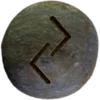
The rune Jēra (ᛃ), pronounced “YEH-rah,” connects closely with Élivágar through its association with cycles, harvest, and the results of ongoing processes. This rune reflects the idea that movement over time leads to growth and completion, aligning with the rivers’ role in shaping conditions that allow development. Its meaning emphasizes the importance of continuity and the gradual unfolding of outcomes.
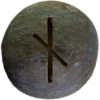
Another rune, Nauthiz (ᚾ), pronounced “NOW-theez,” represents need, tension, and the pressure that drives change, linking it to the intense and forceful nature of Élivágar. This rune highlights how challenges and constraints contribute to transformation, reinforcing the idea that growth often arises from difficulty. Together, Jēra (ᛃ) and Nauthiz (ᚾ) illustrate how Élivágar embodies both steady progression and the tension required for meaningful change.
Importance of Élivágar Within Asatruar Practice
Within modern Heathen traditions, Élivágar holds importance as a symbol of movement, transformation, and the forces that drive change within both the natural world and personal experience. These rivers represent the idea that progress emerges through interaction and activity, encouraging individuals to engage actively with challenges and opportunities. This perspective supports a dynamic approach to growth and development.
Practitioners often view Élivágar as a reminder that tension and difficulty can lead to meaningful transformation when approached with awareness and resilience. Their flow reflects the ongoing nature of change, emphasizing that development occurs through continuous movement rather than isolated events. This understanding encourages adaptability and persistence in navigating life’s complexities.
Élivágar also symbolizes the interconnected nature of processes, showing how individual actions contribute to larger patterns and outcomes. This idea fosters a sense of responsibility and awareness, highlighting the impact of choices on both personal and collective levels. Through these meanings, Élivágar remains a significant and influential symbol within contemporary spiritual practice.