Last Updated on April 14, 2026
Table of Contents
The Devouring Waters of River Sylgr
River Sylgr, also written as Sylg, Sylgur, or Sylgrr, carries a name that conveys swallowing, engulfing force, and relentless consumption within early northern tradition. The name Sylgr can be pronounced as SIL-gur, where “y” sounds like the “i” in “sit,” and the final “gr” forms a firm, slightly rolled ending. This pronunciation reinforces the compact and forceful quality of the word, reflecting a river that consumes rather than simply flows.
Descriptions of River Sylgr emphasize its ability to swallow whatever enters its current, creating an image of water that does not release what it takes. This river does not offer passage in the usual sense, since it absorbs and removes anything that attempts to cross its path. Its presence introduces a sense of finality, where movement toward the river often signals disappearance rather than transition.
The name itself connects with verbs that describe drinking or devouring, which strengthens the impression of a force that actively consumes its surroundings. River Sylgr therefore represents more than a natural feature, because it embodies a process of absorption that erases boundaries and dissolves form. This association gives the river a distinct role within the landscape, marking it as a place of no return.
References in Early Texts
River Sylgr appears in Grímnismál, part of the Poetic Edda, where it stands among a list of rivers that define the structure and movement of the mythic world. In that poem, each river contributes to a network that shapes how realms connect and remain separate at the same time. River Sylgr adds a darker and more consuming aspect to this system, emphasizing loss and absorption rather than passage.
Grímnismál presents these rivers through a sequence that relies on names and associations, allowing each one to convey meaning through its linguistic roots and placement. River Sylgr fits this pattern by introducing a name that suggests swallowing and disappearance, which contrasts with rivers that emphasize flow or division. This contrast enriches the overall structure described in the poem.
The lack of extended narrative detail surrounding River Sylgr allows it to maintain an unsettling presence without requiring elaboration. Its name and placement provide enough context to understand its role within the broader system. Through this method, the river remains both mysterious and clearly defined in its function.
Symbolism and Interpretive Meaning
River Sylgr represents consumption, loss, and the dissolution of boundaries, where forms and identities break down within an overwhelming force. Its current suggests a process that does not return what it takes, reinforcing the idea of irreversible change. This symbolism connects the river with themes of disappearance and transformation that occur through absorption.
The river also functions as a boundary that does not allow crossing in any traditional sense, since it removes the distinction between one side and the other. Approaching River Sylgr implies a confrontation with forces that erase rather than separate, challenging assumptions about movement and transition. This aspect gives the river a unique role among others that define clearer paths or crossings.
Imagery associated with River Sylgr often includes dark, deep waters that move with a steady pull, drawing objects downward and inward. These visual elements create a sense of inevitability, where resistance offers little protection against the river’s force. Through this imagery, River Sylgr stands as a powerful representation of absorption and the end of distinct form.
Runes Reflecting the River’s Nature
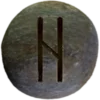
The rune Hagalaz (ᚺ), pronounced HAH-gah-lahz, connects with disruption, natural force, and events that break apart existing structures through sudden impact. This rune aligns with River Sylgr by emphasizing processes that dismantle and transform through overwhelming power. Hagalaz (ᚺ) reflects the destructive aspect of the river, where stability gives way to dissolution.
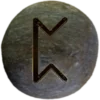
The rune Perthro (ᛈ), pronounced PER-thro, represents hidden processes, unfolding events, and outcomes that remain concealed until they fully emerge. This rune complements River Sylgr by highlighting the unseen aspects of absorption and transformation that occur beneath the surface. Together, Hagalaz (ᚺ) and Perthro (ᛈ) form a pairing that captures both the visible and hidden dimensions of the river’s consuming force.
Meaning for Modern Asatruar
For many Asatruar, River Sylgr represents the reality of loss, transformation, and the processes that remove what no longer remains sustainable or necessary. Practitioners often engage with the river as a reminder that some changes involve complete dissolution rather than gradual transition. This understanding encourages acceptance of endings as part of a broader cycle of existence.
The river also symbolizes the importance of recognizing limits, where resistance may not prevent change but can influence how one responds to it. By reflecting on River Sylgr, individuals explore themes of release and acceptance that remain relevant within modern life. This engagement supports a balanced approach to transformation while maintaining a connection to traditional ideas.