Last Updated on April 14, 2026
Table of Contents

The Wild and Howling Waters of River Ylgr
River Ylgr, also written as Ylg, Ylgar, or Ylgrr, carries a name that connects with wildness, ferocity, and the untamed cry of a wolf within early northern tradition. The name Ylgr can be pronounced as ILL-gur, where the “y” sounds like the “i” in “bit,” and the ending “gr” forms a firm, slightly rolled sound. This pronunciation reflects the sharp and intense character of the river, which conveys motion that feels alive and unpredictable.
Descriptions of River Ylgr emphasize a current that behaves with a restless and almost animal-like energy, as if the river itself expresses instinct and raw movement. Its waters do not move in a calm or orderly fashion, since they surge and twist with force that resists control or containment. This behavior gives the river a presence that feels active and aware, rather than passive or purely environmental.
The name Ylgr connects directly with a term used for a she-wolf, which strengthens the association with wild creatures and untamed landscapes. It therefore represents more than a flowing body of water, because it embodies instinct, survival, and the power of nature beyond human influence. This association places the river among forces that demand respect rather than understanding.
References in Early Texts
River Ylgr appears in Grímnismál, part of the Poetic Edda, where it stands among a collection of rivers that define the structure and movement of the mythic world. In that poem, each river contributes to a larger system that shapes how realms connect, separate, and interact with one another. River Ylgr adds a distinct tone to this system through its association with wildness and animal force.
Grímnismál presents these rivers through a sequence of names, allowing each one to carry meaning through linguistic roots and contextual placement. River Ylgr fits into this pattern by introducing a name that evokes sound, movement, and instinct rather than calm flow or rigid division. This contribution enriches the overall texture of the landscape described in the poem.
The brief mention of River Ylgr leaves room for interpretation, encouraging readers to explore its meaning through language and imagery. This approach allows the river to maintain a vivid presence without requiring extended narrative detail. Through its inclusion, River Ylgr becomes part of a shared framework of knowledge and symbolism.
Symbolism and Interpretive Meaning
River Ylgr represents instinct, survival, and the untamed aspects of existence that resist structure and predictability. Its current suggests movement guided by internal force rather than external control, emphasizing the importance of awareness and adaptability. This symbolism connects the river with experiences that require quick response and intuitive action.
The river also functions as a boundary shaped by unpredictability, where crossing does not follow a clear or stable path. Approaching River Ylgr involves confronting forces that behave according to their own nature, rather than accommodating those who encounter them. This aspect highlights the limits of control and the need to respect environments that operate beyond human design.
Imagery associated with River Ylgr often includes rushing water, sharp turns, and a sense of sound that echoes through its movement, resembling a distant howl carried across the landscape. These elements create a vivid impression of a river that expresses energy and presence in a direct way. Through this imagery, River Ylgr stands as a symbol of vitality, danger, and the enduring power of the natural world.
Runes Reflecting the River’s Instinct
The rune Ūruz (ᚢ), pronounced OO-rooz, represents raw strength, primal force, and the vitality that emerges from untamed natural conditions. This rune aligns closely with River Ylgr through its connection to animal power and the energy that drives survival and movement. Ūruz (ᚢ) reflects the physical and instinctive qualities that define the river’s behavior.
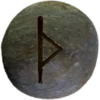
The rune Thurisaz (ᚦ), pronounced THOO-ree-sahz, connects with tension, defense, and the kind of force that reacts quickly to threats or challenges. This rune complements River Ylgr by emphasizing the reactive and protective aspects of instinct that arise in unpredictable situations. Together, Ūruz (ᚢ) and Thurisaz (ᚦ) form a pairing that captures the strength and responsiveness embodied by the river.
Meaning for Modern Asatruar
For many Asatruar, River Ylgr represents the importance of instinct, resilience, and the ability to respond effectively to changing conditions. Practitioners often view the river as a reminder that not all situations allow for careful planning, since some demand immediate awareness and action. This perspective encourages trust in one’s inner sense of direction.
The river also symbolizes a connection to the untamed aspects of existence, where strength and adaptability play a central role in navigating challenges. By reflecting on River Ylgr, individuals engage with ideas that emphasize balance between control and instinct. This engagement supports a grounded approach to life that values both awareness and responsiveness.