Last Updated on April 14, 2026
Table of Contents
The Wide and Enduring Course of River Víð
River Víð, also written as Vith, Víðr, or Vithr, carries a name that expresses breadth, expansion, and far-reaching presence within early northern tradition. The name Víð can be pronounced as VEETH, where the letter í sounds like “ee” in “see,” and the letter ð sounds like the “th” in “this.” This pronunciation highlights the séríslenskur letter ð, which produces a soft and voiced sound that shapes the word’s flowing quality.
Descriptions of River Víð emphasize its wide expanse and steady movement, creating an image of a river that stretches across great distances without losing its form or direction. Its waters do not rush with violent force, since they move with a consistent and grounded presence that suggests endurance rather than sudden change. This character gives the river a sense of stability that contrasts with more turbulent or unpredictable waterways.
The name itself connects with the idea of width and openness, reinforcing the image of a river that defines space rather than compressing it. River Víð therefore represents more than a physical feature, because it embodies the concept of extension across landscapes and experiences. This association places the river among forces that shape continuity and connection across large areas.
References in Early Texts
River Víð appears in Grímnismál, part of the Poetic Edda, where it stands among a group of rivers that define the structure and movement of the mythic world. In that poem, each river contributes to a system that organizes space and establishes relationships between different realms. River Víð adds a sense of breadth and continuity to this system through its name and implied characteristics.
Grímnismál presents these rivers through a sequence of names, allowing each one to convey meaning through linguistic roots and contextual placement. River Víð fits into this pattern by introducing a concept of expansion and reach, which complements rivers that emphasize division or intensity. This contribution strengthens the overall balance within the collection of waterways described in the poem.
The brief mention of River Víð encourages interpretation based on its name and position within the list, rather than detailed narrative description. This approach allows the river to maintain a clear identity while remaining open to reflection. Through its inclusion, River Víð becomes part of a broader framework that shapes understanding of space and movement.
Symbolism and Interpretive Meaning
River Víð represents expansion, continuity, and the steady progression of existence across time and space, where movement does not rely on sudden shifts or disruption. Its wide course suggests a path that allows for growth and development without losing direction or coherence. This symbolism connects the river with experiences that unfold gradually yet consistently.
The river also functions as a boundary defined by scale rather than intensity, where crossing involves traversing distance rather than overcoming force. Approaching River Víð requires patience and awareness of the broader landscape, since its width emphasizes perspective and endurance. This aspect highlights the importance of sustained effort when engaging with long-term processes.
Imagery associated with River Víð often includes broad waters stretching toward distant horizons, reflecting light across a calm and expansive surface. These visual elements create a sense of openness and possibility, while still maintaining a clear sense of direction. Through this imagery, River Víð stands as a symbol of enduring movement and connected experience.
Runes Reflecting the River’s Reach
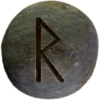
The rune Raido (ᚱ), pronounced RYE-tho, represents journey, movement, and the structured progression that carries individuals across distance with purpose and direction. This rune aligns with River Víð through its emphasis on travel that unfolds over time rather than through sudden change. Raido (ᚱ) reflects the steady and intentional movement that defines the river’s wide course.
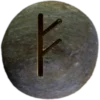
The rune Fehu (ᚠ), pronounced FAY-hoo, connects with growth, resources, and the expansion of value through sustained effort and careful management. This rune complements River Víð by highlighting the benefits of gradual development across a broad landscape. Together, Raido (ᚱ) and Fehu (ᚠ) form a pairing that captures both the movement and the expansion embodied by the river.
Meaning for Modern Asatruar
For many Asatruar, River Víð represents the importance of patience, continuity, and the ability to move forward across extended periods without losing focus or purpose. Practitioners often engage with the river as a reminder that meaningful progress develops through consistent effort rather than sudden change. This perspective encourages a steady approach to both personal and spiritual growth.
The river also symbolizes the value of maintaining connection across different areas of life, where breadth of experience contributes to a deeper understanding of the whole. By reflecting on River Víð, individuals explore themes of endurance and expansion that remain relevant in modern contexts. This engagement supports a balanced approach to development while maintaining a connection to traditional ideas.