Last Updated on April 14, 2026
Table of Contents
The Boundary Waters of River Gjöll
River Gjöll, also written as Gjoll, Gjǫll, or Gjöllr, stands as one of the most striking rivers described in early northern tradition, where it forms a clear boundary between worlds of the living and the dead. The name Gjöll can be pronounced as GYOLL, where the “gj” sounds like a soft “gy” in “gyre,” and the “ö” sounds like the “u” in “burn.” This pronunciation highlights the distinct séríslenskur letter ö, which carries a rounded vowel sound that differs from standard English vowels.
Descriptions of River Gjöll emphasize its role as a dividing force, since it flows near the realm associated with death and the afterlife, creating a threshold that souls must approach. The river does not simply mark a location, because it actively reinforces separation between different states of existence through its presence and surrounding structures. Its waters carry a sense of finality, encouraging reflection on the transition between life and what follows beyond that boundary.
River Gjöll often appears alongside imagery of bridges, guardians, and gates, which together create a structured passage that individuals must confront when moving toward the realm of the dead. This arrangement gives the river a central place within the landscape, since it anchors the transition between one condition and another. The environment surrounding the river reinforces its importance, shaping how individuals understand movement between realms.
Accounts in Early Texts
River Gjöll appears in Gylfaginning, part of the Prose Edda, where it plays a significant role in the journey of Hermóðr as he travels to seek the return of Baldr. In that account, Hermóðr rides toward the realm of the dead and encounters the river as part of his passage through unfamiliar and solemn territory. The description includes a bridge called Gjallarbrú, which arches over the river and serves as a controlled crossing point.
The bridge stands covered in gold and is guarded by a figure named Móðguðr, who questions those who attempt to cross and ensures that passage follows proper order. This interaction highlights the structured nature of the crossing, where movement across River Gjöll requires acknowledgment and purpose. The presence of a guardian reinforces the idea that this boundary cannot be crossed without intention and recognition of its significance.
The narrative uses River Gjöll as a focal point that defines the transition into a different realm, emphasizing its role as both obstacle and passage. The journey across the bridge creates a moment of tension and reflection, since it marks a point of no easy return. Through this account, River Gjöll gains a vivid presence that combines physical description with symbolic meaning.
Symbolism and Interpretive Meaning
River Gjöll represents the boundary between life and death, where movement across its waters signifies a profound and irreversible transition. Its steady flow reflects the inevitability of change, while its position near the realm of the dead reinforces the finality associated with that passage. This symbolism encourages contemplation of mortality and the structures that define existence.
The river also embodies the idea of judgment or evaluation, since the guarded crossing suggests that not all movement occurs freely or without scrutiny. The presence of Gjallarbrú and its guardian indicates that order and recognition shape the transition, adding layers of meaning to the act of crossing. This interpretation highlights the importance of awareness and purpose when approaching such boundaries.
Imagery associated with River Gjöll often includes dark waters, quiet surroundings, and a sense of solemn stillness that contrasts with more turbulent or violent rivers. This calm yet serious atmosphere reinforces its role as a place of passage rather than conflict. The River Gjöll stands as a powerful symbol of transition, reflection, and the enduring structure of existence.
Runes Reflecting the River’s Threshold
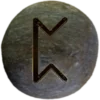
The rune Perthro (ᛈ), pronounced PER-thro, connects with mystery, hidden knowledge, and the unfolding of events that remain beyond immediate understanding. This rune aligns with River Gjöll through its association with transitions and the unknown aspects of existence that reveal themselves over time. Perthro (ᛈ) reflects the uncertainty and depth that accompany movement across boundaries such as those represented by the river.
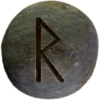
The rune Raido (ᚱ), pronounced RYE-tho, represents journey, movement, and the structured path that guides individuals from one place or state to another. This rune complements the role of River Gjöll by emphasizing the act of travel across defined routes, including crossings that carry significant meaning. Together, Perthro (ᛈ) and Raido (ᚱ) form a symbolic pairing that captures both the mystery and the ordered passage embodied by the river.
Meaning for Modern Asatruar
For many Asatruar, River Gjöll holds meaning as a symbol of transition, reflection, and respect for the boundaries that define existence and experience. Practitioners often engage with the idea of the river as a reminder that life includes moments of passage that require awareness and intention. This perspective encourages thoughtful consideration of change and the structures that guide it.
The river also represents the importance of honoring transitions, whether they involve personal growth, loss, or shifts in understanding that shape an individual’s path. By reflecting on River Gjöll, practitioners connect with ideas that emphasize continuity, respect, and the enduring nature of life’s cycles. This engagement supports a grounded approach to navigating change while maintaining a connection to traditional concepts.