Last Updated on April 14, 2026
Table of Contents
Móðguðr: Guardian of the Bridge Gjallarbrú
The figure Móðguðr, also written as Modgud, Móðgudr, or Modguth in various transliterations, stands as the watchful guardian at the bridge Gjallarbrú, where she questions those who seek passage into the realm of the dead. Her name carries a meaning connected with courage or fierce resolve, which reflects the authority she holds in her role as gatekeeper. Pronounced “MOHTH-goothr,” where “ó” sounds like “o” in “more,” the “ð” forms a soft “th” as in “this,” and the final “r” carries a faint rolled tone, the name conveys strength and presence.
Móðguðr does not serve as a passive observer, since she actively engages with travelers who approach the bridge, requiring them to explain their purpose and identity before allowing them to continue. This interaction establishes her as a figure of authority who maintains order at a crucial boundary between worlds. Her presence ensures that passage occurs with intention and recognition, rather than through chance or confusion.
The position she holds at Gjallarbrú connects her directly with the broader structure of the underworld, where specific roles support the movement and organization of that realm. Móðguðr functions as a living embodiment of that structure, representing vigilance, discernment, and control at a point where transition becomes irreversible. Through this role, she contributes to the sense that the journey into the underworld follows clear and meaningful steps.
Móðguðr in Early Textual Sources
Móðguðr appears in the Prose Edda during the account of Hermóðr’s journey to seek the return of Baldr, where she stands at Gjallarbrú and questions him as he approaches the crossing. In this narrative, she asks about his identity and purpose, noting that the dead who have crossed the bridge appear different from the living rider before her. This exchange provides a clear example of her function as a guardian who distinguishes between those who belong and those who do not.
The description presents Móðguðr as calm and observant, rather than aggressive, emphasizing her role as a figure of judgment and verification rather than conflict. Her questioning establishes a moment of pause within the journey, where intention becomes clear and recognized before passage continues. This interaction highlights the importance of identity and purpose at the threshold she guards.
Through this brief yet meaningful appearance, Móðguðr gains a defined place within the structure of the underworld, serving as a necessary presence at a key point of transition. The narrative does not expand on her beyond this role, yet the clarity of her function gives her lasting significance within the tradition. Her presence reinforces the idea that boundaries require guardians who maintain order and awareness.
Symbolism and Interpretive Meaning
The symbolism of Móðguðr centers on guardianship, discernment, and the act of questioning that accompanies passage between different states of existence. Her role reflects the idea that movement across boundaries requires recognition and clarity, emphasizing that identity must align with purpose before transition can occur. This perspective highlights the importance of awareness during moments of change.
She also represents the human need for accountability, where actions and intentions come into focus at critical thresholds that define direction and outcome. This quality distinguishes her from figures associated with force or chaos, since she embodies calm authority and structured oversight. The presence of such a guardian reinforces the idea that order governs even the most profound transitions.
Alternate spellings such as Modgud, Móðgudr, and Modguth appear in different manuscripts and modern interpretations, reflecting variations in transcription and linguistic reconstruction across time. These forms preserve the essential sound while adapting to different writing systems, ensuring that the name remains recognizable despite changes in spelling conventions. Through these variations, Móðguðr continues to express her association with vigilance and discernment.
Runes Reflecting Móðguðr’s Nature
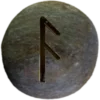
The rune Ansuz (ᚨ), pronounced “AHN-sooz,” connects with communication, speech, and the exchange of words, aligning closely with Móðguðr and her role in questioning those who approach the bridge she guards. This rune represents the power of dialogue and the importance of clear expression, which reflects the interaction that defines her function. Its association with spoken word highlights the significance of communication at the threshold.
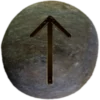
The rune Tiwaz (ᛏ), pronounced “TEE-wahz,” relates to justice, order, and the maintenance of right action, offering another meaningful link to Móðguðr and her role in upholding structure at a critical boundary. Tiwaz (ᛏ) represents fairness and authority, which complements her calm and decisive presence. Together, these runes reflect both the communication and the judgment that define Móðguðr’s symbolic presence.
Meaning of Móðguðr for Asatruar
Móðguðr holds importance for modern practitioners who follow traditional northern paths, since she represents the act of questioning and the need for clarity when approaching significant transitions. Her presence encourages reflection on identity, purpose, and the reasons behind one’s actions. This perspective highlights the value of self-awareness and honesty in moments of change.
Many interpret Móðguðr as a reminder that progress often involves moments of pause and evaluation, where direction depends on understanding and intention rather than impulse. The imagery of a guardian who asks questions reinforces the idea that movement between stages requires recognition and responsibility. Through this understanding, Móðguðr continues to offer a meaningful symbol that connects ancient imagery with present-day reflection and practice.