Last Updated on April 14, 2026
Table of Contents
Gjallarbrú: The Resounding Bridge Over Gjöll
The bridge Gjallarbrú, also written as Gjallarbru, Gjallarbrue, or Gjallarbrúar in different transliterations, spans the river Gjöll and forms a crucial crossing point into the realm of the dead. Its name connects with sound and resonance, suggesting a structure that echoes or rings under passage, which gives it a vivid and memorable presence. Pronounced “GYAL-lar-broo,” where “GYAL” blends like “gyal,” “lar” sounds like “lar” in “larva,” and “brú” sounds like “broo,” with “ú” pronounced as “oo” in “food,” the name carries a clear and resonant tone.
Gjallarbrú serves as more than a simple crossing, since it represents a structured threshold that regulates movement between the world of the living and the domain beyond death. Descriptions often emphasize its brightness and strength, suggesting a bridge that stands firm against the harsh environment that surrounds it. This presence creates a sense of order and intention, reinforcing the idea that passage into the underworld follows defined paths rather than chaotic wandering.
The bridge connects directly with the river Gjöll below, creating a combined boundary that emphasizes both separation and controlled access between realms. This pairing highlights how natural features and constructed elements work together within the underworld landscape to guide and shape the journey of those who approach it. Gjallarbrú therefore stands as a focal point where movement becomes deliberate and meaningful.
Gjallarbrú in Early Textual Sources
Gjallarbrú appears in accounts preserved within the Prose Edda, where it plays a role in the journey undertaken by Hermóðr as he travels to seek the return of Baldr from the realm of the dead. In this narrative, Hermóðr rides toward the underworld and crosses the bridge as part of his passage into that domain, providing a clear example of its function and significance. The description places it within a structured environment where each feature contributes to the overall path.
The guardian of the bridge, named Móðguðr, questions travelers who attempt to cross, ensuring that each individual belongs among the dead or carries a valid purpose for entering the realm. This interaction reinforces the idea that Gjallarbrú operates under rules and oversight, rather than allowing unrestricted passage between worlds. The presence of a guardian adds a layer of verification that strengthens the bridge’s role as a controlled threshold.
The narrative context highlights Gjallarbrú as a place of encounter and decision, where movement forward depends on recognition and purpose rather than simple arrival. This portrayal gives the bridge a central role within the journey, emphasizing its importance as a point where intention and identity become clear. Through this account, it gains depth and meaning within the broader tradition.
Symbolism and Interpretive Meaning
The symbolism of Gjallarbrú centers on transition, structure, and the defined pathways that guide movement between different states of existence, reflecting how thresholds can shape experience through order and direction. Its association with sound and resonance suggests that crossing leaves an imprint, emphasizing awareness and presence during the act of passage. This perspective highlights how movement across boundaries carries significance beyond simple relocation.
The bridge also represents a connection that requires recognition and purpose, emphasizing that not all crossings occur freely or without condition. This quality distinguishes Gjallarbrú from natural boundaries, since it introduces an element of design and intention into the process of transition. The presence of a constructed crossing reinforces the idea that movement between realms involves both natural forces and structured guidance.
Alternate spellings such as Gjallarbru, Gjallarbrue, and Gjallarbrúar appear in different manuscripts and modern interpretations, reflecting variations in transcription and linguistic reconstruction across time. These forms maintain the essential sound while adapting to different systems of writing, ensuring that the name remains recognizable despite changes in spelling conventions. Through these variations, it continues to express its association with resonance, structure, and passage.
Runes Reflecting Gjallarbrú’s Nature
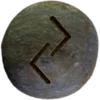
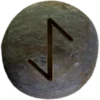
The rune Eihwaz (ᛇ), pronounced “AYE-wahz,” connects with the axis that links different realms, endurance, and the structure that supports passage between states, aligning closely with Gjallarbrú and its role as a bridge across a defining boundary. This rune represents stability within transition, reflecting how the bridge provides a reliable path through a challenging environment. Its association with connection and resilience complements the bridge’s function.
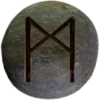
The rune Mannaz (ᛗ), pronounced “MAHN-nahz,” relates to identity, awareness, and the recognition of self within a broader structure, offering another meaningful link to Gjallarbrú and the questioning that occurs at its crossing. Mannaz (ᛗ) represents the importance of understanding one’s place and purpose, which aligns with the interaction between traveler and guardian. Together, these runes reflect both the structural path and the personal awareness required to cross it.
Meaning of Gjallarbrú for Asatruar
Gjallarbrú holds importance for modern practitioners who follow traditional northern paths, since it represents the structured thresholds that define major transitions in life and beyond. The bridge encourages reflection on how movement between stages requires awareness, purpose, and recognition of one’s identity. This perspective highlights the importance of approaching change with clarity and intention.
Many interpret Gjallarbrú as a reminder that not all paths remain open without condition, since certain crossings involve guidance, boundaries, and moments of questioning. The imagery of a guarded bridge reinforces the idea that transition includes both movement and evaluation, requiring honesty and understanding. Through this understanding, it continues to offer a meaningful symbol that connects ancient imagery with present-day reflection and practice.