Last Updated on April 23, 2026
Table of Contents
Hrund and the Movement of Battle Forces
Hrund, sometimes spelled Hrundr, appears among the lesser-known Valkyries who embody specific aspects of warfare within Norse mythological tradition. Her name suggests motion, pressure, or driving force, which aligns with the idea of battle as a shifting and unstoppable current. This association gives her a distinct identity connected with momentum rather than isolated acts of violence. She represents the continuous flow that carries warriors forward during moments of intense conflict.
The pronunciation of Hrund presents difficulty due to its initial consonant cluster and compact vowel structure rooted in Old Norse phonetics. You can pronounce Hrund as “HRUUND,” where the opening sound combines a breathy “h” with a rolled or lightly trilled “r,” followed by a rounded vowel similar to “oo” in “food.” The alternate spelling Hrundr adds a terminal consonant that creates a slightly sharper ending, though spoken forms may soften this final sound. These variations preserve the linguistic texture of early Scandinavian language while offering guidance for modern speakers.
Descriptions of Hrund often place her within the ranks of valkyries who determine the direction and outcome of battles through unseen influence. Valkyries do not merely observe events, since they actively shape which warriors fall and which survive according to deeper forces at work. Her connection with movement suggests that she influences the shifting tide of conflict rather than individual strikes. This role highlights the importance of momentum, where small changes in direction can determine the final result.
References to Hrund appear within lists of valkyries preserved in Old Norse literature, where her name contributes to a broader catalog of divine figures linked with warfare. These mentions may remain brief, yet they confirm her place within a structured mythological system that assigns meaning to each name. By including her among recognized valkyries, these sources acknowledge her role within the collective function of guiding battle. This presence ensures that she remains part of the enduring narrative of Norse myth.
Symbolism and Interpretive Meaning
Hrund embodies the concept of flow within conflict, where events unfold through continuous motion rather than isolated moments of action. This interpretation allows her to represent the dynamic nature of battle, where shifting positions and changing conditions influence outcomes. By focusing on movement, Hrund highlights the importance of adaptability and awareness during intense situations. This perspective transforms her from a simple war figure into a symbol of evolving forces that shape experience.
Her identity also connects with the emotional intensity that arises when individuals engage with high stakes challenges that demand immediate response. This connection links physical movement with internal energy, creating a unified representation of action and feeling. Hrund therefore reflects both the external and internal aspects of conflict, emphasizing how they interact during critical moments. This dual role deepens her significance within mythological interpretation.
Artistic portrayals often depict Hrund as a figure in motion, surrounded by swirling elements that suggest wind, sound, and shifting energy across the battlefield. These images emphasize speed and direction, capturing the sense of unstoppable progress that defines her presence. By presenting her in this way, artists highlight the importance of movement as a defining characteristic. This visual language reinforces her identity as a force that drives events forward.
Runes Reflecting Motion and Force
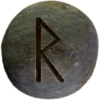
The rune Raido (ᚱ) aligns with Hrund because it represents movement, journey, and the progression of events along a defined path shaped by intention. This rune reflects the structured aspect of motion, where direction and purpose guide action toward a specific outcome. She complements this idea by embodying the energy that sustains movement during conflict and challenge. Together, they illustrate how direction and momentum combine to influence results.
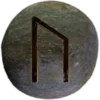
The rune Ūruz (ᚢ) also connects with Hrund through its association with raw strength, vitality, and the driving force that pushes individuals beyond ordinary limits. This rune emphasizes physical power and instinctive action, which appear during moments of intense pressure and engagement. She reflects this surge of energy when movement becomes unstoppable and decisive. The pairing of Ūruz (ᚢ) with her identity highlights the connection between strength and motion.
Importance of Hrund for Asatruar
Hrund holds meaning for Asatruar who seek to understand how mythological figures represent forces that shape human experience and decision making. Her association with movement and momentum offers insight into how actions develop over time through continuous effort and adjustment. By examining her role, practitioners can reflect on how direction and energy influence personal challenges. This connection allows Hrund to serve as a symbolic guide for understanding change.
Many Asatruar interpret Hrund as a representation of the need to remain adaptable and responsive when facing complex situations that require quick thinking and decisive action. Her presence emphasizes the importance of maintaining awareness while moving forward with purpose and intention. This perspective transforms her image into a reminder that progress depends on both direction and energy working together. Hrund continues to influence modern interpretation of Norse mythological themes.