Last Updated on April 25, 2026
Table of Contents
Raud the Strong: Defiance, Devotion, and Legacy
Raud the Strong, often rendered as Rauðr hinn sterki, stands as a vivid figure in Norse tradition, remembered for his fierce independence, spiritual conviction, and refusal to submit to external authority. His name Rauðr, pronounced roughly as “Routhr,” uses the eth sound represented by the letter ð, which sounds like the soft “th” in “this.” The epithet hinn sterki translates as “the strong,” emphasizing both his physical power and his unwavering will. Alternate spellings include Raudr hinn sterki, Rauthr the Strong, and Raud the Mighty, each reflecting transliteration differences from Old Norse into modern alphabets.
Accounts describe Raud the Strong as a wealthy and influential chieftain who lived in northern Norway during the period when Christianity spread through Scandinavia. He owned a grand ship, often described as a dragon vessel, which symbolized both his status and his connection to older traditions rooted in Norse cosmology. His reputation for strength extended beyond physical prowess, as he demonstrated a firm commitment to his ancestral beliefs and resisted efforts to convert him. Many narratives portray him as a man who valued personal autonomy above all, refusing to abandon his identity even under threat.
Stories highlight Raud the Strong’s encounter with King Olaf Tryggvason, a ruler determined to impose Christianity across Norway. Raud resisted conversion despite increasing pressure, which eventually led to a brutal confrontation that sealed his fate. His refusal did not come from ignorance or stubbornness alone, but from a deeply held conviction that defined his place within the spiritual and cultural landscape of his time. His story reflects a broader clash between old and new belief systems, where personal faith became a matter of survival as well as identity.
Tradition often frames Raud the Strong as a symbol of resistance, embodying the tension between individual will and centralized authority. His actions represent a commitment to ancestral ways, even when faced with overwhelming force and inevitable consequences. This portrayal has kept his memory alive in historical and mythological discussions, where he serves as an example of defiance rooted in principle rather than mere rebellion. His legacy resonates as a reminder that cultural transitions rarely occur without conflict or sacrifice.
Mentions in Historical Narratives
Raud the Strong appears most prominently in accounts connected to the Heimskringla, a collection of sagas attributed to Snorri Sturluson, where his story illustrates the harsh methods used during the Christianization of Norway. These narratives describe his wealth, his impressive dragon ship, and his refusal to accept baptism despite direct threats from King Olaf Tryggvason. The saga emphasizes the dramatic nature of his resistance, portraying him as both a tragic and heroic figure whose fate underscores the intensity of religious change during that era.
Descriptions within these texts focus on the confrontation that ultimately led to his execution, presenting it as a defining moment that highlights the clash between belief systems. Raud’s steadfastness under pressure reinforces his image as a man who would not compromise his values, even when faced with extreme consequences. His story does not merely recount an isolated event, but instead illustrates a broader historical pattern where leaders sought to enforce religious conformity across diverse regions. Readers often interpret these passages as both historical record and moral narrative, reflecting the complexities of cultural transformation.
Runic Associations with Strength and Defiance
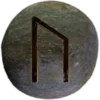
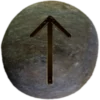
The rune Ūruz (ᚢ) often connects symbolically with Raud the Strong, as it represents raw strength, vitality, and untamed power within the Elder Futhark system. This rune embodies the primal force of the wild aurochs, suggesting resilience and independence that align closely with Raud’s character. Another rune frequently associated with him is Tiwaz (ᛏ), which signifies honor, justice, and the courage to stand firm in one’s convictions. Together, these runes reflect a balance between physical might and moral resolve, illustrating qualities that define Raud’s enduring legacy in Norse tradition.
Enduring Importance to Asatruar
Raud the Strong holds significant meaning for Asatruar, who often view his story as a powerful example of devotion to ancestral traditions and resistance against enforced change. His refusal to abandon his beliefs resonates as a demonstration of personal integrity, especially in the face of overwhelming external pressure. Many see his actions as a reminder that spiritual identity requires commitment, even when circumstances demand difficult choices. His narrative continues to inspire reflection on the importance of maintaining cultural and religious continuity within a rapidly changing world.
Practitioners frequently interpret his story as a call to honor heritage while navigating modern realities, drawing lessons from his unwavering stance. His legacy encourages individuals to approach their beliefs with seriousness and dedication, rather than treating them as casual or temporary affiliations. Raud the Strong remain more than a historical figure, serving instead as a symbol of courage and conviction that continues to influence contemporary spiritual perspectives.