Last Updated on May 24, 2026
Table of Contents
The Story and Meaning of Þrymskviða
Þrymskviða, pronounced “THRIMS kwee tha,” stands among the most entertaining and widely studied poems from the Poetic Edda within Norse mythology. Scholars sometimes spell the title as Thrymskvida, Thrymskvida, or Thrymskvitha because medieval Icelandic characters often change when modern writers transliterate Old Norse texts into English forms. The Icelandic letter Þ, called thorn, sounds like the “th” in the English word “thing,” while the letter ð, called eth, sounds softer, similar to the “th” in “this.”
The title Þrymskviða translates roughly as “The Lay of Thrym,” referring to the giant Þrymr, pronounced “THRIMR,” who steals the hammer Mjölnir from the thunder god Thor. The name Mjölnir, pronounced “MYOL neer,” contains the Icelandic ö sound, which resembles the vowel heard in the English word “burn.” Norse audiences valued this story because it blended humor, danger, disguise, and heroic action within a memorable poetic structure.
The poem begins when Thor awakens and discovers that his sacred hammer has vanished, causing immediate panic among the gods because Mjölnir protected both divine order and human society from hostile giants. Loki assists Thor in investigating the theft, and the pair eventually learns that Þrymr demands the goddess Freyja as his bride in exchange for returning the weapon. Freyja reacts with anger when the gods suggest accepting the arrangement, forcing them to devise another solution.
Heimdallr proposes a daring plan that requires Thor himself to disguise his appearance and travel to the giant realm dressed as a bride. Thor resists the humiliating idea at first because the disguise threatens his reputation as the strongest and most masculine defender among the gods. Loki nevertheless convinces him that recovering Mjölnir matters far more than preserving personal pride during a temporary deception.
Humor and Symbolism Within Þrymskviða
Þrymskviða differs from many Norse myths because the poem emphasizes comedy and cleverness alongside themes of danger and cosmic conflict. Thor travels to the wedding feast wearing bridal garments, while Loki disguises himself as a female servant accompanying the supposed bride. The absurdity of the situation creates dramatic humor because the giant guests fail to recognize the famously powerful thunder god seated among them.
Several scenes within the poem highlight Thor’s enormous appetite and fierce personality, which nearly expose the deception before the wedding ceremony can conclude. Þrymr becomes suspicious after observing the supposed bride consume an entire ox, several fish, and large amounts of mead during the feast. Loki quickly invents excuses by claiming that “Freyja” has fasted for many nights because excitement about the marriage prevented restful sleep and proper meals.
The climax arrives when the giants place Mjölnir upon Thor’s lap as part of the ceremonial blessing associated with the wedding ritual. Thor immediately abandons the disguise, grasps the hammer, and destroys Þrymr along with several other giants gathered within the hall. This conclusion restores divine order while reinforcing Thor’s role as protector of both gods and humanity against dangerous supernatural threats.
Many scholars interpret Þrymskviða as a story exploring gender expectations, ritual symbolism, and the temporary reversal of social roles within Norse culture. Thor succeeds because he accepts humiliation for the sake of duty, which demonstrates practical wisdom alongside physical strength. Ancient audiences likely appreciated both the comic performance and the deeper message regarding sacrifice, honor, and the preservation of cosmic balance.
Þrymskviða in the Poetic Edda
Þrymskviða survives within the Poetic Edda, a medieval Icelandic manuscript collection preserving mythological and heroic poems from earlier oral traditions across Scandinavia. Scholars value the Poetic Edda because it contains many of the most important surviving narratives concerning Odin, Thor, Loki, Freyja, and other figures from Norse mythology. Þrymskviða remains especially popular because its storytelling style feels lively, direct, and accessible even to modern readers.
The poem reflects the strengths of oral poetic tradition through repeated dialogue, vivid imagery, and carefully structured scenes that performers could recite before gathered audiences. Norse Skalds and storytellers relied upon memorable exchanges between characters because dramatic speech helped listeners follow complex mythological narratives. Þrymskviða therefore preserves both literary artistry and evidence concerning medieval Scandinavian entertainment.
Several medieval sagas and later Icelandic writings mention Thor’s hammer and his ongoing battles against giants, although Þrymskviða itself remains the clearest surviving account concerning the theft of Mjölnir. The poem contributed greatly to later artistic portrayals of Thor because it presented him as powerful, emotional, stubborn, and unexpectedly humorous at the same time. This balance between strength and comedy helped establish Thor as one of the most beloved figures within Norse tradition.
Modern readers continue studying Þrymskviða because the poem combines mythological symbolism with entertaining storytelling that reveals important aspects of Viking Age culture and belief. Its surviving verses preserve insights regarding marriage customs, ritual practices, heroic ideals, and attitudes toward honor within medieval Scandinavia. Through humor and conflict, Þrymskviða demonstrates how Norse mythology blended seriousness with imaginative creativity.
Runes Associated with Þrymskviða
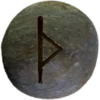
Thurisaz (ᚦ), pronounced “THOO ree sazz,” connects strongly with giants, raw force, and dangerous conflict within the Elder Futhark tradition, making it closely associated with Þrymskviða and the giant Þrymr. The rune reflects the threatening power that giants represented throughout Norse mythology, especially when supernatural enemies challenged divine order or attempted to seize control through force. Thor’s struggle to recover Mjölnir therefore mirrors the tension embodied by Thurisaz (ᚦ) between destructive strength and protective action.
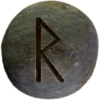
Raido (ᚱ), pronounced “RYE though,” symbolizes journeys, movement, and purposeful travel, which aligns naturally with Thor and Loki’s dangerous expedition into the realm of the giants. The poem centers upon a carefully planned mission involving disguise, ceremony, and the restoration of sacred balance after the theft of the hammer. Norse storytelling often linked physical journeys with spiritual or social transformation, making Raido (ᚱ) a meaningful symbolic connection to the narrative.
The Importance of Þrymskviða to Asatruar
Many Asatruar value Þrymskviða because the poem preserves important themes concerning courage, sacrifice, humor, and the defense of cosmic order within Norse mythology. Thor’s willingness to endure embarrassment for the greater good demonstrates the importance of responsibility and loyalty toward both divine companions and the wider Community. Readers often appreciate the story because it combines heroic action with emotional depth and memorable dialogue.
Þrymskviða also offers modern practitioners insight into the personality of Thor beyond his reputation for physical strength and warfare. The poem portrays him as determined, protective, and capable of accepting temporary discomfort in order to fulfill an essential duty. Through this balance of comedy, danger, and triumph, Þrymskviða continues influencing spiritual interpretations and cultural appreciation connected with ancient Scandinavian tradition.