Last Updated on April 25, 2026
Table of Contents
Hildr the Everlasting Battle Maiden
Hildr, also written as Hild or Hilda in later traditions, stands among the most vivid Valkyries in Norse mythology, embodying the perpetual cycle of conflict and renewal. Her name derives from an Old Norse word meaning battle, which scholars reconstruct as HIL-dr, where the final consonant carries a crisp and lightly rolled sound. This direct association with warfare places her at the center of mythic interpretations that explore both destruction and continuity within heroic narratives.
Unlike many valkyries who appear only in lists, Hildr features in a distinct legend that highlights her agency and supernatural power. Her story centers on a conflict involving her father Hǫgni, pronounced HOG-nee, and the warrior Heðinn, pronounced HETH-in, whose actions spark an endless cycle of combat. Hildr moves between these forces, influencing events in a way that transforms a single battle into an eternal struggle.
Her role extends beyond simple participation, as she revives fallen warriors each night so they may fight again at dawn. This act reflects a deeper symbolic meaning, where battle becomes a repeating pattern rather than a finite event, and Hildr governs that repetition with deliberate intent. Through this cycle, she represents the persistence of conflict and the idea that struggle defines existence rather than concluding it.
The Legend of the Eternal Battle
The tale of Hildr appears most clearly in the Prose Edda, where her story forms part of a larger discussion of poetic language and mythic reference. In this account, Heðinn abducts Hildr, which provokes her father Hǫgni to pursue and confront him, leading to a fierce clash between their forces. Hildr stands between them and uses her powers to ensure that neither side achieves lasting victory, creating a battle that never ends.
Each evening, she walks across the battlefield and restores the fallen warriors to life, allowing them to rise again and continue their struggle with renewed strength. This act does not serve mercy alone, as it also sustains the conflict indefinitely, turning war into a continuous cycle rather than a decisive outcome. Her influence shapes the very nature of the conflict, emphasizing repetition over resolution.
Poets and storytellers likely used this legend to illustrate the enduring nature of feud and vengeance within Norse culture. Hildr becomes both a participant and a controlling force, guiding the rhythm of battle without resolving its cause. Her presence transforms a personal conflict into a mythic pattern that reflects broader themes of persistence and inevitability.
Symbolism and Cultural Impact
Hildr symbolizes the concept of endless struggle, where conflict regenerates itself and resists final resolution despite repeated efforts. Her actions reveal a worldview that accepts tension as a constant element of existence, rather than something that disappears through victory or defeat. This perspective aligns with the harsh realities of the Norse environment, where survival often required continuous effort and resilience.
Her name itself became a poetic synonym for battle, which demonstrates how deeply her identity influenced language and cultural expression. Skaldic poets often used her name in kennings to evoke the intensity and inevitability of warfare, embedding her presence within the fabric of storytelling. This linguistic influence ensured that her character remained active in memory even when her story did not appear directly.
Modern interpretations continue to draw upon her image as a powerful and enigmatic figure who governs cycles beyond human control. Artists and writers often depict her as both beautiful and formidable, reflecting the dual nature of her role as giver and restorer of life within conflict. Hildr endures as a symbol of motion without end, where struggle defines meaning and continuity shapes existence.
Runic Connections to Hildr
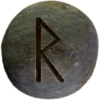
The rune Raido (ᚱ) aligns with Hildr through its association with movement, cycles, and the structured progression of events that unfold over time. This rune reflects journeys that repeat or evolve, which mirrors the endless battle she sustains through her nightly acts of restoration. Raido (ᚱ) emphasizes rhythm and continuity, both of which define Hildr’s influence over the ongoing conflict between opposing forces.
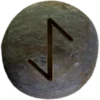
Another significant rune is Eihwaz (ᛇ), which represents endurance, transformation, and the connection between life and death within a continuous cycle. This rune resonates with Hildr because she bridges the boundary between mortality and renewal by reviving fallen warriors repeatedly. Eihwaz (ᛇ) highlights resilience and persistence, qualities that define her role as a guardian of perpetual struggle and renewal.
Hildr and Her Meaning to Asatruar
Hildr holds deep meaning for Asatruar because she represents the acceptance of struggle as an ongoing and necessary part of existence. Her story encourages individuals to confront challenges with determination, recognizing that resolution does not always arrive quickly or permanently. Through her example, followers find inspiration to endure hardship while maintaining purpose and direction.
Her role also reinforces the idea that actions carry lasting consequences, as the conflict she sustains continues because of choices made by those involved. This perspective supports a worldview that values accountability and awareness of how decisions shape future experiences. Hildr’s presence reminds practitioners that life unfolds through cycles that require persistence and adaptability.
Many see her as a symbol of resilience, where strength emerges through repetition and effort rather than sudden triumph. Her enduring narrative connects ancient mythological themes with modern spiritual reflection, offering a model for navigating difficulty with clarity and resolve. Hildr remains a powerful figure who embodies continuity, courage, and the will to persevere.