Last Updated on April 24, 2026
Table of Contents
Natural Cycles: Rhythms of Renewal and Return
Natural Cycles, sometimes described as cycles of becoming, seasonal turning, or tíðahringr, pronounced “TEE-thah-ringr” where ð sounds like the “th” in “this,” represent the continuous processes of change, renewal, and return that shape existence across all realms. These cycles connect growth, decline, and rebirth into a unified pattern, and they reflect a worldview that values continuity rather than final endings. This perspective emphasizes that every phase leads into another, and it reinforces the idea that transformation remains constant.
The concept of Natural Cycles appears through recurring patterns such as the смена of seasons, the growth and decay of life, and the repetition of events that echo across time. These cycles do not occur randomly, and they follow recognizable rhythms that guide both natural processes and human understanding. This structure allows individuals to anticipate change, and it encourages alignment with patterns that already exist.
Natural Cycles also connect closely with larger events such as Ragnarök, which represents destruction followed by renewal, and this connection shows how even dramatic change fits within a broader pattern. This approach integrates both stability and transformation, and it demonstrates that endings create conditions for new beginnings. Existence unfolds as a continuous sequence rather than a fixed state.
Seasonal and Cosmic Patterns
Seasonal change provides one of the clearest examples of Natural Cycles, and it demonstrates how predictable patterns guide the flow of time and activity. The transition from growth to harvest and then to rest reflects a rhythm that supports both survival and reflection. These patterns influence daily life, and they shape how individuals interact with their environment.
Larger patterns extend beyond seasonal change, and they include cycles that affect realms, beings, and events across vast spans of time. The movement of celestial bodies, the flow of water, and the growth of Yggdrasil all reflect processes that repeat while still allowing variation. This combination of repetition and difference creates a dynamic system that remains active and evolving.
Natural Cycles do not isolate individual elements, and they connect all aspects of existence into a network of interdependent processes. Each action influences another, and this interaction ensures that no part of the system remains static. This interconnected structure reinforces the importance of understanding how cycles operate at multiple levels.
Appearances in Old Norse Texts
Natural Cycles appear throughout the
Accounts within these sources describe the progression toward Ragnarök and the subsequent renewal that follows, and they illustrate how destruction integrates into a larger pattern of continuation. The texts also highlight smaller cycles, such as seasonal changes and repeated journeys between realms, which reinforce the presence of ongoing rhythms. These details emphasize that cycles operate at every level of existence.
Through these appearances, Natural Cycles gain clarity as a guiding principle that shapes both events and understanding. The texts present these cycles as active forces that influence behavior and perception, and they demonstrate how continuity emerges through repeated patterns. This perspective continues to inform interpretations of change and stability.
Runes Reflecting Natural Cycles
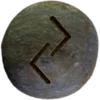
The rune Jēra (ᛃ), pronounced “YEH-rah,” represents the cycle of the year, harvest, and the reward that follows sustained effort, and it directly reflects the concept of Natural Cycles. This rune emphasizes the relationship between action and outcome, and it highlights how time shapes results through repeated processes. Its symbolism reinforces the importance of patience, and it shows how cycles lead to fulfillment.
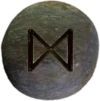
Another rune, Dagaz (ᛞ), pronounced “DAH-gahz,” represents transformation, breakthrough, and the transition between states, and it aligns with the turning points within Natural Cycles. This rune reflects moments when change becomes visible, and it emphasizes the movement from one phase into another. Together, these runes express continuity and transition, and they capture essential aspects of cyclical patterns.
Natural Cycles and Their Importance to Asatruar
Natural Cycles hold deep importance for Asatruar, and they provide a framework that connects daily life with broader patterns of change and renewal. This understanding encourages individuals to align their actions with existing rhythms, and it promotes a sense of balance within both personal and shared experiences. The cycles reinforce the idea that change remains constant and meaningful.
The concept of Natural Cycles supports a perspective that values patience, awareness, and adaptability, and it encourages individuals to recognize the timing of actions and responses. This approach fosters a deeper connection to both natural and spiritual processes, and it highlights the importance of participating in ongoing patterns. Individuals develop a sense of continuity that links past, present, and future.