Last Updated on April 25, 2026
Table of Contents
The Harsh Current of River Slíðr
River Slíðr, also written as Slidr, Slithr, or Slíðr, carries a name that evokes danger, sharpness, and relentless motion within early northern tradition. The name Slíðr can be pronounced as SLEE-thr, where the letter í sounds like “ee” in “see,” and the letter ð sounds like the “th” in “this.” This river flows through descriptions of darker realms, where its waters carry not life-giving nourishment but instead a harsh and cutting force that shapes the environment around it.
Descriptions of River Slíðr often emphasize its violent and unsettling nature, since it does not behave like a calm or nurturing stream. Its waters are described as filled with sharp objects, sometimes imagined as blades or jagged fragments, which create a current that wounds anything attempting to cross. This portrayal transforms the river into a barrier that enforces separation, ensuring that only those prepared for suffering or endurance can approach its banks.
The name itself connects with Old Norse roots associated with danger and harm, reinforcing the idea that this river embodies more than a physical feature within a landscape. River Slíðr expresses a concept of punishment, consequence, and unavoidable hardship that appears within various descriptions of harsher realms. This association gives the river a symbolic role that extends beyond geography, linking it to moral and existential boundaries.
References in Early Texts
River Slíðr appears in Grímnismál, part of the Poetic Edda, where it is listed among rivers that flow through significant regions of the mythic world. In that poem, the river stands alongside others that define structure, movement, and separation across realms described in early northern sources. The mention remains brief, yet its inclusion places it firmly among recognized and meaningful waterways.
Grímnismál presents knowledge through a sequence of names and descriptions, allowing each river to contribute to a broader understanding of the world’s structure. River Slíðr fits into this framework by representing a harsher and more dangerous aspect of that structure. Its presence suggests that not all boundaries offer safe passage, and some exist to challenge or punish those who encounter them.
The limited detail encourages interpretation based on linguistic meaning and contextual placement within the poem. This approach allows River Slíðr to maintain an aura of severity without requiring extensive narrative elaboration. Readers often draw upon its name and associations to understand its role within the larger system of rivers and realms.
Symbolism and Imagery
River Slíðr represents pain, consequence, and the cutting edge of existence, where actions carry weight and outcomes cannot be avoided. Its imagery suggests a current filled with sharpness, where movement forward demands endurance and acceptance of hardship. This interpretation aligns with themes that emphasize accountability and the reality of suffering within the broader worldview.
The river also functions as a boundary that separates different states of being, reinforcing the idea that certain transitions require more than simple movement. Crossing River Slíðr implies confrontation with danger, forcing individuals to face the results of their actions or the challenges placed before them. This concept gives the river a powerful symbolic role as both obstacle and judge.
Visualizations of River Slíðr often include dark, turbulent waters filled with cutting elements that move with relentless force. These images highlight the intensity of the river while reinforcing its role as a place of trial rather than refuge. River Slíðr stands as a vivid representation of the harsher aspects of existence, where growth and consequence intertwine.
Runes Reflecting the River’s Nature
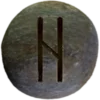
The rune Hagalaz (ᚺ), pronounced HAH-gah-lahz, connects with disruption, natural force, and sudden change that reshapes conditions without warning or mercy. This rune aligns closely with the violent and cutting imagery associated with River Slíðr, since both represent forces that disrupt stability and demand resilience. Hagalaz (ᚺ) reflects the idea that destruction can serve as a catalyst for transformation, even when it arrives with intensity and hardship.
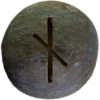
The rune Nauthiz (ᚾ), pronounced NOW-theez, represents necessity, constraint, and the pressure that forces growth through difficulty and limitation. This rune complements the nature of River Slíðr by emphasizing the role of hardship in shaping strength and awareness. Together, Hagalaz (ᚺ) and Nauthiz (ᚾ) form a symbolic pairing that captures both the destructive and instructive qualities embodied by the river.
Meaning for Modern Asatruar
For many Asatruar, River Slíðr represents the unavoidable presence of hardship and the importance of facing challenges with determination and clarity. Practitioners often view the river as a reminder that difficult experiences shape character and deepen understanding. This perspective encourages engagement with adversity rather than avoidance, fostering resilience and personal growth.
The river also symbolizes boundaries that require respect, highlighting the need to recognize limits and consequences within both spiritual and practical contexts. By reflecting on River Slíðr, individuals explore themes of accountability and endurance that remain relevant in modern life. This engagement strengthens a connection to traditional ideas while supporting a grounded and realistic approach to personal development.