Last Updated on April 30, 2026
Table of Contents
The Origins of Asatru Started
Asatru Started as a modern revival of ancient Norse religious traditions, yet its roots extend deeply into the pre-Christian spiritual practices of Northern Europe. Practitioners looked back to the beliefs of the Viking Age, drawing from mythological texts, archaeological findings, and oral traditions that survived cultural transformation. The term Asatru comes from Old Norse, where “Asatru” is pronounced OW-sah-troo, with Á sounding like “ow” in “now,” and it translates loosely to “faith in the Æsir,” who were the principal gods of Norse mythology.
Early Norse religion did not exist as a single unified system, but instead formed a collection of localized traditions that varied across regions and communities. Worship centered around deities such as Odin, Thor, and Freyja, along with reverence for ancestors and land spirits, which shaped a worldview grounded in honor, reciprocity, and connection to nature. When Christianity spread through Scandinavia, these traditions gradually declined, though fragments persisted in folklore, place names, and cultural memory.
Asatru Started in its modern form during the twentieth century, when individuals and groups sought to reconstruct and practice these ancient beliefs in a contemporary context. The revival gained momentum in Iceland during the 1970s, where practitioners established organized communities that emphasized both historical continuity and modern relevance. This movement did not aim to replicate the past exactly, but instead adapted ancient principles to suit present day ethical and spiritual needs.
Reconstruction and Modern Practice
Asatru Started through a process of careful reconstruction, where scholars and practitioners examined primary sources such as the Poetic Edda and Prose Edda to understand pre-Christian beliefs. These texts, recorded in medieval Iceland, preserve mythological narratives and poetic expressions that offer insight into the worldview of early Norse societies. Practitioners interpret these materials alongside archaeological discoveries, including burial sites and ritual objects, which help create a fuller picture of historical practices.
Different groups developed varying approaches to reconstruction, with some focusing on strict historical accuracy while others embraced a more flexible and interpretive framework. This diversity allowed Asatru to evolve into a living tradition rather than a rigid reconstruction, encouraging personal engagement and communal creativity. Many practitioners refer to themselves as Asatruar, pronounced OW-sah-troo-ar, and they often gather for rituals known as Blóts and symbels, which foster Community bonds and spiritual reflection.
Common alternate spellings and related terms include Asatru, Asatro, and Heathenry, with the latter serving as a broader category encompassing various Germanic pagan traditions. Each variation reflects differences in language, regional influence, and philosophical emphasis, yet they all share a connection to the revival of ancient Northern European spirituality. This adaptability has contributed to the continued growth and resilience of the movement across different cultural contexts.
Cultural Significance and Continued Growth
Asatru Started as more than a religious revival, since it also represented a cultural reawakening that encouraged people to reconnect with ancestral heritage and historical identity. Practitioners often explore language, folklore, and traditional crafts as part of their spiritual journey, creating a holistic approach that blends belief with cultural expression. This emphasis on heritage does not exclude modern values, as many communities actively address contemporary issues while maintaining respect for tradition.
The movement has expanded internationally, with organizations and kindreds forming in North America, Europe, and beyond, each adapting practices to local environments while preserving core principles. This global presence demonstrates how ancient traditions can find relevance in modern societies, offering meaning and structure without requiring uniformity. Asatru Started continues to evolve as new generations contribute their perspectives, ensuring that the tradition remains dynamic and responsive.
Pronunciation remains an important aspect of preserving authenticity, as many practitioners take care to learn Old Norse sounds and linguistic patterns. Words like Asatru and blót, pronounced bloat with a long “o,” carry cultural weight that connects modern speakers to historical roots. Through language, ritual, and shared values, Asatru maintains a living link between past and present, allowing its origins to inform its future development.
Runes Connected to Asatru Started
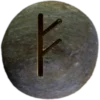
The rune Fehu (ᚠ), pronounced FAY-hoo, represents wealth, prosperity, and the beginning of creation, which aligns closely with how Asatru Started as a revival grounded in growth and renewal. Fehu (ᚠ) symbolizes the flow of energy and resources, reflecting the way early practitioners gathered knowledge and built communities to sustain their spiritual path. This rune highlights the importance of initiative and transformation, which played a central role in the emergence of modern Asatru.
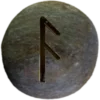
The rune Ansuz (ᚨ), pronounced AHN-sooz, connects directly to divine inspiration and communication, often associated with the god Odin and the transmission of sacred knowledge. Ansuz (ᚨ) reflects how Asatru Started through the rediscovery of ancient wisdom preserved in texts, myths, and oral traditions. This rune emphasizes the power of language and expression, which helped practitioners reconstruct beliefs and share them across generations, strengthening the foundation of the movement.
The Importance of Asatru Started to Asatruar
Asatru Started holds deep significance for Asatruar because it represents a conscious effort to reclaim and revitalize a spiritual tradition that connects them to their perceived ancestral roots. This revival provides a framework for understanding identity, ethics, and community through a lens shaped by ancient values and modern interpretation. Practitioners often find meaning in the emphasis on honor, reciprocity, and respect for both the natural world and human relationships.
The origins of Asatru also inspire a sense of continuity, as individuals see themselves as participants in an ongoing cultural and spiritual narrative rather than isolated believers. This perspective fosters a strong communal bond, encouraging collaboration and shared responsibility within kindreds and broader networks. Through rituals, storytelling, and cultural engagement, Asatruar maintain a living connection to how Asatru Started, ensuring that its legacy continues to evolve with purpose and relevance.