Last Updated on June 2, 2026
Table of Contents
Origins and Traditions of the Yngling Dynasty in Sweden
The Yngling dynasty in Sweden occupies an important place in Norse mythology and legendary Scandinavian tradition. Scholars and storytellers often describe this royal line as one of the oldest dynasties connected with ancient Swedish kings. The name Yngling comes from Yngvi, who many traditions identify with the god Freyr. Common alternate spellings include Ynglingar and Ynglings. The pronunciation of Yngling usually sounds like ING ling, while Ynglingar often sounds like ING ling ar. These names appear in medieval sources that blend mythology, royal ancestry, and cultural memory into a single narrative.
According to traditional accounts, the dynasty traced its ancestry to divine figures rather than ordinary human rulers. This connection gave kings a sacred heritage that strengthened their authority and linked their rule with prosperity, fertility, and social stability. Freyr held a special place within these traditions because many stories associated him with successful harvests, peace, and abundance. By claiming descent from such a figure, rulers could present themselves as guardians of both political order and the well being of their people.
The Yngling dynasty in Sweden appears most prominently in narratives that describe the earliest legendary kings of Scandinavia. These accounts do not function as straightforward historical records. Instead, they preserve a mixture of mythological themes, cultural ideals, and memories of ancient leadership. The stories often emphasize family succession, heroic deeds, and the challenges that rulers faced while attempting to maintain power across generations.
Many traditions place the earliest Yngling rulers in the region around Uppsala, which became one of the most important centers of early Swedish identity. The association with this area strengthened the dynasty’s prestige because Uppsala held strong religious and political significance in Scandinavian tradition. Through repeated storytelling, the dynasty became connected with the development of kingship itself, creating a model that later generations could admire and remember.
Mythological Connections and Literary Sources
The dynasty stands at the intersection of mythology and royal genealogy. Stories about its members frequently include supernatural elements, unusual deaths, prophetic events, and interactions with forces beyond ordinary human experience. These features reflect the worldview of Norse tradition, where the boundaries between gods, heroes, and rulers often remained fluid. The resulting narratives provided explanations for political authority while also entertaining audiences with dramatic and memorable tales.
A small but important reference appears in medieval Norse literature. The Yngling dynasty receives attention in the Ynglinga Saga, which presents a sequence of rulers descended from divine ancestors. Related traditions also connect with material preserved in the Poetic Edda and the Prose Edda, although these works focus more broadly on mythology and heroic tradition. Together, these texts helped preserve stories that might otherwise have disappeared during the centuries following the conversion of Scandinavia to Christianity.
Modern historians generally distinguish between legendary tradition and verifiable historical evidence. Even so, the Yngling dynasty remains valuable because it reveals how medieval Scandinavians understood their past. The stories illustrate ideals of leadership, family continuity, honor, and sacred legitimacy. They also demonstrate how communities used mythology to explain the origins of institutions that shaped everyday life.
The enduring appeal of the Yngling dynasty in Sweden comes from its combination of royal drama, mythological ancestry, and cultural influence. Readers continue to explore these stories because they offer insight into the beliefs and values of the Norse world. Through legendary kings and divine forebears, the dynasty preserves a vision of Scandinavian identity that remained influential for many centuries.
Names, Pronunciation, and Lasting Influence
The pronunciation of Yngling usually follows the form ING ling, while Ynglingar commonly follows the form ING ling ar. Some readers also encounter the related name Yngvi, often pronounced ING vee. These names connect closely with traditions surrounding Freyr and the sacred ancestry of rulers. Understanding these pronunciations helps modern audiences approach the material with greater familiarity and confidence.
The legacy of the Yngling dynasty extends beyond mythology because later writers and historians frequently referenced the dynasty when discussing the origins of Scandinavian kingship. The stories contributed to national memory and helped shape perceptions of Sweden’s distant past. Even when interpreted as legend rather than history, the narratives continue to influence discussions about identity, heritage, and the cultural imagination of the Nordic world.
Elder Futhark Runes Associated with the Yngling Dynasty in Sweden
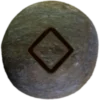
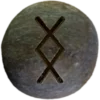
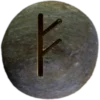
Two Elder Futhark runes often fit the themes associated with the Yngling dynasty in Sweden: Ingwaz (ᛜ or ᛝ) and Fehu (ᚠ). Although medieval sources do not assign these runes directly to the dynasty, their symbolic associations align closely with traditions surrounding divine ancestry, prosperity, and successful leadership.
Ingwaz (ᛜ or ᛝ), pronounced ING waz, takes its name from Ing or Yngvi, a figure closely connected with Freyr. Because the Yngling dynasty claimed descent from Yngvi in many traditional accounts, Ingwaz (ᛜ or ᛝ) serves as a meaningful symbolic link. The rune commonly represents growth, continuity, fertility, and the completion of important cycles. These themes reflect the dynasty’s emphasis on hereditary succession and the transmission of authority across generations.
Fehu (ᚠ), pronounced FAY hoo, often symbolizes wealth, abundance, and movable prosperity. Traditional interpretations connect it with successful stewardship and the ability to maintain social stability through wise leadership. Since stories about the Yngling rulers frequently emphasize prosperity and the blessings associated with Freyr, Fehu (ᚠ) complements Ingwaz (ᛜ or ᛝ) effectively. Together, these runes represent lineage, continuity, abundance, and the enduring strength that legendary traditions attribute to the Yngling dynasty.
Importance of the Yngling Dynasty in Sweden to Asatruar
Many Asatruar view the Yngling dynasty in Sweden as an important example of how mythology, ancestry, and cultural memory intersect within the Norse tradition. The dynasty provides a narrative link between divine figures and human communities, illustrating how ancient Scandinavians understood leadership, responsibility, and social order. These stories offer a framework through which modern practitioners can explore historical beliefs and traditional values.
The association with Freyr holds particular significance because Freyr represents themes such as prosperity, fertility, peace, and good governance. Through the Yngling narratives, these qualities appear within the context of rulership and Community welfare. Many Asatruar appreciate the dynasty because it preserves traditional stories that highlight continuity between generations and encourage reflection on heritage and cultural identity.
The Yngling tradition also contributes to the preservation of Norse mythological literature. By studying these accounts, Asatruar gain insight into legendary kingship, sacred ancestry, and the broader worldview reflected in medieval Scandinavian sources.