
Last Updated on May 8, 2026
Table of Contents
The Origins and Meaning of the Old Icelandic Rune Poem
The Old Icelandic Rune Poem stands among the most important literary sources connected with medieval Nordic rune traditions and the symbolic world of Norse mythology. Scholars often refer to the work as the Icelandic Rune Poem or the Old Norse Rune Poem, although the most common English title remains Old Icelandic Rune Poem. The pronunciation of Icelandic follows distinctive sounds, especially the séríslenskur letters. The word Icelandic sounds like “Eyes land ik,” while the Old Norse term rún means “roon,” carrying meanings connected with mystery, wisdom, and secret knowledge.
The poem presents a sequence of runes from the Younger Futhark writing system, giving each rune a short stanza filled with metaphorical and cultural meaning. Medieval Icelandic poets and scribes preserved these verses during a period when Christian learning mixed with older Germanic traditions. The poem therefore reflects both practical literacy and symbolic interpretation, creating a bridge between everyday communication and mythological imagination. Many historians believe the text functioned as an educational memory aid that helped students remember rune names and associated concepts.
The pronunciation of the title itself deserves careful attention because Icelandic contains letters unfamiliar to many English speakers. The letter þ, called thorn, sounds like the “th” in “thing,” while the letter ð, called eth, sounds like the “th” in “this.” The ligature æ sounds similar to the “i” in “ice.” Readers encountering words such as Futhark should pronounce the term as “FOO thark,” while Younger Futhark sounds like “YUNG er FOO thark.” These pronunciation details help modern readers approach the poem with greater historical awareness.
The Old Icelandic Rune Poem differs from the Old English Rune Poem and the Norwegian Rune Poem because each version reflects local traditions and linguistic changes. Icelandic scribes adapted rune meanings according to their own literary culture, emphasizing imagery connected with weather, seafaring, livestock, wealth, and social order. The compact verses reveal how medieval Icelanders understood fate, prosperity, hardship, and personal conduct through symbolic language. Many rune descriptions also contain poetic ambiguity, allowing several interpretations to exist at the same time.
Connections Between Runes and Norse Mythology
The symbolic atmosphere surrounding the Old Icelandic Rune Poem connects strongly with mythological traditions preserved elsewhere in Old Norse literature. Although the poem itself remains brief and instructional, its themes echo the sacred role of wisdom and hidden knowledge found throughout Norse mythology. Runes represented more than alphabetic characters because people associated them with memory, communication, ritual knowledge, and the unseen forces shaping human destiny. Medieval audiences likely recognized these deeper meanings while reciting the poem.
The Poetic Edda and the Prose Edda contain references to runes and magical knowledge connected with divine figures. The Hávamál section of the Poetic Edda describes Odin gaining rune wisdom through sacrifice and suffering, presenting runes as sacred discoveries carrying spiritual and intellectual power. This famous narrative shaped later interpretations of rune lore and influenced how medieval Scandinavians understood the cultural significance of written symbols. Although the Old Icelandic Rune Poem never directly retells this story, the broader mythological background remains important for understanding its symbolism.
Icelandic saga literature also preserves occasional references to rune carving, rune reading, and the dangers of misusing rune knowledge. Several sagas portray runes as tools requiring precision, wisdom, and moral responsibility. These literary traditions support the idea that medieval audiences viewed the Old Icelandic Rune Poem as more than a simple alphabet lesson. The poem carried echoes of ancestral learning and preserved fragments of older symbolic traditions during a period of cultural transition across Scandinavia.
Modern researchers continue studying the poem because it offers valuable insight into medieval Icelandic language, poetic structure, and cultural memory. Linguists analyze the wording to understand historical pronunciation and regional dialect development, while historians examine the text for clues about literacy and education in medieval Iceland. The poem survives as an important witness to how Icelandic society preserved inherited traditions while adapting to changing religious and political conditions.
Important Elder Futhark Runes Connected with the Old Icelandic Rune Poem
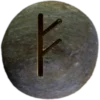
Fehu (ᚠ) and Ansuz (ᚨ) stand among the most discussed Elder Futhark runes associated with traditions later reflected in the Old Icelandic Rune Poem. Fehu (ᚠ), pronounced “FAY hoo,” originally connected with cattle, wealth, and movable property in early Germanic society. The rune represented prosperity and social standing because livestock formed the foundation of economic survival across much of Northern Europe. Poetic rune traditions often linked Fehu (ᚠ) with responsibility, generosity, and the temporary nature of material success.
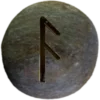
Ansuz (ᚨ), pronounced “AHN sooz,” carried associations with speech, wisdom, and divine communication. Scholars frequently connect the rune with Odin because of its symbolic relationship to language and inspired knowledge. Rune poems from different Scandinavian traditions often emphasized intellectual power and careful speech when describing concepts related to Ansuz (ᚨ). Together, Fehu (ᚠ) and Ansuz (ᚨ) demonstrate how rune traditions blended practical concerns with symbolic meaning, creating a literary system that reflected both ordinary life and mythological imagination.
The Importance of the Old Icelandic Rune Poem to Asatruar
The Old Icelandic Rune Poem holds importance for many Asatruar because it preserves part of the cultural and symbolic heritage connected with Norse mythology and early Scandinavian traditions. Modern readers often study the poem to gain insight into how medieval Icelanders understood rune meanings, poetic symbolism, and the relationship between language and wisdom. The text provides historical material that supports reconstruction efforts focused on pre Christian Northern European culture.
Many Asatruar value the poem because it presents rune lore within an authentic historical framework rather than a modern invention. The verses encourage reflection on themes such as prosperity, hardship, communication, and personal conduct, all of which remain meaningful within contemporary spiritual practice. Readers also appreciate the poem for its connection to Icelandic literary history and the preservation of ancient linguistic traditions.
The Old Icelandic Rune Poem continues attracting interest because it combines mythology, poetry, and historical memory in a concise literary form. Its survival across centuries allows modern communities to study an important piece of Nordic cultural heritage while maintaining a connection to medieval Icelandic thought and storytelling traditions.