Last Updated on April 15, 2026
Table of Contents
Skaldic Poetry as a Craft of Language and Memory
Skaldic Poetry, also written as Skáldskapr or Skaldskapr in Old Norse forms, carries a pronunciation shaped by its linguistic roots, spoken as “skald-ik poe-uh-tree,” while Skáldskapr sounds like “skowl-ds-kah-pr.” The letter á produces an “ow” sound similar to “cow,” and the ð, called eth and pronounced like the “th” in “this,” influences related forms. These phonetic elements give the tradition a distinct rhythm that supports its oral and performative nature.
Skaldic Poetry represents a highly structured form of expression that combines intricate meter, layered imagery, and precise word choice to convey meaning with clarity and depth. Poets who practice this craft, known as Skalds, develop skill through discipline and familiarity with established forms, allowing them to create compositions that balance creativity with tradition. This approach ensures that each piece reflects both individual effort and shared cultural knowledge.
The language within Skaldic Poetry often includes kennings and heiti, which expand vocabulary and provide alternative ways to describe familiar concepts. These devices allow poets to construct lines that carry multiple layers of meaning, encouraging listeners to engage actively with the content. This complexity transforms each composition into an experience that rewards attention and interpretation.
Structure and Techniques
Skaldic Poetry relies on strict metrical patterns that guide the arrangement of syllables, stresses, and alliteration within each line, creating a consistent framework for composition. These patterns do not limit creativity, since they provide a foundation that supports innovation within defined boundaries. Poets use this structure to shape rhythm and emphasis, ensuring that each line contributes to the overall effect.
Kennings play a central role within this system, offering descriptive phrases that replace simple nouns with more elaborate expressions tied to shared knowledge. For example, a poet might describe the sea through imagery connected to movement, depth, or association with specific figures, creating a richer representation. This technique allows language to convey both literal and symbolic meaning simultaneously.
The use of alliteration strengthens cohesion within each line, linking words through repeated sounds that enhance memorability and flow. This feature supports oral performance, where clarity and rhythm remain essential for effective delivery. As a result, Skaldic Poetry functions as both a written and spoken art form.
Presence in Traditional Sources
Skaldic Poetry appears throughout the Poetic Edda and the Prose Edda, where it provides examples of technique and serves as a medium for conveying narrative and praise. These texts include verses that demonstrate the complexity and precision required for effective composition, offering insight into the skills of accomplished poets. Their inclusion ensures that the tradition remains documented and accessible.
Snorri Sturluson, pronounced “snor-ree stur-loo-son,” plays a key role in preserving knowledge about Skaldic Poetry through his compilation and explanation of its forms. His work provides guidance on structure, vocabulary, and technique, allowing readers to understand how poets achieve their effects. This contribution supports both study and continued practice.
The presence of Skaldic Poetry within these sources highlights its importance as a means of recording events, honoring individuals, and expressing ideas within a structured format. Its influence extends beyond specific texts, shaping how language functions within the broader tradition. This enduring role ensures that it remains relevant for both historical understanding and creative exploration.
Runes Reflecting the Nature of Skaldic Poetry
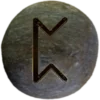
The rune Perthro (ᛈ), pronounced “perth-ro,” aligns with Skaldic Poetry through its association with hidden meaning, unfolding knowledge, and the process of discovery through engagement. Perthro (ᛈ) represents the idea that understanding develops gradually, which mirrors how listeners interpret layered imagery and complex phrasing within poetic composition. This rune emphasizes the value of attentive listening and thoughtful analysis.
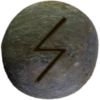
The rune Sowilō (ᛊ or ᛋ), pronounced “so-wee-lo,” connects with Skaldic Poetry through its link to clarity, success, and the illumination that follows effective expression. Sowilō (ᛊ or ᛋ) represents the moment when meaning becomes clear, aligning with the impact of well crafted verses that communicate ideas with precision. This rune highlights the role of skill and intention in achieving strong and lasting expression.
Importance of Skaldic Poetry to Asatruar
For individuals who identify as Asatruar, Skaldic Poetry offers a meaningful connection to language, tradition, and the preservation of cultural expression through structured composition. Its emphasis on skill and creativity encourages active participation, allowing individuals to engage with established forms while contributing their own perspectives. This approach supports both continuity and innovation.
Skaldic Poetry also reinforces the importance of memory and communication, highlighting how carefully chosen words can convey complex ideas and shared values. Its techniques provide tools for expressing identity and experience within a consistent framework. This balance ensures that the tradition remains accessible and relevant across different contexts.