Last Updated on April 15, 2026
Table of Contents
The Meaning and Craft of the Kenning
The word kenning, sometimes written as kenningr, comes from Old Norse and carries the sense of recognition, insight, or symbolic naming within poetic language that favors layered imagery over direct description. You pronounce kenning as “KEN-ing,” where the first syllable sounds like the word “ken” meaning to know, followed by a soft “ing” that blends smoothly. Poets used this device to replace common nouns with vivid compound expressions, allowing them to evoke deeper associations while maintaining rhythm and alliteration within complex verse structures.
Writers formed a kenning by combining two or more words that together created a metaphorical substitute for a familiar object, action, or concept, often drawing from shared cultural knowledge. A famous example includes “whale-road” to represent the sea, where the imagery captures movement, vastness, and the presence of sea creatures without naming the ocean directly. Skaldic poets relied on kennings to demonstrate skill, since audiences expected cleverness, precision, and an ability to weave meaning through layers that rewarded attentive listeners.
Pronunciation of Old Norse elements within kennings varies depending on reconstruction, yet many scholars render them using approximations that reflect phonetic clarity for modern readers. When encountering letters such as “ð,” pronounced like the “th” in “this,” or “þ,” pronounced like the “th” in “thing,” readers should speak them distinctly to preserve the original sound patterns. Ligatures such as “æ,” pronounced like the “a” in “cat,” appear in some reconstructed forms and help convey vowel qualities that differ from standard English usage.
Usage in Poetry and Cultural Context
Poets integrated them into oral and written traditions that valued memorization, performance, and intricate verbal artistry, which required both composer and audience to share a deep familiarity with mythic references and heroic narratives. A kenning did not merely decorate a line, since it anchored the poem within a network of stories and symbols that reinforced identity, memory, and social cohesion. Skilled listeners could decode these expressions quickly, while less experienced audiences still appreciated the rhythm and imagery even when meaning unfolded gradually.
Some kennings referenced figures and stories recorded in works such as the Poetic Edda and the Prose Edda, where mythic beings, legendary heroes, and divine events supplied a rich pool of symbolic associations. For example, references to Odin often appeared in layered forms that described him through deeds, attributes, or relationships, which required knowledge of his role as a seeker of wisdom and patron of poetry. These literary sources preserve many examples that illustrate how they functioned not only as poetic devices but also as cultural markers tied to shared storytelling traditions.
Over time, scholars have identified patterns in kenning construction, including base words known as determinants and referents that combine to form the final expression, though poets frequently stretched these patterns to showcase originality. This flexibility allowed kennings to evolve, enabling each poet to create new expressions while still respecting traditional frameworks that audiences recognized. As a result, they stand as both structured and inventive elements within early northern poetic practice, reflecting a balance between convention and creativity.
Runic Connections to Poetic Expression
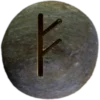
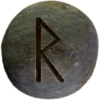
The rune Fehu (ᚠ), pronounced “FAY-hoo,” represents wealth, movement, and the flow of resources, which aligns with the creative exchange embodied in kenning usage within poetic traditions. Poets treated language as a form of wealth, shaping words into layered expressions that carried value beyond their literal meaning. Another rune, Raido (ᚱ), pronounced “RYE-tho,” reflects journey and rhythm, mirroring how kennings guide listeners through imagery while maintaining the structured cadence of verse.
Both runes emphasize motion and transformation, qualities that define how kennings shift ordinary language into symbolic expression that travels across memory and performance. Fehu (ᚠ) highlights the richness of metaphor, while Raido (ᚱ) underscores the movement within poetic storytelling that keeps meaning active and engaging. Together, these runes illustrate how sound, symbolism, and structure intertwine within the art of poetic naming.
Continuing Significance Among Asatruar
Modern practitioners who follow northern traditions value kenning as a living link to ancestral language practices, where symbolic expression deepens ritual, storytelling, and personal reflection within contemporary settings. Kenning encourages participants to engage actively with language, prompting them to craft meanings that resonate with both historical sources and present-day experience. This approach strengthens cultural continuity while allowing room for adaptation and creative exploration.
Community gatherings, recitations, and written works often include kennings that connect modern voices with earlier poetic forms, creating a sense of continuity that bridges centuries of cultural development. Practitioners find that using kennings fosters attentiveness, since each phrase requires thoughtful construction and interpretation rather than passive understanding. Through this process, kenning remains relevant as both a linguistic tool and a cultural expression that supports identity and shared heritage.