Last Updated on April 18, 2026
Table of Contents
The Querent in Asatru Practice and Personal Insight
The word querent describes the individual who seeks knowledge, guidance, or clarity through divination, reflection, or spiritual dialogue within Asatru traditions. Many practitioners pronounce querent as KWEH-rent or KWER-ent, depending on regional dialect and personal preference, while some alternative spellings include querant or querenté, though the latter appears rarely in modern usage. A querent doesn’t simply ask questions, since they engage actively with the process, shaping outcomes through intention, awareness, and willingness to confront truth. Within Asatru, this role carries weight because the querent stands as both seeker and participant, bridging human experience with the wisdom preserved through lore, rune work, and ancestral memory.
Practitioners in Asatru often view the querent as someone who approaches the sacred with purpose rather than idle curiosity, since intention influences how insights unfold during any ritual or reading. Their mindset matters deeply, because distraction or dishonesty clouds interpretation and weakens the clarity that runes or omens might otherwise provide. Strong engagement with personal responsibility defines the querent’s role, since Asatru emphasizes action, honor, and accountability rather than passive reliance on unseen forces. This perspective ensures that they remains grounded in reality, even while exploring spiritual dimensions that connect them to gods, ancestors, and the wider cosmos.
Historical context reinforces the querent’s importance, since early Germanic societies valued those who sought wisdom before making decisions that affected kinship groups or tribal stability. Leaders, warriors, and seers often served as querents themselves, consulting runes or völur, pronounced VOH-lur, who acted as ritual specialists and interpreters of fate. Their questions guided these interactions, shaping the form and depth of answers that emerged through symbolic systems or poetic insight. Modern Asatru continues this tradition by encouraging individuals to approach divination as a dialogue, rather than a one-sided request for certainty.
The Querent’s Role in Rune Work
Rune casting forms a central practice where the querent’s presence directly influences the outcome, since their question frames the symbolic language that emerges from the Elder Futhark. They must articulate their concern clearly, avoiding vague or overly broad phrasing that leads to confusing interpretations and weak personal relevance. Practitioners often advise them to focus on actionable insight, because Asatru values practical wisdom that guides behavior rather than abstract speculation detached from lived experience. This focus ensures that each rune reading becomes a meaningful exchange rather than a superficial exercise.
Pronunciation also matters when the querent engages with runic names, since speaking them aloud reinforces connection and intention during ritual practice. For example, Fehu (ᚠ) becomes FEH-hoo, while Raido (ᚱ) becomes RYE-thoh, each sound carrying rhythm that aligns the their voice with ancient linguistic patterns. Some explore reconstructed pronunciations from Old Norse or Proto-Germanic roots, though others prefer modern adaptations that feel natural within their own speech. Flexibility in pronunciation reflects the living nature of Asatru, where authenticity matters more than rigid adherence to reconstructed forms.
Runes That Reflect the Querent’s Journey
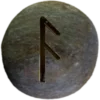
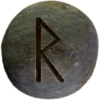
Two Elder Futhark runes often align closely with the querent’s role, since they symbolize the act of seeking knowledge and navigating personal transformation through deliberate action. Ansuz (ᚨ), pronounced AHN-sooz, represents communication, divine inspiration, and the transmission of wisdom between realms, making it highly relevant for any querent engaging with spiritual inquiry. This rune connects them to Odin, pronounced OH-thin, who sacrificed for knowledge and embodies the relentless pursuit of understanding. Raido (ᚱ), pronounced RYE-thoh, complements this energy by representing journey, movement, and the structured path that unfolds through conscious decision-making.
Together, these runes illustrate the querent’s dynamic role, since Ansuz (ᚨ) encourages insight while Raido (ᚱ) demands forward motion guided by that insight. They remain static, because each revelation carries responsibility that must translate into action within daily life. These symbols reinforce Asatru values by reminding them that wisdom without application loses meaning, while action without reflection risks chaos and poor judgment.
The Querent’s Importance Within Asatru Community
The querent holds importance within Asatru because they embody the living connection between tradition and present experience, ensuring that ancient practices remain relevant and meaningful. Communities rely on individuals who actively seek understanding, since shared wisdom grows stronger when members question, reflect, and contribute thoughtfully to collective knowledge. Their engagement fosters dialogue within kindreds and groups, encouraging deeper exploration of ethics, mythology, and ritual practice. This participation strengthens bonds, because mutual respect develops through shared inquiry and honest discussion.
Asatru values self-reliance and accountability, so the querent’s role reinforces these principles by emphasizing personal responsibility in spiritual matters. Individuals don’t rely entirely on external authorities, because they must interpret insights and apply them within their own lives with integrity and courage. They therefore becomes a vital force within the community, shaping both personal growth and collective evolution through consistent engagement with tradition. This active role ensures that Asatru continues as a living faith grounded in experience, action, and thoughtful reflection.