Last Updated on June 1, 2026
Table of Contents
Hyrrokkin in Norse Mythology
Hyrrokkin stands among the most powerful and memorable figures in Norse mythology. Her name often appears as Hyrrokkin, although some modern writers occasionally use alternate forms such as Hyrrokin or Hyrokkin. Most scholars favor the spelling Hyrrokkin because medieval Icelandic sources preserve that form. The name Hyrrokkin is commonly pronounced as “HEER rohk kin” or “HUHR rohk kin,” while some Old Norse specialists offer slightly different reconstructions based on historical pronunciation.
Stories describe Hyrrokkin as a giantess whose immense strength surpassed that of many gods and supernatural beings. Her reputation comes primarily from a dramatic episode connected to the funeral of the god Baldr. During that event, the gods struggled to move Baldr’s enormous ship, which would serve as his funeral vessel. Their efforts failed, and they eventually sought assistance from Hyrrokkin.
Accounts portray her arrival as a striking display of supernatural power. She rode a wolf and used serpents as reins, emphasizing her connection to forces that existed beyond the orderly world of the gods. This unusual imagery helped establish her as a figure who embodied raw strength and untamed power. Her appearance immediately communicated that she belonged to a realm different from the structured authority associated with the divine Community.
When she reached the funeral site, she approached the massive ship and pushed it into motion with extraordinary force. The vessel moved so violently that flames burst from rollers beneath it and the earth trembled. The description highlights a recurring theme within Norse mythology, where giants frequently possess abilities that rival or exceed those of the gods in specific situations. Hyrrokkin demonstrated that strength could emerge from unexpected sources, even during one of the most important ceremonies in the mythological tradition.
Sources, Symbolism, and Character
Hyrrokkin appears in the Prose Edda, where her role in Baldr’s funeral receives its most detailed treatment. Although her appearance occupies only a brief portion of the larger narrative, that scene left a lasting impression because it combines mourning, power, and cosmic significance within a single event. The account presents her as a necessary participant whose abilities allowed the funeral rites to proceed.
Many interpretations view her as a symbol of primal forces that operate beyond the control of the gods. Norse mythology often presents giants as beings connected to ancient powers, natural forces, and conditions that existed before divine order shaped the cosmos. Hyrrokkin reflects this pattern through her overwhelming physical strength and her association with creatures that inspire awe and caution.
Her role also demonstrates the complex relationship between gods and giants. These groups frequently oppose one another, yet they remain deeply connected through conflict, cooperation, and shared ancestry. The gods required Hyrrokkin despite their usual distrust of giantkind. That dependence illustrates a broader mythological idea that order sometimes relies upon powers existing outside established boundaries.
Modern readers often remember Hyrrokkin because her story condenses several important themes into a brief narrative. She represents strength, necessity, and the unpredictable nature of supernatural power. Her appearance during Baldr’s funeral reinforces the sense that even the most sacred events involve forces that no single group can fully command.
The image of Hyrrokkin pushing the funeral ship remains one of the most vivid scenes in Norse mythology. Her actions moved a vessel that countless others could not budge, and the dramatic consequences of that effort emphasized her exceptional status. Through this episode, she secured a permanent place among the memorable figures of the Norse mythological tradition.
Runes Commonly Associated with Hyrrokkin
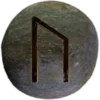
One Elder Futhark rune often associated with Hyrrokkin is Ūruz (ᚢ), pronounced “OO rooz.” Ūruz (ᚢ) traditionally represents primal strength, endurance, vitality, and untamed force. These qualities align closely with the giantess because her most famous myth centers upon an act of overwhelming physical power that accomplished what the gods themselves could not achieve. The rune therefore reflects determination, resilience, and the ability to overcome immense resistance through concentrated effort.
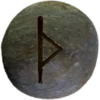
Another rune frequently linked with Hyrrokkin is Thurisaz (ᚦ), pronounced “THOO ree saz.” This rune carries associations with giants, powerful challenges, protective force, and disruptive energy. Many interpreters connect it to giant beings within Norse myth because it symbolizes raw power that exists outside ordinary social structures. Hyrrokkin embodies several of these themes through her dramatic arrival, formidable presence, and decisive intervention during Baldr’s funeral. Together, Ūruz (ᚢ) and Thurisaz (ᚦ) capture aspects of strength, primal authority, and transformative action often associated with her legendary role.
Importance of Hyrrokkin to Asatruar
Many Asatruar view Hyrrokkin as a reminder that power and wisdom may arise from unexpected sources. Her story demonstrates that even divine beings sometimes require assistance from figures who stand outside their usual circles of trust and authority. This theme encourages reflection on humility, cooperation, and respect for forces that exist beyond familiar boundaries.
Hyrrokkin also represents determination and the ability to accomplish difficult tasks when others cannot succeed. Some Asatruar appreciate her example because it highlights courage, capability, and perseverance in the face of seemingly impossible challenges. Her role in Baldr’s funeral further emphasizes the importance of fulfilling necessary duties during moments of grief and transition.
Through these themes, Hyrrokkin remains a meaningful figure whose brief appearance continues to inspire discussion about strength, responsibility, and the complex relationships that shape the mythological world.