Last Updated on April 25, 2026
Table of Contents
The Radiant Boar of Divine Craft and Power
Gullinbursti stands as a remarkable creation in Norse mythology, known as the golden boar who serves the god Freyr with unmatched brilliance and strength. The name Gullinbursti, pronounced GUL-lin-bur-stee, combines elements that mean “golden bristles,” reflecting the shining hair that emits light wherever he travels. You may also encounter alternate spellings such as Gullinburste or Gullinbürsti, though most Old Norse sources retain the original form with slight variation in vowel length.
Crafted by skilled Dwarves, Gullinbursti embodies the union of artistry and supernatural function, since his creators designed him to surpass ordinary beasts in both speed and endurance. His glowing bristles illuminate darkness, allowing him to move through night and shadow without hesitation or fear. This radiant quality symbolizes not only physical light but also prosperity and divine favor, which align closely with Freyr’s associations with fertility, abundance, and peace.
Gullinbursti serves as more than a companion, since he also functions as a vehicle for Freyr, carrying the god swiftly across land and sky. His speed rivals that of any horse, yet his boar form connects him to ancient symbols of fertility and strength within Indo European traditions. This dual role reinforces his importance, since he bridges the gap between natural symbolism and divine utility in a way that few mythological creatures achieve.
Creation and Mythic Significance
Stories from the Prose Edda describe how dwarven brothers forged Gullinbursti during a contest of craftsmanship, where they sought to prove their unmatched skill against rival smiths. They shaped the boar from gold with such precision that each bristle shone like a flame, and they imbued him with life and motion through secret techniques. This account highlights the dwarves’ mastery over materials and magic, since they transform inert metal into a living being that serves a god.
The tale also emphasizes the importance of competition and pride among divine and semi divine figures, since Loki’s involvement sparks the challenge that leads to Gullinbursti’s creation. Gullinbursti becomes a symbol of excellence achieved under pressure, where craftsmanship meets necessity and produces something extraordinary. His existence therefore reflects both creative brilliance and the unpredictable forces that often drive innovation in mythic stories.
Descriptions often focus on his glowing presence, which lights paths and reveals hidden terrain, making him a guide as well as a mount. This luminous aspect connects him to solar imagery, reinforcing Freyr’s role as a deity linked to growth and seasonal cycles. Gullinbursti thus carries layered meaning, since he represents illumination in both a literal and symbolic sense, guiding movement while also embodying prosperity and clarity.
Symbolism and Cultural Interpretation
Gullinbursti’s form as a boar ties him to long standing symbols of fertility, protection, and warrior strength, which appear across many early European traditions. The boar often represents courage and resilience, since it faces threats directly and defends itself with fierce determination. These traits enhance Gullinbursti’s role, since he supports a god who governs peace and prosperity while still requiring strength to maintain those conditions.
His golden bristles extend this symbolism, since gold represents wealth, divine favor, and enduring value within Norse cultural contexts. The combination of animal strength and radiant material suggests a harmony between natural vitality and refined abundance. This harmony aligns closely with Freyr’s domain, where fertile land and successful harvests depend on both Natural Cycles and favorable conditions.
Interpretations of Gullinbursti often highlight his role as a guiding force, since his light ensures safe passage through uncertain environments. This guiding function reinforces the idea that prosperity requires direction and awareness, not just raw resources or strength. Through Gullinbursti, the mythology presents a vision of balanced power, where illumination, endurance, and purpose combine to support divine and human endeavors.
Runes of Radiance and Growth
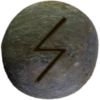
The rune Sowilō (ᛊ or ᛋ), pronounced SOH-wee-loh, aligns closely with Gullinbursti through its association with the sun, light, and guiding energy. This rune represents clarity and success achieved through illumination, which mirrors the boar’s glowing bristles that light the path for Freyr. Its symbolism emphasizes forward movement guided by insight, reinforcing the idea that light reveals opportunity and direction.
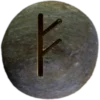
The rune Fehu (ᚠ), pronounced FEH-hoo, connects to Gullinbursti through themes of wealth, prosperity, and the responsible use of resources. Fehu (ᚠ) represents movable wealth such as livestock, which ties directly to the boar’s role as a living embodiment of value and abundance. Together, Sowilō (ᛊ or ᛋ) and Fehu (ᚠ) capture the radiant and fertile qualities that define Gullinbursti’s presence in myth.
Meaning for Modern Asatruar
Gullinbursti holds deep importance for Asatruar, since he represents prosperity that arises through both natural strength and careful cultivation of resources. Many practitioners view the golden boar as a symbol of abundance that requires guidance and awareness, rather than unchecked accumulation. His radiant bristles remind them that clarity and intention shape how wealth and success develop over time.
His connection to Freyr reinforces themes of fertility and peace, which remain central values within many modern interpretations of Norse spirituality. Practitioners often reflect on Gullinbursti as a reminder that strength supports growth when guided by purpose and respect for natural cycles. Through this figure, they explore how balance between power and illumination sustains both personal and communal well being.