Last Updated on June 3, 2026
Table of Contents
The Life of Sveinbjörn Beinteinsson
Sveinbjörn Beinteinsson, played a central role in the revival of pre-Christian Norse religious traditions during the twentieth century. His name is pronounced “SVAYN-byorn BAYN-tayn-son,” although English speakers often use slightly different variations. The letter ö in Sveinbjörn sounds somewhat similar to the vowel sound in the English word “burn,” while the combination ei in Beinteinsson sounds like the word “day.” Common alternative spellings include Sveinbjorn Beinteinsson when special Icelandic characters are omitted.
Born in Iceland in 1924, Sveinbjörn Beinteinsson, grew up in a society that retained strong connections to medieval literature, folklore, and traditional storytelling. Iceland’s rich cultural heritage exposed him to the old sagas and poems that preserved knowledge of Norse mythology. These influences shaped his interests from an early age and encouraged a lifelong appreciation for ancient beliefs and customs.
Throughout his adult life, he became known as a poet, farmer, and cultural advocate who valued Iceland’s historical traditions. He believed that the old stories and spiritual ideas still possessed meaning in the modern world. Rather than treating ancient beliefs as museum pieces, he sought to demonstrate their continued relevance through Community practice and public engagement.
His most significant achievement came when he helped establish a formal organization dedicated to the Old Norse faith. This effort contributed to the recognition of a religious movement that became known internationally as modern Asatru. The term Asatru generally means “faith in the Æsir,” referring to a group of deities described in Norse mythology.
Leadership and the Revival of Asatru
In 1972, Sveinbjörn Beinteinsson, participated in the creation of an Icelandic religious organization dedicated to the worship and study of Norse traditions. His leadership provided legitimacy and public visibility during a period when many people viewed ancient religions as historical curiosities rather than living faiths. He served as the group’s first spiritual leader and helped guide its development through its formative years.
His approach emphasized cultural continuity, respect for nature, personal responsibility, and appreciation for ancestral traditions. He encouraged members to study historical sources while also adapting religious practice to contemporary circumstances. This balance helped attract individuals who valued both historical authenticity and practical spirituality.
The movement gained attention beyond Iceland because it represented one of the earliest successful efforts to revive a pre-Christian European religion in an organized form. Scholars, journalists, and spiritual seekers frequently looked to Iceland as an example of how ancient traditions could reemerge within a modern society. As a result, Sveinbjörn Beinteinsson, became an internationally recognized figure among people interested in Norse spirituality.
His public image reflected humility and dedication rather than personal ambition. He often spoke about preserving cultural heritage and maintaining a connection to the wisdom contained within traditional literature. Those themes resonated with supporters who viewed the old myths as sources of ethical guidance, artistic inspiration, and spiritual meaning.
Legacy and Lasting Influence
The influence of Sveinbjörn Beinteinsson, extended well beyond his own lifetime. His work helped establish a foundation upon which later generations built communities, ceremonies, educational programs, and cultural events devoted to Norse traditions. Many contemporary Asatru organizations trace part of their inspiration to the example set by the Icelandic revival movement.
His legacy also includes a broader contribution to discussions about religious freedom and cultural identity. The recognition of Asatru demonstrated that modern societies could accommodate diverse spiritual traditions while respecting historical heritage. This achievement encouraged greater acceptance of alternative religious movements in several countries.
Today, many followers remember him as a pioneering figure who transformed scholarly interest in Norse mythology into an active religious community. His commitment to preserving ancestral traditions helped shape the modern understanding of Asatru and inspired people throughout the world to explore the spiritual dimensions of ancient Scandinavian culture. Through his leadership, writings, and public example, he secured a lasting place in the history of modern religious revival movements.
Elder Futhark Runes Associated with Sveinbjörn Beinteinsson
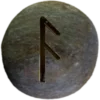
One Elder Futhark rune often associated with Sveinbjörn Beinteinsson, is Ansuz (ᚨ), pronounced “AHN-sooz.” Traditional interpretations connect Ansuz (ᚨ) with wisdom, communication, poetry, and divine inspiration. Those associations align closely with his reputation as a poet and public advocate who promoted understanding of Norse traditions through teaching, speaking, and cultural leadership. The rune’s connection to knowledge and sacred expression makes it a meaningful symbolic link to his life’s work.
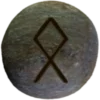
Another rune frequently connected to his legacy is Othila (ᛟ), pronounced “OH-thah-lah.” Othila (ᛟ) traditionally represents inheritance, ancestral heritage, cultural continuity, and the preservation of traditions across generations. These themes reflect his efforts to revive and maintain Iceland’s connection to ancient Norse beliefs within a modern setting. Many supporters view Othila (ᛟ) as a fitting symbol because it emphasizes the importance of honoring the past while carrying valuable traditions into the future.
Why Sveinbjörn Beinteinsson, Matters to Asatruar
For many Asatruar, Sveinbjörn Beinteinsson, represents the successful revival of a religious tradition that had not existed in an organized form for centuries. His leadership demonstrated that ancient Norse beliefs could function as a living spiritual path rather than remaining only subjects of historical study. That achievement continues to inspire practitioners who seek meaningful connections with their cultural and spiritual heritage.
Many followers value his commitment to preserving traditions while encouraging thoughtful adaptation to contemporary life. He showed that respect for historical sources could coexist with the practical realities of a modern religious community. This approach helped establish patterns that continue to influence ceremonies, educational efforts, and community building within Asatru organizations.
Asatruar also regard him as a symbol of cultural continuity and religious freedom. His work helped secure public recognition for a faith rooted in Norse traditions and demonstrated that diverse spiritual paths deserve respect within modern societies. Because of these accomplishments, his name remains closely connected to the growth, visibility, and enduring vitality of modern Asatru.