Last Updated on April 19, 2026
Table of Contents
Sleipnir: The Eight-Legged Steed of Odin
Sleipnir stands as one of the most striking figures connected to Odin, and his form immediately captures attention through his eight powerful legs that drive unmatched speed and endurance. You pronounce Sleipnir as “SLAYP-neer,” where “Slei” sounds like “slayp” and “nir” ends with a soft “neer” sound that flows smoothly. Alternate spellings include Sleipner and Sleipnír, with the accented “í” pronounced as a long “ee,” giving the name a slightly sharper and more elongated tone.
His origin story carries unusual depth, as Loki transforms into a mare and gives birth to Sleipnir after an encounter with the stallion Svaðilfari, which creates a connection between trickery and strength. This beginning ties him to both transformation and resilience, since he emerges from a situation shaped by cunning decisions and unexpected outcomes. His existence reflects the blending of different forces that result in something both unique and powerful.
Descriptions of Sleipnir emphasize not only his speed but also his ability to travel across boundaries that other beings cannot cross, including journeys between realms that remain inaccessible to ordinary riders. His eight legs symbolize more than physical advantage, since they represent stability and reach across multiple directions at once. This capability allows him to serve Odin as a reliable companion in both travel and exploration.
Form, Motion, and Unique Traits
Sleipnir’s eight legs create an image of continuous motion, where each stride overlaps with the next to produce a rhythm that feels almost unbroken in its flow. This structure allows him to maintain balance even at extreme speeds, giving him a presence that feels both grounded and unstoppable. His movement suggests a mastery of terrain, where obstacles lose significance under the force of his stride.
The name Sleipnir connects to Old Norse roots related to slipping or gliding, which aligns with the idea of smooth and effortless travel across difficult surfaces. Pronouncing Sleipnír with the accented “í” as “SLAYP-neer” highlights the extended vowel that adds emphasis to the second syllable. These linguistic details reinforce the sense of motion and fluidity that define his identity.
Artists and storytellers often depict Sleipnir with a calm yet intense presence, where strength doesn’t require constant display because it exists as an inherent quality. His appearance conveys readiness rather than aggression, suggesting that speed and endurance serve a purpose beyond mere spectacle. This portrayal supports his role as a trusted and capable companion rather than a chaotic force.
Presence in the Eddas and Stories
Sleipnir appears in both the Poetic Edda and the Prose Edda, where his role as Odin’s steed becomes clear through various journeys and encounters that highlight his unmatched abilities. In the Prose Edda, Snorri Sturluson describes his origin and emphasizes his status as the finest of all horses, reinforcing his exceptional nature. These accounts establish Sleipnir as a central figure connected directly to Odin’s movements and actions.
In the Poetic Edda, Sleipnir carries Odin into the underworld, demonstrating his ability to traverse boundaries that separate different realms and states of existence. This journey highlights not only his speed but also his reliability in situations that demand absolute trust and endurance. His presence during such moments underscores his importance as more than a means of travel.
These references ensure that Sleipnir remains an active and recognizable figure within the tradition, even when individual stories focus more on Odin’s actions than on the horse himself. His inclusion in key moments reinforces his role as an essential companion whose abilities shape the outcome of important journeys. Through these accounts, he continues to embody movement, connection, and strength.
Runes Connected to Sleipnir’s Nature
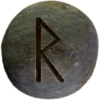
The rune Raido (ᚱ) aligns closely with Sleipnir due to its association with travel, movement, and the structured act of journeying along a chosen path with purpose and awareness. Raido (ᚱ), pronounced “RYE-doe,” reflects the idea of controlled motion, where direction and intent guide every step taken along the way. This rune mirrors Sleipnir’s role as a steed who carries his rider across great distances with precision and reliability.
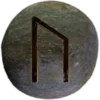
Another rune that resonates with Sleipnir’s nature is Ūruz (ᚢ), pronounced “OO-rooz,” which represents physical strength, endurance, and the raw vitality required to sustain movement over time. Ūruz (ᚢ) connects with the power behind his stride, emphasizing the energy that supports his unmatched speed and stability. Together, these runes highlight the balance between direction and strength that defines his presence.
Sleipnir’s Importance to Asatruar
Sleipnir holds deep meaning for Asatruar who seek to understand movement, connection, and the ability to navigate complex paths through both physical and spiritual experiences. His role as Odin’s steed reflects the importance of trust and partnership, where strength and direction must align to achieve meaningful outcomes. This perspective encourages individuals to consider how they move through their own journeys.
Many practitioners view Sleipnir as a symbol of endurance and adaptability, since his ability to travel across boundaries reflects a capacity to face challenges without losing direction or purpose. His presence reinforces the idea that progress requires both strength and awareness, especially when facing uncertain or shifting conditions. This understanding supports a balanced approach to growth and exploration.