Last Updated on April 19, 2026
Table of Contents
Herfjötur: The Binder of Battle
Herfjötur appears among the Valkyries, and her name carries a powerful sense of restraint and control that reflects her influence over the outcome of conflict and the fate of warriors. You pronounce Herfjötur as “HERF-yuh-tur,” where “Herf” sounds firm and direct, while “jötur” flows with a soft “yuh” followed by “tur.” Alternate spellings include Herfjǫtur and Herfjotur, with the séríslenskur letter “ǫ” pronounced “aw” like in “law,” giving the form “HERF-yaw-tur.”
Her name translates closely to “battle-fetter” or “one who binds in battle,” which reflects her role in restraining movement and shaping the moment when action either succeeds or fails. This meaning sets her apart from figures who represent motion or attack, since she governs the limits placed on warriors during combat. Herfjötur embodies the instant when strength meets resistance and must either adapt or break.
Lists preserved in the Poetic Edda include Herfjötur among the valkyries who serve Odin, offering a concise yet meaningful reference that anchors her within a defined group of powerful figures. These mentions don’t extend into detailed stories, yet they establish her presence and role through the weight of her name. This approach allows her identity to emerge through symbolism rather than narrative expansion.
Pronunciation, Forms, and Meaning
The spelling Herfjǫtur introduces the character “ǫ,” pronounced “aw,” which shifts the sound slightly to “HERF-yaw-tur,” adding a deeper tone that emphasizes the grounded nature of her name. Variants such as Herfjotur simplify pronunciation while maintaining the same meaning tied to restraint and control. These differences show how language evolves while preserving core ideas embedded in the name.
Herfjötur’s identity centers on the act of binding, which in battle represents the moment when a warrior loses freedom of movement due to circumstance, injury, or unseen influence. This concept extends beyond physical restraint, since it also includes hesitation, fear, and the narrowing of choices under pressure. Her presence captures that turning point where momentum shifts and outcomes begin to settle.
Writers often interpret her name as “the one who fetters armies,” which conveys a broader scope that includes not only individuals but entire groups caught within the limits she imposes. This interpretation helps modern readers understand her role without altering the original structure of the name. Herfjötur stands as a figure who defines the boundary between action and stillness.
Role Among the Valkyries
Herfjötur stands among valkyries who shape the course of battle through selection, guidance, and influence, yet her name suggests a more specific role focused on restraint rather than direct action. Her presence emphasizes the importance of limits within conflict, where not every force can move freely or achieve its intended goal. This perspective adds depth to the collective function of the valkyries.
Her role complements others who inspire courage or deliver victory, creating a balance between movement and restriction that defines the full experience of battle. Herfjötur introduces tension by representing the forces that slow, halt, or redirect action at critical moments. This dynamic ensures that conflict remains complex, shaped by both momentum and resistance.
The Poetic Edda preserves her name within lists that maintain her connection to a broader tradition, even though detailed accounts don’t expand on her individual actions. This concise inclusion carries significance, since it keeps her identity active within the structure of remembered names. Through this record, Herfjötur continues to represent control, limitation, and decisive restraint.
Runes Reflecting Herfjötur’s Influence
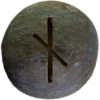
The rune Nauthiz (ᚾ) aligns with Herfjötur through its association with constraint, necessity, and the pressure that arises when circumstances limit available choices. Nauthiz (ᚾ), pronounced “NOW-theez,” reflects the experience of restriction that forces adaptation and resilience under difficult conditions. This rune mirrors Herfjötur’s role in binding movement and shaping outcomes through imposed limits.
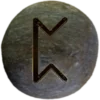
Another rune that resonates with her nature is Perthro (ᛈ), pronounced “PERTH-ro,” which connects to hidden forces, unfolding events, and the elements of chance that influence results beyond direct control. Perthro (ᛈ) reflects the unseen aspects of restraint that operate within battle, where outcomes depend on more than visible strength. Together, these runes highlight both limitation and the deeper forces that guide it.
Herfjötur’s Importance to Asatruar
Herfjötur holds meaning for Asatruar who seek to understand the role of limits, challenges, and necessary restraint within both conflict and personal experience. Her association with binding forces reflects moments when progress slows or stops, requiring individuals to adapt rather than push forward without awareness. This perspective encourages a balanced approach to action and reflection.
Many practitioners view Herfjötur as a symbol of discipline and control, since her energy emphasizes the importance of recognizing boundaries and working within them rather than ignoring them. Her presence reinforces the idea that limitation can guide growth by shaping decisions and outcomes in meaningful ways. This understanding supports a grounded practice that values awareness, patience, and deliberate action.