Last Updated on April 19, 2026
Table of Contents
Grímnir: The Masked Wanderer of Hidden Knowledge
Grímnir stands as one of the many names used by Odin, and this identity emphasizes concealment, endurance, and the deliberate choice to move through the world without revealing true form. You pronounce Grímnir as “GREEM-neer,” where “Grím” uses a long “ee” sound and “nir” closes with a soft “neer.” Alternate spellings include Grimnir and Grímner, while the accented “í” maintains that elongated vowel which gives the name a sharper and more focused tone.
The name Grímnir connects directly to the word “gríma,” which means mask or covering, and this link highlights the act of hiding identity in order to observe, test, or influence events. This meaning places Grímnir within a broader pattern of deliberate disguise, where appearance becomes a tool rather than a fixed trait. Through this name, Odin adopts a role that values insight gained through direct experience rather than distant authority.
Grímnir appears prominently in the poem Grímnismál from the Poetic Edda, where Odin, under this name, endures hardship while sharing extensive knowledge about the worlds, beings, and structures that define existence. This account shows him bound between fires as a test of endurance, yet he continues to speak with clarity and authority. His presence in this poem reinforces the connection between suffering, persistence, and the transmission of knowledge.
Pronunciation, Forms, and Hidden Identity
The spelling Grímnir includes the accented “í,” pronounced as “ee,” which ensures the name sounds like “GREEM-neer” rather than a shorter or flatter variation. Forms such as Grimnir remove the accent yet retain the same general pronunciation, though the tonal clarity becomes less precise without the marked vowel. These variations demonstrate how written forms can shift while preserving the underlying identity tied to the name.
He represents more than a disguise, since the name carries the idea that truth often emerges through indirect experience rather than open declaration. By moving unseen or unrecognized, he gains access to situations that would remain closed to a known figure. This approach reflects a method of learning and influence that depends on presence rather than display.
Writers often interpret Grímnir as “the masked one” or “the hooded one,” which conveys the sense of concealment without losing the cultural weight embedded in the original term. These interpretations provide clarity for modern readers while maintaining the symbolic depth of the name. Grímnir stands as a figure who uses identity as a flexible and purposeful tool.
Grímnir in the Edda Narrative
The poem Grímnismál presents Grímnir as a central figure who undergoes a harsh ordeal while revealing detailed knowledge about divine halls, rivers, and beings that shape the structure of existence. King Geirröðr captures him and subjects him to torment, yet he endures without breaking, which highlights both resilience and control. This situation creates a powerful contrast between physical suffering and intellectual clarity.
During this ordeal, Grímnir speaks at length, delivering information that serves both as instruction and as a demonstration of authority grounded in knowledge rather than force. His words flow despite the conditions, reinforcing the idea that understanding remains steady even when the body faces strain. This dynamic strengthens his identity as a bearer of insight gained through experience.
The poem concludes with a revelation of his true identity, which brings consequences for those who failed to recognize or respect him during his time in disguise. This moment underscores the risk involved in misjudging appearances, especially when dealing with figures who operate beyond ordinary limits. He embodies endurance, hidden presence, and the power of revealed knowledge.
Runes Connected to Grímnir’s Nature
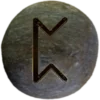
The rune Perthro (ᛈ) aligns with Grímnir through its association with mystery, hidden knowledge, and the unfolding of truths that remain concealed until the right moment reveals them. Perthro (ᛈ), pronounced “PERTH-ro,” reflects the idea that not all information appears openly, and some understanding requires patience and experience to uncover. This rune mirrors his role as a figure who reveals knowledge only after enduring concealment and challenge.
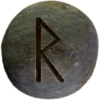
Another rune that resonates with his nature is Raido (ᚱ), pronounced “RYE-doe,” which represents journeys, both physical and internal, guided by purpose and awareness. Raido (ᚱ) connects with Grímnir’s wandering aspect, where movement serves as a means of gathering insight rather than simple travel. Together, these runes highlight the balance between hidden knowledge and the path taken to uncover it.
Grímnir’s Importance to Asatruar
Grímnir holds strong meaning for Asatruar who value knowledge gained through experience, resilience during hardship, and the ability to see beyond surface appearances. His story emphasizes the importance of endurance, especially when facing situations that test both strength and understanding. This perspective encourages individuals to remain steady even when circumstances challenge their limits.
Many practitioners view Grímnir as a symbol of hidden wisdom, since his identity highlights the idea that truth doesn’t always present itself openly or immediately. His presence reinforces the value of observation, patience, and the willingness to learn through direct engagement with the world. This understanding supports a path grounded in awareness, persistence, and thoughtful action.