Last Updated on April 19, 2026
Table of Contents

King Geirröðr: The Host Who Failed the Trial
King Geirröðr appears as a ruler whose actions reveal the consequences of pride, suspicion, and a failure to recognize hidden power when it stands directly before him. You pronounce Geirröðr as “GAYR-roth,” where “Geir” sounds like “gair,” and “röðr” carries a soft “roth” sound with the séríslenskur letter “ð” pronounced like “th” in “this.” Alternate spellings include Geirrod, Geirröd, and Geirrøðr, with “ö” pronounced “uh” as in “fur,” creating the variation “GAYR-ruth.”
The name Geirröðr combines elements that suggest a spear or forceful action, which aligns with his role as a king who exercises authority through command and control. This connection to force reflects his tendency to act quickly and decisively, though not always with wisdom or restraint. His identity centers on leadership shaped by personal judgment, which ultimately defines his fate.
He appears most prominently in the poem Grímnismál from the Poetic Edda, where his interaction with a disguised Odin creates a powerful narrative about recognition, respect, and the consequences of poor judgment. This account places him in direct contrast with divine presence, highlighting the limits of mortal authority when faced with hidden truth. Through this story, King Geirröðr becomes a figure defined by his response to the unknown.
Pronunciation, Variants, and Character
The spelling Geirröðr includes both “ö” and “ð,” which shape the pronunciation into “GAYR-ruth” or “GAYR-roth,” depending on how the vowel sound shifts in spoken use. The letter “ð,” known as eth, produces a soft “th” sound, which adds a flowing quality to the name rather than a sharp ending. Variants such as Geirrod simplify these sounds, yet they retain the structure and meaning tied to the original form.
King Geirröðr’s character reflects a ruler who values control and authority, yet struggles with trust and perception when faced with unfamiliar situations. His actions demonstrate how power can become unstable when guided by suspicion instead of understanding. This trait shapes his decisions during critical moments, where caution gives way to harsh treatment.
Writers often interpret his name as “spear-thrower” or “one who acts with force,” which aligns with his decisive yet flawed approach to leadership. These interpretations help modern readers understand his behavior without altering the linguistic roots of his name. King Geirröðr stands as a figure whose strength lacks the balance required for wise rule.
King Geirröðr in Grímnismál
The poem Grímnismál presents King Geirröðr as a central figure who captures Odin, disguised as Grímnir, and subjects him to a harsh ordeal without recognizing his true identity. He binds the figure between fires, creating a situation that tests endurance while revealing the king’s lack of discernment. This act sets the stage for a dramatic unfolding of knowledge and consequence.
During this ordeal, Grímnir speaks at length, sharing detailed knowledge about divine realms, beings, and structures, while King Geirröðr fails to understand the significance of what he hears. His inability to recognize wisdom presented directly before him highlights a disconnect between authority and insight. This contrast emphasizes the importance of perception in leadership.
The narrative concludes with the revelation of Odin’s identity, which brings immediate consequences for King Geirröðr as his actions return upon him with fatal results. This ending reinforces the idea that mistreatment of the unknown carries serious risks, especially when dealing with forces beyond ordinary understanding. Through this account, King Geirröðr becomes a lasting example of failed recognition and its cost.
Runes Connected to King Geirröðr’s Nature
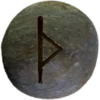
The rune Thurisaz (ᚦ) aligns with King Geirröðr through its association with reactive force, conflict, and the kind of energy that emerges when decisions rely on impulse rather than reflection. Thurisaz (ᚦ), pronounced “THOO-ree-sahz,” reflects the sharp and sometimes destructive power that defines his actions during critical moments. This rune highlights the intensity that can arise when strength lacks restraint.
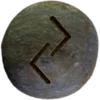
Another rune that resonates with his nature is Nauthiz (ᚾ), pronounced “NOW-theez,” which represents necessity, constraint, and the pressure that shapes outcomes when circumstances limit available choices. Nauthiz (ᚾ) reflects the conditions King Geirröðr creates for himself through his decisions, leading to consequences that he cannot avoid. Together, these runes emphasize force shaped by limitation and the results that follow.
King Geirröðr’s Importance to Asatruar
King Geirröðr holds meaning for Asatruar who examine leadership, responsibility, and the importance of recognizing value and wisdom even when it appears in unfamiliar forms. His story highlights how authority alone doesn’t guarantee understanding, especially when perception remains clouded by suspicion or pride. This perspective encourages careful judgment in positions of influence.
Many practitioners view King Geirröðr as a cautionary figure, since his actions demonstrate the consequences of failing to respect what one doesn’t immediately understand. His presence reinforces the importance of balance between strength and awareness, where decisions must align with insight rather than impulse. This understanding supports a thoughtful approach to leadership and personal conduct.