Last Updated on April 25, 2026
Table of Contents
Thunder’s Companions and Their Mythic Role
Tanngrisnir and Tanngnjóstr stand as the powerful goats who pull the chariot of Thor, the thunder god in Norse mythology, and their names reflect fierce qualities tied to grinding and gnashing teeth. Scholars often translate Tanngrisnir as “tooth grinder,” pronounced TAN-gris-neer, while Tanngnjóstr means “tooth gnasher,” pronounced TAN-gn-yoh-str, with the “gnj” cluster spoken quickly as one blended sound. You may also encounter alternate spellings such as Tanngrísnir or Tanngnjóstr, where the accented vowels indicate subtle shifts in stress and tone, though English texts often simplify these forms.
These goats do more than transport Thor across the sky, since they embody resilience, renewal, and a strange cycle of life that reflects deeper mythic themes. When Thor travels, he relies on their immense strength to pull his chariot, which creates thunder as it moves across the heavens. Their presence connects natural forces with divine action, giving a physical form to storms and reinforcing Thor’s role as both protector and wielder of destructive power.
Stories describe how Thor slaughters the goats for food when he travels with companions, then revives them the next day using his hammer, as long as their bones remain unbroken. This cycle shows a belief in restoration and continuity, since death does not end their service or identity. It also highlights the sacred nature of respect toward what sustains life, since careless damage to the bones prevents full restoration and leads to consequences within the myth.
Appearances in Norse Sources
Tanngrisnir and Tanngnjóstr appear in the Prose Edda, particularly in tales recorded by Snorri Sturluson, where Thor travels with human hosts and demonstrates both generosity and strict expectations. In one account, a farmer’s family shares a meal of the goats, yet a child breaks a bone to access marrow, which disrupts the restoration process. Thor revives the goats but notices the damage, and this moment leads to tension that reflects the importance of honoring divine property and ritual practice.
The narrative reinforces Thor’s dual nature, since he shows both hospitality and a readiness to enforce consequences when respect falters. Tanngrisnir and Tanngnjóstr therefore act as more than animals, because they become instruments through which divine justice and order manifest. Their presence in these stories anchors the myth in everyday concerns such as food, trust, and responsibility, which makes their role feel immediate and tangible.
Descriptions emphasize their enduring vitality, as they return to life repeatedly and continue their service without losing strength or purpose. This repetition suggests a worldview that values cycles rather than final endings, where destruction leads into renewal rather than permanent loss. Through these goats, the mythology expresses a balance between power and dependence, since even a god relies on companions who embody natural forces.
Runic Connections to Strength and Renewal
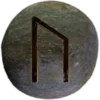
The rune Ūruz (ᚢ), pronounced OO-rooz, connects strongly with Tanngrisnir and Tanngnjóstr through its association with raw strength, endurance, and primal vitality. This rune represents the aurochs, a powerful wild ox, and it conveys untamed energy that mirrors the goats’ ability to pull Thor’s chariot and endure repeated cycles of death and rebirth. Its symbolism emphasizes physical power grounded in nature, which aligns with the goats’ role as living forces that bridge the divine and the natural world.
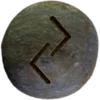
The rune Jēra (ᛃ), pronounced YEH-rah, reflects cycles, harvest, and the turning of time, which closely parallels the goats’ repeated restoration after sacrifice. Jēra (ᛃ) expresses the idea that actions bring results through steady progression, and it suggests that renewal follows completion when proper care and respect guide behavior. Together, Ūruz (ᚢ) and Jēra (ᛃ) capture both the strength and the cyclical regeneration embodied by Tanngrisnir and Tanngnjóstr.
Meaning for Modern Asatruar
Tanngrisnir and Tanngnjóstr hold symbolic value for Asatruar, since they represent dependable strength, renewal through cycles, and the importance of honoring sacred relationships with both gods and natural forces. Many practitioners see the goats as reminders that power requires responsibility, especially when actions affect shared resources or communal well-being. Their story encourages mindfulness toward how one uses and restores what sustains life, reflecting a practical ethical framework rooted in myth.
These goats also illustrate resilience, since they endure repeated trials without losing purpose or identity, which resonates with those who seek continuity in spiritual practice. Their connection to Thor reinforces protection and stability, while their cycles of death and rebirth highlight the enduring nature of life’s patterns. Through Tanngrisnir and Tanngnjóstr, Asatruar often reflect on balance, respect, and the ongoing relationship between effort and renewal.