Last Updated on April 19, 2026
Table of Contents
The Haunting Vision of Darraðarljóð
Darraðarljóð, often written as Darradarljóð or Darraðarljod, stands as a vivid and unsettling poetic work that captures a moment of supernatural intensity and human conflict. The name Darraðarljóð comes from Old Norse, where “Darraðr” connects with a valkyrie figure or a spear bearer, and “ljóð” means song or chant, pronounced roughly as “LYOH-th.” When spoken aloud, Darraðarljóð sounds like “DAR-rath-lyohth,” with the “ð” pronounced like the soft “th” in “this.” This chant-like poem presents a dramatic weaving scene where fate and battle intertwine through symbolic imagery that feels immediate and alive.
The poem describes twelve women weaving a grisly tapestry using human intestines as thread and severed heads as weights, while swords and arrows serve as their tools. These women, clearly Valkyries, actively determine the outcome of a fierce battle rather than merely observing events from a distance. Their actions demonstrate how war and destiny intertwine, creating a powerful impression that no warrior escapes the pattern woven by unseen hands. This striking imagery doesn’t just shock the audience, it also communicates the inevitability of conflict and the harsh realities faced by those who enter battle.
The setting links closely to a historical battle near Clontarf in Ireland, giving the poem a grounded context while maintaining its supernatural atmosphere. The observer within the narrative witnesses the weaving and hears the chant, which reinforces how ordinary individuals could glimpse forces beyond their understanding during moments of chaos. This connection between historical conflict and mythic imagery gives Darraðarljóð a unique position as both a literary and cultural artifact. Readers encounter a fusion of real events and symbolic storytelling that reflects how people interpreted war through a spiritual lens.
The Weaving of Fate and Battle
The weaving scene serves as the central metaphor, and it conveys more than simple storytelling through its intense and deliberate imagery. Each thread and tool represents violence, yet the act of weaving itself suggests order and structure imposed upon chaos. Valkyries chant as they work, describing the battle’s progress and shaping its outcome with every movement they make. Their song functions as both narration and command, ensuring that events unfold according to a design that no mortal can resist or alter.
The poem emphasizes how individuals remain subject to forces that operate beyond their control, even when they act with courage or skill. Warriors may believe they influence the battlefield through strength and strategy, yet the woven fabric reveals a predetermined structure guiding every action. This idea doesn’t strip heroes of their valor, but it places their efforts within a larger framework that limits personal agency. Such a perspective creates a sense of tension between human ambition and the inevitability of fate.
Darraðarljóð appears in Njáls saga, where it enhances the narrative by adding a supernatural dimension to the events surrounding the Battle of Clontarf. The inclusion of this poem within the saga demonstrates how storytelling traditions preserved both historical memory and mythic interpretation in a single narrative thread. Readers encounter a layered account where physical events and unseen influences coexist, offering a richer understanding of how people interpreted their world. This integration strengthens the poem’s significance as part of a broader literary tradition.
Language, Imagery, and Lasting Impact
The language of Darraðarljóð carries a rhythmic and almost hypnotic quality that reflects its origin as a chant or incantation. Each line builds upon the previous one, creating a sense of momentum that mirrors the unfolding battle described within the poem. The repeated references to weapons and bodily elements reinforce the brutality of the scene while maintaining a structured poetic form. This balance between chaos and order allows the poem to remain compelling and memorable for audiences across generations.
Alternate spellings such as Darradarljóð and Darraðarljod appear in modern discussions, often reflecting differences in transliteration from Old Norse into English. Despite these variations, the core meaning and pronunciation remain consistent, preserving the identity of the work across linguistic boundaries. Understanding these alternate forms helps readers recognize the poem in different texts and academic discussions without confusion. This adaptability contributes to the poem’s continued relevance and accessibility.
The lasting impact of Darraðarljóð comes from its ability to merge visceral imagery with profound thematic content in a way that feels immediate and engaging. Readers don’t simply observe the events described, they experience the tension and inevitability woven into every line. This immersive quality ensures that the poem continues to resonate, offering insight into how people once grappled with the realities of war and the concept of fate. Its vivid portrayal of unseen forces shaping human events keeps it firmly rooted in cultural memory.
Runes Connected to Darraðarljóð
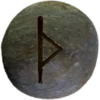
The rune ᚦ, known as Thurisaz (ᚦ) and pronounced “THOO-ree-saz,” connects strongly with the themes found in Darraðarljóð through its association with conflict, force, and reactive power. This rune embodies the raw energy that drives confrontation and destruction, reflecting the violent imagery woven throughout the poem’s narrative. Its presence aligns with the relentless momentum of battle and the aggressive shaping of outcomes by supernatural forces. Thurisaz (ᚦ) emphasizes how sudden and overwhelming power influences events beyond human control.
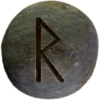
The rune ᚱ, called Raido (ᚱ) and pronounced “RYE-doh,” represents movement, journey, and the unfolding of events along a determined path. This rune complements the weaving motif by symbolizing progression and the structured flow of fate that guides each step in the battle’s development. Raido (ᚱ) reinforces the idea that every action follows a course that leads toward a specific conclusion, much like threads forming a complete tapestry. Together, these runes reflect both the force and direction present within the poem’s powerful imagery.
Meaning of Darraðarljóð for Asatruar
Darraðarljóð holds significant meaning for Asatruar because it presents a vivid depiction of how fate, conflict, and divine influence intersect within human experience. The poem offers more than dramatic imagery, as it provides insight into how unseen forces shape outcomes in ways that individuals cannot fully control or predict. This perspective encourages reflection on personal responsibility while acknowledging the presence of greater powers that influence life’s direction. Practitioners often engage with such material to deepen their understanding of spiritual relationships and the nature of destiny.
The imagery of weaving resonates strongly because it symbolizes interconnectedness and the continuous creation of reality through action and intention. Asatruar may view this concept as a reminder that every decision contributes to a broader pattern, even when the full design remains hidden. The poem also reinforces respect for courage and resilience, since warriors continue to act despite knowing that forces beyond their control influence the outcome. This balance between acceptance and action remains central to how many interpret its message today.