Last Updated on April 25, 2026
Table of Contents
Bestla: Ancestral Mother of the First Gods
Bestla, also written as Bestla or occasionally Bestlǫ, carries a name that resonates with deep ancestral significance and enduring influence within early Germanic tradition. You can pronounce Bestla as “BEST-lah,” where the first syllable receives emphasis and the final vowel sounds soft and open. The alternate form Bestlǫ includes the letter ǫ, which you can pronounce as a short “aw” sound, giving it a slightly rounded tone. These variations preserve phonetic traces from older linguistic forms while maintaining a consistent identity across sources.
Bestla stands as the daughter of Bölþorn, whose name includes the letter þ, called “thorn,” and pronounced like the “th” in “thin,” making Bölþorn sound like “BOL-thorn.” This lineage connects her to ancient beings associated with primal forces, which gives her position a sense of depth and continuity that reaches into the earliest stages of existence. Her marriage to Borr unites two powerful ancestral lines, creating a foundation that supports the emergence of a structured world. Through this union, Bestla becomes the mother of Odin, Vili, and Vé, figures who actively shape the realms that follow.
Her presence emphasizes the importance of maternal lineage within early storytelling, where ancestry shapes identity and influence across generations. Bestla does not dominate narratives through direct action, yet her role carries immense weight because her sons carry forward the transformation of existence. This dynamic highlights a recurring theme where foundational figures provide the basis for later developments without occupying center stage. Her identity therefore blends quiet strength with lasting impact, creating a balance between presence and subtlety.
Lineage and Cultural Meaning
Bestla’s connection to Bölþorn introduces a lineage tied to ancient wisdom and powerful origins, reinforcing her importance within the broader structure of divine ancestry. This relationship suggests that her children inherit more than physical existence, as they also receive insight and capability shaped by earlier generations. Her role as a mother extends beyond biological connection, as she serves as a conduit for the transmission of knowledge and strength. This perspective highlights how ancestry functions as both inheritance and responsibility within early traditions.
The union between Bestla and Borr creates a bridge between primordial forces and the emerging order shaped by their sons, forming a critical link in the unfolding narrative of existence. Their offspring do not simply continue a lineage, as they actively transform the environment and establish structure where none existed before. Bestla’s contribution lies in enabling this transformation through her place within the generational chain. Her influence therefore remains deeply embedded in the actions and achievements of her children.
Alternate spellings such as Bestla and Bestlǫ reflect linguistic variation rather than separate identities, allowing readers to trace her presence across different texts and translations. These forms preserve subtle differences in pronunciation while maintaining a unified representation of her character. This consistency ensures that her role remains clear even when language shifts over time. Such continuity strengthens her position as a stable and recognizable figure within ancestral narratives.
Presence in Early Texts
Bestla appears in the Prose Edda and Poetic Edda, where authors include her within genealogical passages that establish the origins of key divine figures. These references identify her as the mother of Odin and his brothers, ensuring her place within the lineage that leads to the shaping of the world. While the texts do not expand on her actions or personality, they emphasize her importance through her relationships and ancestry. This concise treatment reflects a broader pattern where lineage often carries more narrative weight than individual deeds for certain figures.
Her mention within these works provides essential context for understanding how later figures connect to earlier generations, reinforcing the continuity that defines these traditions. By including Bestla, the texts preserve a clear link between primordial origins and the structured order created by her sons. This approach allows readers to appreciate the importance of ancestry without requiring extensive narrative detail. Her presence therefore remains subtle yet indispensable within the framework of these writings.
Runes Reflecting Bestla’s Influence
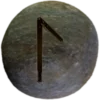
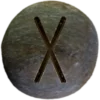
The rune Laguz (ᛚ) embodies flowing energy, intuition, and the deep currents that guide transformation, which aligns closely with Bestla’s role as a maternal figure who channels generational strength. Its symbolism connects to water and movement, suggesting a steady yet powerful force that shapes outcomes over time. Another rune, Gebō (ᚷ), represents exchange, partnership, and the balance created through meaningful relationships, reflecting the union between Bestla and Borr. Together, these runes capture both the nurturing flow and the reciprocal connection that define her influence, illustrating how foundational relationships enable growth and transformation.
Bestla’s Importance to Asatruar
Bestla holds importance for Asatruar because she represents the enduring strength of maternal ancestry and the transmission of identity across generations. Her role highlights how foundational figures contribute to spiritual understanding through connection rather than overt action. Practitioners often recognize the value of lineage, where each generation carries forward both responsibility and inherited wisdom. By acknowledging Bestla, they emphasize the importance of continuity and the quiet influence that shapes existence over time.
This perspective encourages reflection on the balance between visible achievement and underlying support within spiritual practice. Bestla’s presence reminds individuals that influence often flows through relationships and heritage rather than dramatic acts. Her connection to powerful descendants reinforces the idea that origins carry lasting significance. She becomes a symbol of continuity, strength, and the enduring impact of generational bonds.