Last Updated on April 7, 2026
Table of Contents
The First Emergence of Búri
Búri, pronounced “BOO-ree,” where “ú” sounds like “oo” in “food,” stands as one of the earliest beings in the ancient stories of the North, emerging at the very beginning of existence. His name sometimes appears without the accent as “Búri,” yet the pronunciation remains similar, with a long rounded vowel that carries a soft and resonant tone. He comes into being through a striking and elemental process, shaped not by birth in a traditional sense but by the slow uncovering of form from ice.
In the beginning, the vast emptiness fills with frost and rime, and within that frozen expanse a primeval cow named Auðhumla pronounced “OY-thum-la,” licks salty ice blocks for nourishment. As she continues this action across several days, the shape of Búri gradually appears, first revealing hair, then a head, and finally a complete figure. This emergence connects him deeply to the raw forces of nature, suggesting that life arises through persistence and transformation rather than sudden creation.
He does not act as a warrior or ruler in the way later figures do, yet his presence establishes a foundation for all that follows. He represents the first step in a lineage that leads directly to powerful gods, serving as a quiet but essential origin point. His existence emphasizes continuity, where each generation builds upon the last, shaping a world that becomes increasingly structured and alive.
The Lineage and Legacy of Búri
Búri fathers a son named Borr, whose name sometimes appears as “Bor,” and Borr continues the lineage that leads to some of the most central figures in these ancient traditions. Through Borr, Búri becomes the grandfather of Odin and his brothers, placing him at the root of a divine family that shapes the structure of the world and the fate of its inhabitants. Even though Búri himself remains distant in action, his role carries immense weight because it anchors the ancestry of those who actively shape events.
This ancestral importance highlights how early figures often exist as silent pillars rather than active participants, providing stability and continuity instead of dramatic intervention. Búri’s story does not include battles or quests, yet his presence ensures that such events can occur later through his descendants. His quiet emergence from ice also reflects a broader theme where life arises from harsh and unyielding conditions, suggesting resilience and inevitability within the unfolding of existence.
Sources such as the Prose Edda, compiled by Snorri Sturluson, include brief references to Búri, presenting him as the first of the gods and emphasizing his origin from the ice licked by Auðhumla. These mentions remain concise, yet they confirm his foundational role and preserve his place within the broader narrative structure.
Runes Connected to Búri
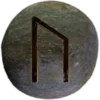
The rune Ūruz(ᚢ), pronounced “OO-rooz,” represents strength, endurance, and primal force, and it aligns closely with Búri’s emergence from the raw and untamed elements of ice and salt. This rune reflects the physical and foundational energy that underlies creation, suggesting a connection to the earliest shaping forces that bring form into existence.
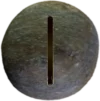
Another rune, Isaz (ᛁ), pronounced “EE-sahz,” symbolizes ice and stillness, directly echoing the frozen environment from which Búri appears. Isaz (ᛁ) captures the quiet, suspended state that precedes transformation, emphasizing patience and gradual revelation rather than sudden change.
The Importance of Búri to Asatruar
Búri holds significance for modern practitioners who follow these ancient traditions, as he represents the origin of divine ancestry and the enduring power of beginnings shaped through natural forces. His story emphasizes continuity, reminding practitioners that every action and lineage connects to something older and more fundamental. By reflecting on Búri’s emergence, they recognize the value of persistence and the quiet unfolding of potential within harsh conditions. His presence encourages a respect for origins and a deeper awareness of how foundational elements support growth, identity, and the ongoing relationship between the natural world and spiritual understanding.