Last Updated on April 7, 2026
Table of Contents

The Æsir as Ruling Powers and Shapers of Order
The word Æsir includes a ligature, and you pronounce it EYE-seer, where the Æ blends into a sound similar to the word eye, followed by a clear and steady second syllable. This term also appears as Aesir when written without the ligature, preserving pronunciation while adapting to modern alphabets that do not include this combined letter form. The Æsir represent a group of deities associated with authority, conflict, and the establishment of structure within their realms, guiding both divine and human affairs through their actions and decisions.
They reside primarily in Asgard, pronounced AWS-gard. This realm serves as a center of governance and interaction, where members of the Æsir gather to make decisions, resolve disputes, and shape outcomes that affect multiple worlds. Their presence reflects organization and deliberate action, since they do not act randomly but instead engage with purpose and awareness of consequence.
Prominent figures among the Æsir include Odin, Þórr, and Týr each contributing distinct qualities that support the group’s overall function and identity. Odin brings wisdom and strategic insight, Þórr provides strength and protection, and Týr represents law and honor through his actions and sacrifices. These roles create a balanced system where different abilities support collective stability, ensuring that no single aspect dominates without consideration of others. This structure allows the Æsir to respond to challenges with coordination and clarity.
Interaction, Conflict, and Agreements
The Æsir engage in ongoing interaction with other groups, particularly the Vanir, which leads to both conflict and eventual reconciliation that shapes their shared history. This relationship begins with tension and warfare, but it transitions into exchange and cooperation, demonstrating their ability to adapt and find balance after confrontation. The exchange of hostages between the groups symbolizes trust and mutual recognition, reinforcing the idea that stability requires both strength and compromise. These interactions highlight their capacity to evolve through experience and negotiation.
They also maintain relationships with giants, often navigating tension that arises from differing priorities and perspectives, which creates a dynamic environment of challenge and response. These encounters require careful judgment, since the Æsir must balance defense with diplomacy while protecting their interests. This constant engagement fosters resilience, as they refine their strategies and responses through repeated interaction with powerful and unpredictable forces. Their actions in these situations reveal a commitment to maintaining order even when faced with uncertainty.
In the Poetic Edda and the Prose Edda, the Æsir appear frequently in narratives that describe their decisions, conflicts, and alliances, providing detailed insight into their roles and relationships. These texts present them as active participants in shaping events, offering accounts that illustrate how they respond to both internal and external pressures. Through these stories, readers gain a sense of how the Æsir function as a collective while maintaining distinct individual identities.
Symbols, Roles, and Continuing Influence
The Æsir connect with various symbols that reflect their authority and responsibilities, including weapons, tools, and objects that represent power, protection, and governance. These items often carry specific meanings tied to the individual who wields them, reinforcing the idea that each member contributes uniquely to the group’s overall function. Their use of these symbols demonstrates intentional action, as they apply their abilities in ways that support stability and continuity within their domains.
Their influence extends into concepts of law, honor, and social structure, shaping how communities understand leadership and responsibility through the examples they provide. These themes encourage reflection on how authority operates and how individuals contribute to collective well-being. The Æsir therefore remain relevant as representations of organized power and the responsibilities that accompany it, offering a framework for understanding how structure and cooperation sustain complex systems.
Runes Associated with the Æsir
The rune Tiwaz (ᛏ), pronounced TEE-wahz, connects strongly with the Æsir through its association with law, justice, and honorable action, reflecting the role of figures like Týr within the group. This rune emphasizes the importance of integrity and the willingness to act for the greater good, even when such actions require personal sacrifice.
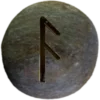
Another rune, Ansuz (ᚨ), pronounced AHN-sooz, represents communication, authority, and the transmission of knowledge, aligning with the leadership and decision-making roles that define the Æsir. Together, these runes highlight structure, communication, and responsibility as key aspects of their collective identity.
The Importance of the Æsir to Asatruar
Among Asatruar, the Æsir hold central importance as figures who represent order, responsibility, and the active shaping of Community through deliberate action and shared values. Practitioners look to their stories as examples of how leadership, cooperation, and accountability function within both divine and human contexts. These narratives encourage individuals to consider how their actions influence others and contribute to the stability of their communities. Through rituals, study, and reflection, they maintain a connection to the Æsir, using their examples to guide decisions and reinforce a sense of purpose within their daily lives and interactions.