Last Updated on April 25, 2026
Table of Contents
The Guardian Hound Garmr
Garmr, sometimes written as Garm, stands in Norse mythology as a fearsome hound that guards the entrance to the underworld realm associated with Hel. The name Garmr carries a pronunciation close to GAHRM-r, where the “a” sounds like the vowel in “father,” and the final “r” receives a light roll that reflects Old Norse speech patterns. This name conveys a sense of harshness and intensity, which aligns closely with his role as a relentless guardian. Linguistic features within the name reinforce the image of a creature bound to vigilance and ferocity.
Descriptions place Garmr at Gnipahellir, a cave or rocky opening that marks a threshold between worlds, where he watches over those who pass into the realm of the dead. His presence emphasizes the boundary between life and death, making him a symbol of transition and finality. He does not simply exist as an animal but embodies a force that enforces separation between realms. This role positions him as a critical figure within the structure of Norse cosmology.
Writers often compare Garmr to other mythological hounds across cultures, yet his identity remains distinct through his connection to Hel and the events surrounding Ragnarök. His depiction combines physical threat with symbolic meaning, creating a figure that operates on both narrative and conceptual levels. He stands as a reminder that boundaries require guardians who maintain order through strength and vigilance. This dual function ensures his continued relevance within mythological discussions.
Role in Ragnarök
Garmr’s most dramatic appearance occurs during Ragnarök, the cataclysmic series of events that leads to the destruction and renewal of the world. During this time, he breaks free from his restraints and joins the chaos that engulfs gods and giants alike. His release signifies the collapse of boundaries that once held destructive forces in check. This moment transforms him from a guardian into an active participant in cosmic conflict.
Accounts describe how Garmr confronts the god Týr during Ragnarök, leading to a fierce battle that ends in mutual destruction. This encounter highlights the scale of the conflict, where even powerful beings face inevitable endings. The clash between Garmr and Týr reflects the broader theme of balance, where opposing forces meet and neutralize each other. Their confrontation contributes to the sense of finality that defines Ragnarök.
The imagery surrounding Garmr during these events often includes references to blood and howls, which amplify the atmosphere of dread and intensity. These details create a vivid picture of a creature that embodies both physical danger and symbolic transformation. His role in Ragnarök underscores the idea that guardianship can shift into destruction when order dissolves. This transformation adds complexity to his character within the mythological framework.
Presence in Norse Texts
Garmr appears in the Poetic Edda, particularly in the poem Völuspá, where his howling signals the approach of Ragnarök and the unraveling of cosmic order. Völuspá presents a prophetic vision that describes the past, present, and future of the world, placing Garmr within a larger narrative of inevitability. His inclusion in this poem highlights his importance as a harbinger of change and destruction. This placement ensures that his role extends beyond a single story.
The name Garmr includes the characteristic Old Norse final “r,” which often indicates grammatical function while also contributing to pronunciation. Variations such as Garm simplify the spelling for modern usage, yet they retain the essential sound and identity of the figure. These adaptations show how names evolve while preserving their core meaning. Pronunciation remains central to understanding how these figures existed within oral tradition.
Through his appearances in these texts, Garmr maintains a consistent identity as both guardian and destroyer, reflecting the dual nature of many mythological beings. His story demonstrates how roles can shift depending on the state of the world around him. This adaptability reinforces his significance within the mythological system. Garmr continues to represent the tension between order and chaos.
Runes Associated with Garmr
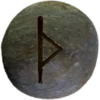
The rune Thurisaz (ᚦ), pronounced THOO-ree-sahz, aligns strongly with Garmr because it represents raw force, danger, and the presence of chaotic power within the mythological landscape. This rune reflects the aggressive and untamed aspects of Garmr’s nature, especially during Ragnarök when he breaks free from restraint. It embodies the destructive energy that emerges when boundaries collapse. The rune captures the intensity and threat that define his role.
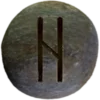
The rune Hagalaz (ᚺ), pronounced HAH-gah-lahz, connects with disruption, sudden change, and forces that shatter established order, which mirrors Garmr’s transformation during Ragnarök. This rune represents the breaking of structures that once maintained stability, reflecting the moment when he shifts from guardian to participant in chaos. Garmr’s story embodies this transition clearly. Together, these runes highlight both his power and the upheaval he represents.
Importance of Garmr to Asatruar
Garmr holds importance for Asatruar because his story emphasizes the role of boundaries and the consequences that arise when those boundaries break down. His presence as a guardian highlights the need for vigilance and responsibility in maintaining order within both personal and communal contexts. Practitioners often view him as a symbol of the forces that stand at the edge of transformation. This perspective encourages awareness of limits and transitions.
His role during Ragnarök also illustrates how destructive change forms part of a larger cycle that leads to renewal and continuation. Many interpret his actions as a reminder that endings and beginnings remain closely connected within the mythological worldview. This understanding supports a balanced approach to change and challenge. Garmr continues to offer insight into the nature of transformation and resilience.