Last Updated on April 11, 2026
Table of Contents
Hel: Guardian of the Shadowed Realm
Hel’s domain, often called Helheim or Niflhel, receives those who die of illness, age, or other non-heroic causes, and this destination contrasts with the halls reserved for warriors who fall in battle. The realm itself does not rely on dramatic punishment or reward, and it instead presents a subdued environment where existence continues in a dim and reflective state. This depiction reveals a nuanced understanding of death, where continuation matters more than judgment, and where identity persists beyond physical life.
Descriptions portray Hel with a striking dual appearance, where one side of her body appears living and vibrant, while the other side looks lifeless and decayed, symbolizing the boundary between life and death. This visual contrast reinforces her role as a mediator who governs the transition between worlds without fully belonging to either state. Her character does not seek to terrify, and instead she commands respect through her calm and unyielding presence.
Role and Symbolism in the Underworld
Hel rules her realm with a measured sense of order, and she maintains a structured environment where souls exist in accordance with the nature of their lives rather than through arbitrary punishment. Her hall, called Éljúðnir (pronounced “EL-yooð-neer,” where the letter ð sounds like the “th” in “this”), serves as the central place where she receives those who enter her domain. The features within her realm carry symbolic names, and they reflect themes of endurance, memory, and inevitability rather than fear or chaos.
The concept of Hel’s domain introduces a perspective on death that values continuity, and it shows that existence does not end abruptly but shifts into another state that retains identity and awareness. This view differs from later ideas that emphasize strict moral judgment, and it instead presents a world where death integrates naturally into the cycle of existence. Her realm becomes a place where the past remains present, and where the quiet passage of time shapes the experience of those who dwell there.
Hel’s interactions with other figures often reveal her independence, and she does not yield easily to demands from gods or heroes who attempt to challenge her authority. When others seek to retrieve souls from her domain, she responds with conditions that emphasize balance and fairness rather than emotional persuasion. Her decisions reflect a consistent logic, and she upholds the boundaries that define her realm with unwavering resolve.
Appearances in Old Norse Texts
Hel appears in the
One notable account involves the death of Baldr, where efforts to retrieve him from Hel’s domain ultimately fail due to a single refusal to mourn, which demonstrates her commitment to conditions that must be met fully. This story highlights her adherence to rules, and it reinforces the idea that her authority does not bend easily under pressure. Her portrayal in these texts remains consistent, and she emerges as a figure who maintains balance within a system that values structure and consequence.
Through these appearances, Hel gains depth as both a ruler and a symbol, and her presence connects themes of mortality, memory, and continuity across the broader narrative tradition. Her character does not rely on spectacle, and instead she embodies a steady force that shapes the experience of death in a meaningful and enduring way.
Runes Connected to Hel’s Domain
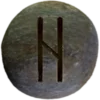
The Elder Futhark rune Hagalaz (ᚺ) (pronounced “HAH-gah-lahz”) connects strongly with disruption and transformation, and it reflects the unavoidable forces that reshape existence through hardship and sudden change. This rune represents natural events that alter the course of life, and it aligns with Hel’s role as a figure who governs the transition between states of being. Its symbolism emphasizes that destruction and renewal often occur together, and it reinforces the idea that endings create space for new forms of existence.
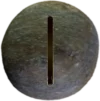
Another rune, Isaz (ᛁ) (pronounced “EE-sahz”), embodies stillness, preservation, and the suspension of motion, and it mirrors the quiet and enduring nature of Hel’s realm. This rune represents a pause within the flow of time, where change slows and reflection deepens, and it aligns with the subdued atmosphere associated with Helheim. Together, these runes highlight themes of transformation and stillness, and they offer insight into the symbolic dimensions that surround Hel’s influence.
Hel’s Importance to Asatruar
For modern practitioners who follow traditions rooted in Old Norse beliefs, Hel holds a meaningful place as a figure who represents the natural continuation of existence beyond death. She provides a framework that allows individuals to understand mortality without relying on fear-based interpretations, and her role emphasizes acceptance and continuity. This perspective supports a balanced view of life and death, where both states contribute to a larger cycle that remains interconnected.
Hel’s presence encourages reflection on how one lives, and it promotes an understanding that actions shape the legacy carried into the next state of existence. Her domain does not rely on reward or punishment, and it instead reflects the essence of a person’s life in a steady and enduring way. This approach resonates with those who seek a grounded and realistic understanding of mortality, and it reinforces the importance of living with intention and awareness.