Last Updated on April 24, 2026
Table of Contents
The Presence and Identity of Angrboða
Angrboða, sometimes written as Angrboda or Angrboða with normalized spelling, stands as a powerful figure associated with wilderness, transformation, and the boundary between order and chaos within early northern tradition. You pronounce Angrboða as “ANGR-boh-tha,” where “ð” sounds like the “th” in “this,” and the first syllable carries a strong, grounded tone. Her name translates roughly as “she who brings grief,” which reflects the weight of her role within the stories that mention her.
Angrboða resides in a region known as Járnviðr, pronounced “YARN-vidr,” where “á” sounds like “yow” in “yowl,” and “ðr” closes with a soft “thr” sound that blends into the preceding consonant. This forest setting emphasizes her connection to untamed landscapes and forces that exist beyond structured society. Her presence in this environment reinforces themes of separation from organized realms and alignment with primal elements.
She forms a significant relationship with Loki, and together they produce three well-known offspring whose actions shape many later events within the mythic narrative cycle. These children include Fenrir, Jörmungandr, and Hel, each representing a different aspect of disruption, transformation, or boundary crossing. Through this lineage, Angrboða occupies a central position in the unfolding of events that challenge established order.
Role in Mythic Narratives and Sources
Angrboða appears in the Prose Edda, where Snorri Sturluson records her connection to Loki and identifies her as the mother of three formidable beings who play crucial roles in later events. This account highlights her importance through her offspring rather than extensive direct action, which adds a layer of mystery to her character. The text presents her as a figure whose influence emerges through lineage and consequence rather than frequent presence.
Descriptions of her children emphasize the scale and impact of their existence, which reflects back on Angrboða’s role as their origin and caretaker within the wilderness. Fenrir grows into a massive wolf associated with destruction, Jörmungandr encircles the world as a vast serpent, and Hel governs a realm connected to the dead. These associations deepen the sense that Angrboða connects to forces that operate beyond ordinary limits.
Writers and interpreters often explore her character as a symbol of hidden knowledge, transformation, and the acceptance of forces that exist outside controlled environments. Her limited appearances encourage deeper examination of her significance, since each mention carries substantial narrative weight. This approach allows her presence to resonate without requiring extensive description.
Symbolism and Interpretive Perspectives
Angrboða embodies themes of change, unpredictability, and the emergence of powerful forces that reshape established structures within mythic storytelling. Her association with the wilderness reflects a space where boundaries dissolve and new forms arise, often challenging expectations and stability. This symbolism connects her to cycles of transformation that influence both individuals and larger systems.
Alternate spellings such as Angrboda and Angrboða appear in modern texts, yet pronunciation remains close to “ANGR-boh-tha,” preserving the distinct sound of the original name. The letter “ö” in some variations sounds like the “u” in “burn,” while “ð” continues to carry the voiced “th” sound. These phonetic details help maintain a connection to the linguistic texture of the original language.
Modern interpretations often highlight her role as a figure who stands at the edge of known structures, representing both danger and potential within the broader narrative framework. Her story invites reflection on how societies understand and respond to forces that resist control or categorization. Angrboða remains a compelling presence whose influence extends beyond her limited appearances.
Runic Associations with Angrboða
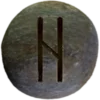
The rune Hagalaz (ᚺ), pronounced “HAH-gah-lahz,” represents disruption, natural force, and sudden change, which aligns closely with Angrboða’s connection to powerful transformations and unpredictable outcomes. This rune reflects the impact of forces that break established patterns and introduce new conditions that demand adaptation. Its symbolism resonates with her role as the origin of beings who alter the course of events.
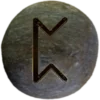
Another rune, Perthro (ᛈ), pronounced “PERTH-ro,” relates to mystery, hidden processes, and unfolding outcomes that remain uncertain until revealed through time. This rune captures the sense of concealed potential associated with Angrboða, whose influence emerges through her children and the consequences they bring. Together, these runes express themes of transformation, uncertainty, and the unfolding of powerful forces.
Importance of Angrboða Among Asatruar
Practitioners who follow northern traditions often view Angrboða as a figure who represents transformation, resilience, and the acceptance of forces that exist beyond structured control or predictable outcomes. Her story encourages reflection on how individuals engage with change, uncertainty, and the boundaries that define their understanding of the world. This perspective supports a deeper engagement with symbolic narratives that remain relevant in contemporary contexts.
Modern interpretations emphasize her role as a source of strength and insight, particularly in situations that require adaptability and awareness of hidden influences. Engagement with her story allows practitioners to explore themes of growth, challenge, and transformation within a meaningful framework. Angrboða continues to hold significance as a figure who embodies complex and enduring ideas.