Last Updated on April 25, 2026
Table of Contents
The Myth and Nature of Fenrir in Norse Tradition
Fenrir, often called Fenrisúlfr pronounced as FEHN-rir and FEHN-riss-ool-vr, stands among the most feared beings in Norse mythology, embodying chaos, raw strength, and inevitable destruction within the mythic worldview. Ancient sources also record alternate spellings such as Fenris Wolf, Fenrisulfr, and Fenrisúlfr, each reflecting linguistic variation across Old Norse manuscripts and later retellings. He emerges as the monstrous offspring of Loki and the giantess Angrboða pronounced AHNG-r-boh-tha, linking him directly to forces that challenge divine order.
The gods recognized Fenrir’s immense potential for devastation early in his life, yet they raised him within their own realm because they sought control over his growing power. Only Týr pronounced TEER possessed the courage to feed the wolf, since his size and ferocity frightened even the most battle-hardened deities. Their attempt to manage him reveals a recurring theme within Norse myth, where foresight never fully prevents fate but instead shapes the path toward its fulfillment.
As Fenrir grew stronger, the gods attempted to bind him using chains forged with great skill, yet he broke each restraint with ease and increasing defiance. These failed attempts heightened the gods’ fear and forced them to seek help from dwarven craftsmen, who created Gleipnir pronounced GLAYP-neer, a magical binding that appeared delicate yet held immense strength. He agreed to test this ribbon-like restraint only after demanding a pledge of trust, which led to Týr placing his hand within the wolf’s jaws.
Binding, Betrayal, and the Role of Fate
When Fenrir realized he could not break Gleipnir, he bit off Týr’s hand, sealing a moment of betrayal that echoed through Norse storytelling as a symbol of sacrifice and broken trust. The gods then secured him to a rock, placing a sword between his jaws to hold them open, which caused a constant flow of saliva that formed the river Ván pronounced VAWN. This binding did not eliminate Fenrir’s threat, since prophecy declared that he would one day break free during Ragnarök pronounced RAG-nah-rok.
During Ragnarök, Fenrir fulfills his destined role by escaping his bonds and wreaking havoc across the world, embodying the unstoppable force of destruction that even the gods cannot prevent. He confronts Odin pronounced OH-din, the chief of the gods, and devours him, marking one of the most significant and tragic moments within the mythic cycle. This act illustrates the Norse understanding that even the highest authority must eventually yield to fate, no matter how powerful or wise.
The story does not end with Fenrir’s triumph, since Odin’s son Víðarr pronounced VEE-thar avenges his father by killing the wolf, restoring a degree of balance after immense loss. This sequence reinforces a cyclical vision of destruction followed by renewal, where even catastrophic events contribute to the rebirth of order. He represents more than a monster, since he acts as a necessary force within the broader cosmic pattern.
Sources and Cultural Context
Key accounts of Fenrir appear in the Poetic Edda pronounced poh-EH-tik ED-da and the Prose Edda pronounced PROH-suh ED-da, where poets and scholars preserved these narratives with vivid imagery and symbolic depth. These texts describe his lineage, his binding, and his role in Ragnarök, offering insight into how Norse societies understood power, fear, and inevitability. The consistency of Fenrir’s portrayal across these works highlights his importance within the mythological framework.
Writers present him not simply as a villain but as an embodiment of forces that exist beyond control, reflecting a worldview that accepts both creation and destruction as essential elements of existence. His story challenges the idea that order can permanently dominate chaos, since every attempt to restrain him ultimately contributes to the conditions of his release. Fenrir becomes a powerful symbol of fate’s certainty and the limits of divine authority.
Runes Connected to the Power of Fenrir
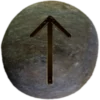
The rune Tiwaz (ᛏ) pronounced TEE-wahz connects strongly with Fenrir through the myth of Týr, whose sacrifice defines the binding of the great wolf and reflects courage under dire circumstances. This rune represents honor, justice, and willingness to uphold order despite personal loss, qualities that Týr demonstrated when he placed his hand within Fenrir’s jaws. The association highlights a balance between lawful restraint and the dangerous power that he embodies.
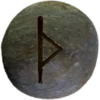
The rune Thurisaz (ᚦ) pronounced THOO-ree-sahz also aligns with Fenrir, since it symbolizes giants, raw force, and chaotic energy that can both destroy and protect depending on its direction. This rune captures his untamed essence, emphasizing his role as a being tied to primal strength and inevitable upheaval within the mythic structure. Together, these runes reflect tension between control and chaos, which defines Fenrir’s enduring significance.
Fenrir’s Importance to Asatruar
Fenrir holds complex meaning for Asatruar, who often view him not simply as a destructive monster but as a representation of natural forces that cannot be ignored or permanently restrained. Many practitioners interpret his story as a reminder that attempts to suppress powerful truths or instincts can lead to greater consequences over time. This perspective encourages reflection on balance, responsibility, and respect for forces that exist beyond human control.
Some Asatruar also see Fenrir as a symbol of resistance against unjust authority, since the gods’ treatment of him raises questions about fear-driven decisions and moral compromise. His binding and eventual escape illustrate how mistrust and coercion can create the very outcomes they seek to prevent. Fenrir becomes a figure who challenges individuals to consider the cost of control and the inevitability of change.