
Last Updated on April 15, 2026
Table of Contents
Gullveig: The Gold-Weaver of Fire and Desire
Gullveig, also known through alternate spellings such as Gullveig and Gullveig, appears as a striking and unsettling figure within early northern tradition, where her presence sparks conflict, transformation, and a profound shift in divine relationships. Her name carries the meaning “gold-drink” or “gold-power,” and it suggests an intimate connection with wealth, desire, and the intoxicating pull of material value within human and divine realms. Pronounce Gullveig as “GOOL-vayg,” where the first syllable rhymes with “cool,” and the second syllable sounds like “vague” without the final soft consonant.
Stories describe Gullveig as a mysterious woman who arrives among the gods and quickly draws suspicion, fascination, and hostility because of her association with gold and her repeated resilience against destruction. She undergoes burning three times and rises each time renewed, which establishes her as a figure of endurance and transformation rather than simple mortality. This cycle of burning and rebirth reinforces her connection to both destructive fire and regenerative power, suggesting a deeper symbolic role tied to cycles of desire, greed, and renewal.
Her presence provokes one of the earliest divine conflicts, as her treatment leads to a breakdown in trust between different groups of gods, which escalates into open confrontation and long-lasting consequences. This conflict reshapes alliances and forces an exchange of knowledge and power, showing that Gullveig’s influence extends far beyond her individual story and into the structure of divine society itself. Through this role, she embodies disruption, forcing change where stability once prevailed, and revealing tensions that already existed beneath the surface.
Transformation, Fire, and Identity
Gullveig’s repeated burning and rebirth highlight her as a symbol of transformation, where destruction does not end existence but instead refines and strengthens it through intense experience. Fire acts as both a weapon used against her and a medium through which she emerges altered yet enduring, suggesting that attempts to erase her only amplify her significance and presence. This dual nature of fire as both destructive and creative power shapes her identity as something beyond ordinary existence, aligning her with forces that cannot be easily controlled or understood.
Some traditions connect Gullveig with a figure named Heiðr, pronounced “HAY-thr,” where the “ð” represents a soft “th” sound as heard in “this,” and the name implies brightness or honor. This association deepens her identity by linking her to practices of foresight, magic, and knowledge that influence both individuals and entire communities through unseen means. The blending of these identities suggests that Gullveig represents not just physical wealth but also the allure of hidden knowledge and transformative power that reshapes those who seek it.
Her connection to gold reinforces themes of desire and corruption, as gold serves as both a source of beauty and a catalyst for conflict, drawing attention to the consequences of unchecked longing. Rather than presenting wealth as purely beneficial, her story emphasizes how obsession with material value can destabilize relationships and provoke destructive actions. Gullveig becomes a living embodiment of the tension between attraction and consequence, where desire fuels both creation and ruin.
Runes Linked to Gullveig’s Power
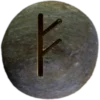
The rune Fehu (ᚠ), pronounced “FAY-hoo,” represents wealth, cattle, and movable prosperity, and it aligns closely with Gullveig’s association with gold and the allure of material abundance. Fehu (ᚠ) carries both positive and cautionary meanings, since it reflects how wealth can support growth while also creating imbalance when pursued without restraint. This duality mirrors Gullveig’s influence, where attraction to gold leads to transformation and conflict, showing how material desire shapes both personal and collective destinies.
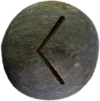
The rune Kenaz (ᚲ), pronounced “KAY-nahz,” symbolizes fire, illumination, and creative energy, and it connects directly to Gullveig’s repeated burning and renewal through flame. Kenaz (ᚲ) represents the light of knowledge and the forge of transformation, where raw elements undergo change and emerge refined through intense heat and focus. This rune complements Gullveig’s narrative by emphasizing how fire reveals truth and reshapes existence, reinforcing her role as a catalyst for profound and often disruptive change.
Meaning of Gullveig Among Asatruar
Among modern practitioners, Gullveig holds significance as a figure who represents transformation, resilience, and the complex relationship between desire and consequence within spiritual and daily life. Her story encourages reflection on how individuals engage with wealth, ambition, and personal power, urging a balanced approach that acknowledges both opportunity and risk. By examining her experiences, practitioners gain insight into cycles of destruction and renewal, which can guide personal growth and ethical decision-making.
Gullveig also serves as a reminder that conflict often arises from deeper imbalances, and her role highlights the importance of addressing underlying tensions rather than ignoring them until they erupt. Her endurance through repeated trials inspires strength and adaptability, showing that hardship can lead to transformation rather than defeat when approached with awareness and intention. Gullveig remains a powerful symbol whose influence continues to shape understanding of change, value, and resilience.